A Salty Surprise: the Midden Maple

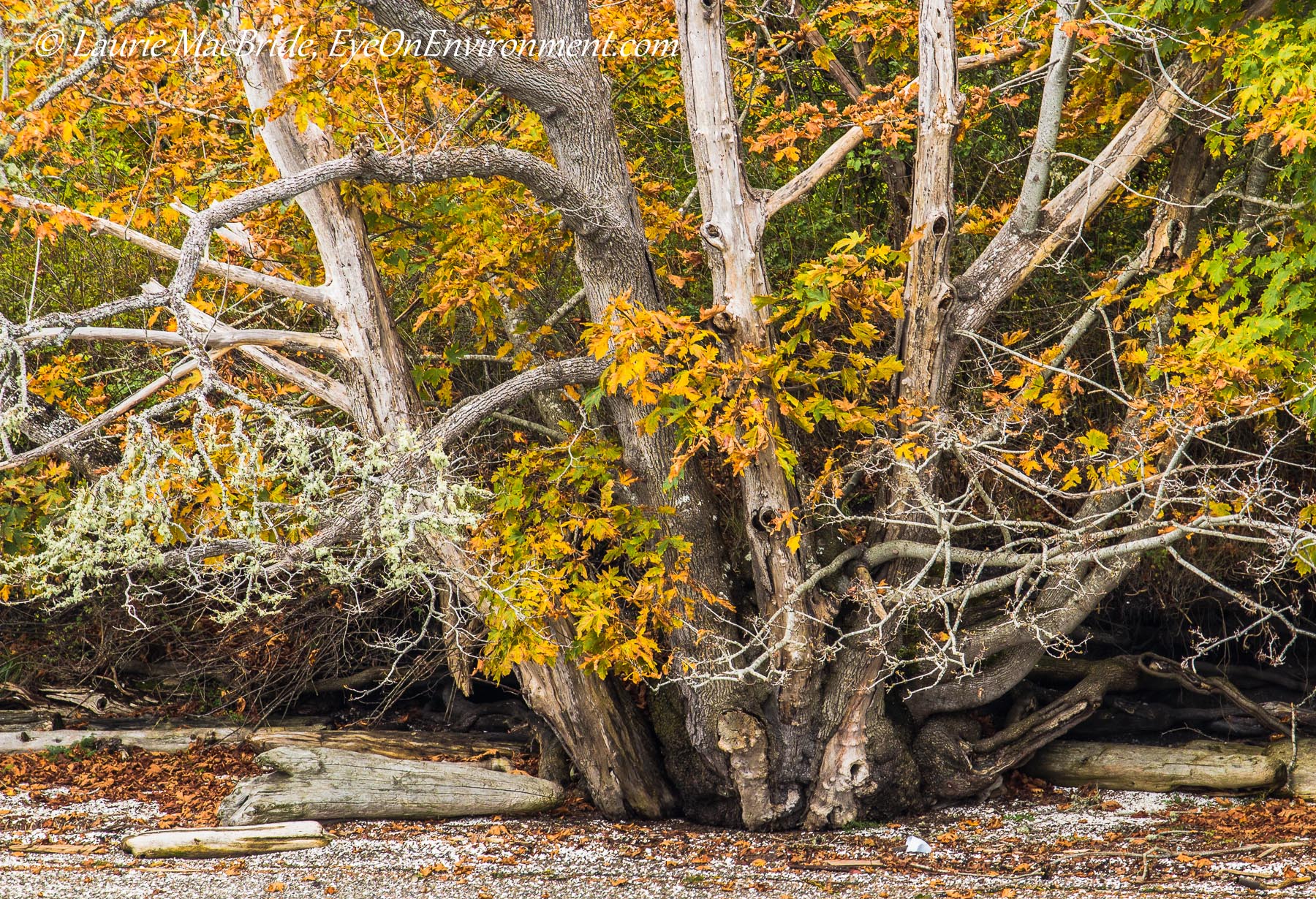
Bigleaf maple in fall, growing on a shell beach

Maple in the Midden (click to enlarge)

This Bigleaf maple (Acer macrophyllum) stands on the beach – below the highwater mark – in Montague Harbour Marine Park on Galiano Island. It’s an unusual setting for a large tree: Bigleaf maples often grow alongside streams, but that’s fresh water. This one must endure having its roots bathed in salt water with every day’s high tide.

I don’t usually think of trees as inhabitants of the intertidal zone – that’s the niche for sea asparagus, barnacles, starfish and clams. But this individual seems to have managed quite nicely. Like many Bigleaf maples, it has developed multiple trunks and a rather chaotic look, but judging by its canopy it seems healthy enough.

The beach it`s growing on is white, but neither sandy nor tropical. Montague was the site of a huge Coast Salish village for about 3000 years, with the residents and their visitors relying on clams and other shellfish as the mainstay of their diet. All those clams made for a lot of debris, and thus the beach is a part of a large, deep midden, made from the fragments of thousands of years of dumped shells. (I suppose this gives the maple a plentiful supply of calcium.)

I couldn`t resist photographing the maple last fall, when we pulled our dinghy up onto the beach to take a walk in the park. I was drawn by the intense colour of the leafy canopy against the bleached-out tones of the shells, drift logs, tree trunks and lichen – along with the surprise of finding such an improbable giant on a salt-soaked west coast beach.

With the publication of this article I’m celebrating a personal milestone of sorts: this is my 100th blog post! A heartfelt thank you to all readers and commenters for your visits and kind words since I launched this site in the fall of 2011.
A Confounding Beauty

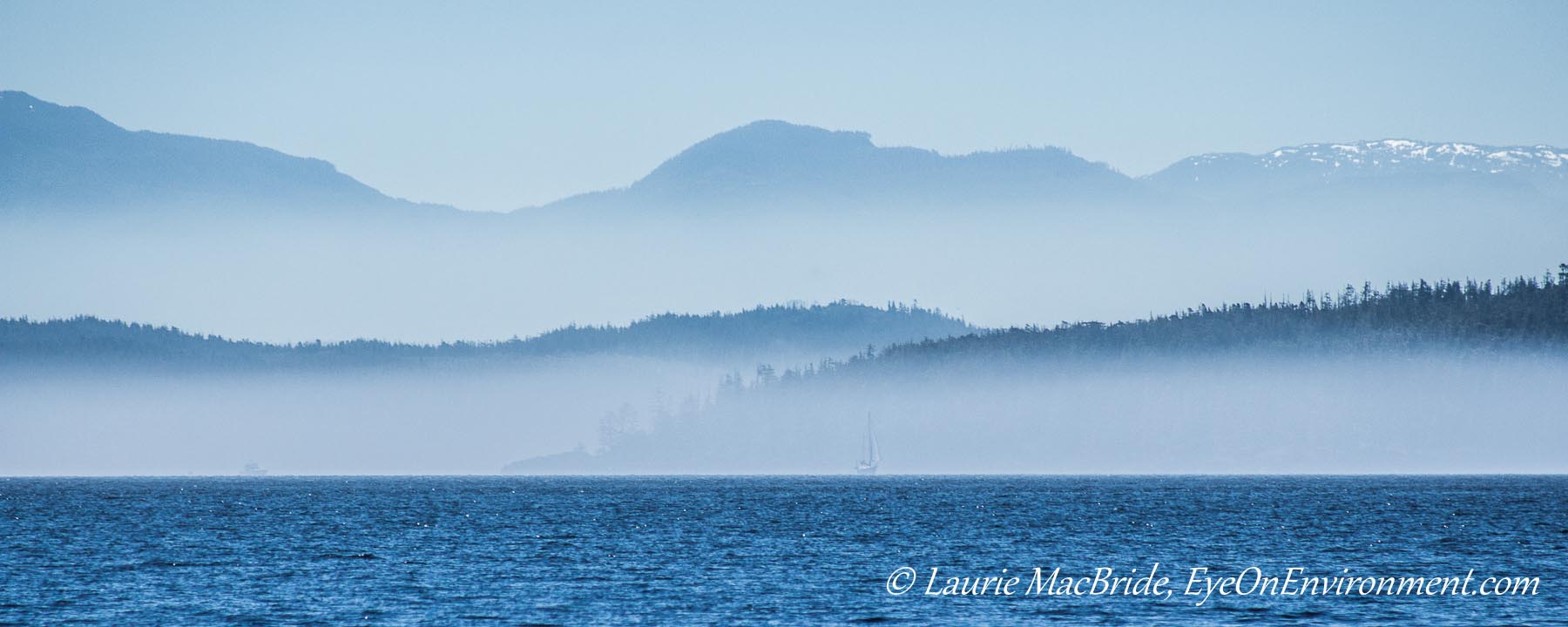
Blue sea and skies with layers of fog and boats in distance

Morning Run (Queen Charlotte Strait) – click to enlarge

In the summer, overnight fog forms frequently along much of the BC coast, and it often doesn’t dissipate until the next afternoon. Even if you have radar and GPS, navigating is tricky, especially when time constraints or distance require you to make a morning passage.

Sometimes you’re travelling virtually blind with no landmarks whatsoever – a disorienting experience that makes it challenging to steer a straight course.  At other times nearby shorelines can be just visible enough to help guide your passage, but boats and even large ships can be hard to spot until suddenly they appear, alarmingly near. Even while maintaining a 360-degree watch and using our radar, we’ve had some close encounters we’d prefer to forget.

Yet despite such anxiety, I appreciate the profound beauty that fog can bring. As it drapes its soft white shawl over the sea and land, it creates an almost otherworldly hush, an ethereal light and ever-changing hints of mysterious shoreline textures.

The photo above is from the God’s Pocket area of Queen Charlotte Strait, looking towards the BC mainland. If you click on the image to enlarge it then look closely, you’ll see two ghost-like boats travelling through the mist – making a morning run across the Strait, as we were doing that day.

This image was one of the 38 prints in “Reflections on the Coast”, my photography show which took place recently on Gabriola Island. In case you weren’t able to see it, here’s a narrated video of the show (be sure to have your sound turned on).

A Sense of Scale

man standing in front of Douglas fir forest with grasses in foreground

Douglas fir forest, Drumbeg Park (Gabriola Island). Click to enlarge – it looks better that way!

It’s important to keep a sense of scale about our place in world.

Our species holds more than its fair share of influence over our planet’s health and future. But at the same time, we humans are collectively just one tiny fragment of the vast, intricate and delicately balanced ecosystem that makes up our earthly home.

Too often we get wrapped up in our own problems and plans, and lose our sense of perspective. Instead, let’s notice and honour the amazing array of life that’s all around us, every day of the year – grasses, trees and other human beings included.

Here’s wishing a happy new year to all blog readers!

If you haven’t visited my Flickr photostream lately, you might like to check it out.

December Light

Sandstone beach lit by low-angle sun

December LIght (click to enlarge)

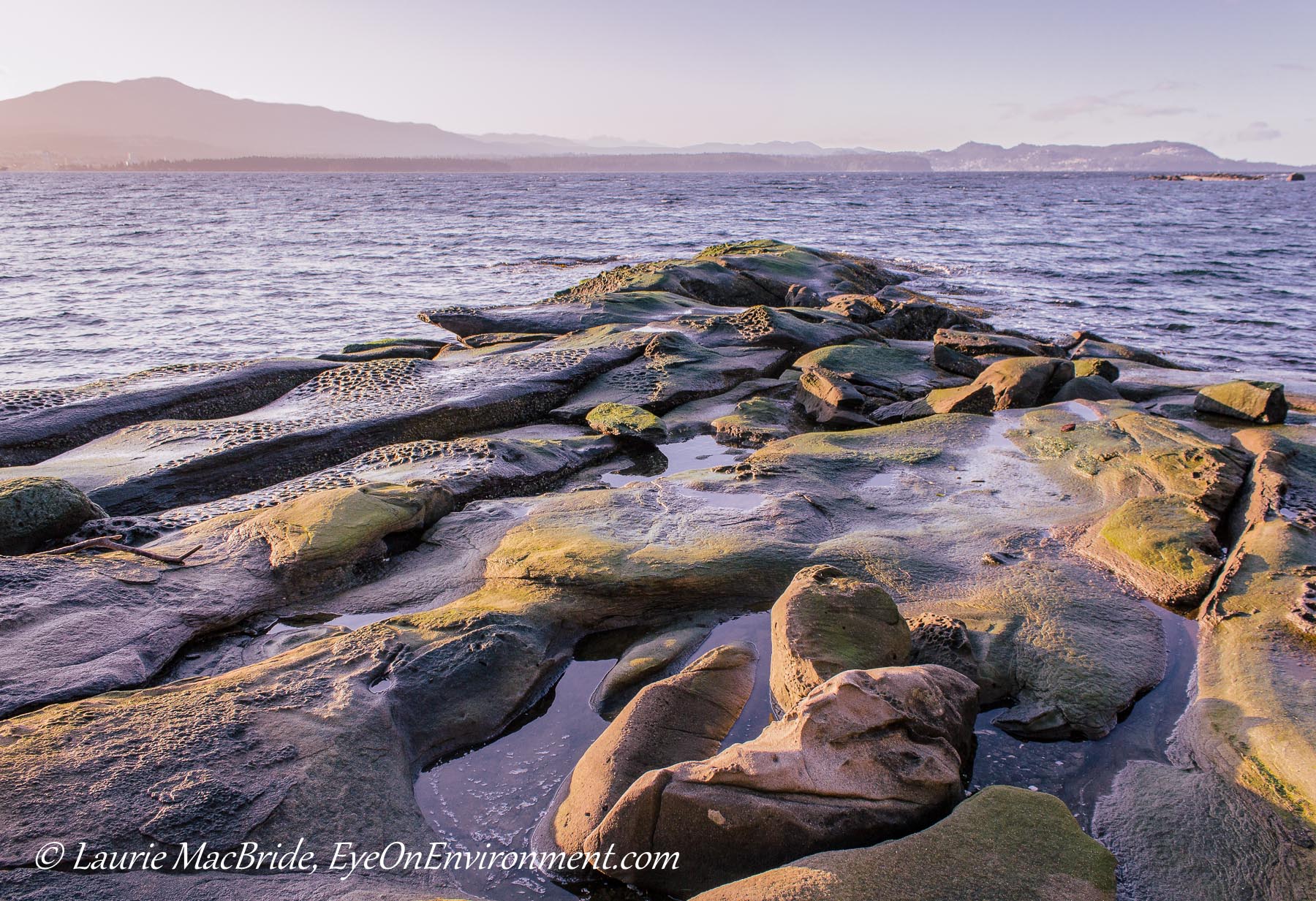
Two years ago almost to the day, I took this photo, looking northwest from Descanso Bay Park on Gabriola Island. The low angle winter sun, combined with the sea and the furrowed sandstone so characteristic of Gabriola’s shores, formed a tapestry of light, shadows and subtle colours that I found visually irresistible.

And now, here in the northern hemisphere we are once again at winter solstice: the day that holds the least light and the longest darkness of the entire year. At this season, most of us seek extra light, looking for the warm and welcome sense of comfort it can bring.

Today the sun will stop moving southward. It will briefly pause (“solstice” comes from the Latin words for “sun stops”), then it will start moving northward again. Of course, it’s not really the sun that’s moving – it’s our earth, relative to the sun’s position. All the same, today is a welcome occasion. Before too many weeks, we’ll start to see the difference in the length of our daylight hours.

As we celebrate the start of the light’s return, here’s wishing all readers a peaceful, happy and healthy holiday season.

The Silent Intruder

Barred owl on tree branch

Silent Watcher (Barred owl) – click to enlarge

In the night we often hear a Barred owl call out its persistent question: “Who-cooks-for-YOU?”

Less frequently, we catch a dialogue between two Barred owls, sounding more like a loud gang of crazed chimpanzees than a couple of birds. The strange, hilarious caterwauling lasts for a quarter hour or more, rising and falling in pitch, speed and volume. At those times, it’s best to give up any hope of sleep and just enjoy the broadcast.

But we don’t see these large birds very often, and when we do, it’s usually at a distance. During one week this past summer, though, we had some very close views when one visited our place, drawn by the prospect of tasty songbird nestlings.

We might have missed seeing the owl, but the prolonged robin ruckus gave it away. Their loud alarm calls indicated a predator was about, but what, and where? I went to investigate, expecting to shoo away a neighbour’s cat, but half way across the little bridge over our pond I came to a sudden stop. Almost within arm’s reach, on the lowest limb of the willow, sat the source of robin angst: about two feet (60 cm) in height, silent, still, and eyeing me with no apparent concern.

Over the next hour I watched the robins in their valiant, noisy and exhaustive effort to dispatch the owl. Dive-bombing in daring sorties, they came closer and closer to the predator. At one point, a brave little robin even went so far as to kick the big bird in the head. The owl showed no reaction other than a brief headshake and a look that seemed to say, “Bug off!”

Of course I wondered if I should intervene on behalf of the robins, and if so, how? In the end, I opted for neutrality. (Or perhaps I simply chickened out – those talons looked awfully sharp.)

I’m not sure how the battle ended that day, as eventually I had to get on with my to-do list. But three more times that week, a similar robin ruckus led me to the owl: in the willow again, then in a nearby Douglas fir, and finally on a branch of the Bigleaf maple that overhangs our patio.

We were glad when the big bird finally moved on. Peace reigned again in our little robin kingdom, and those gawky fledglings could get on with the vital business of learning to fly.

Here’s a link to the amazing caterwauling and other sounds that Barred owls make (from Cornell Lab of Ornithology). Enjoy!

A Complex Story, Simply Told

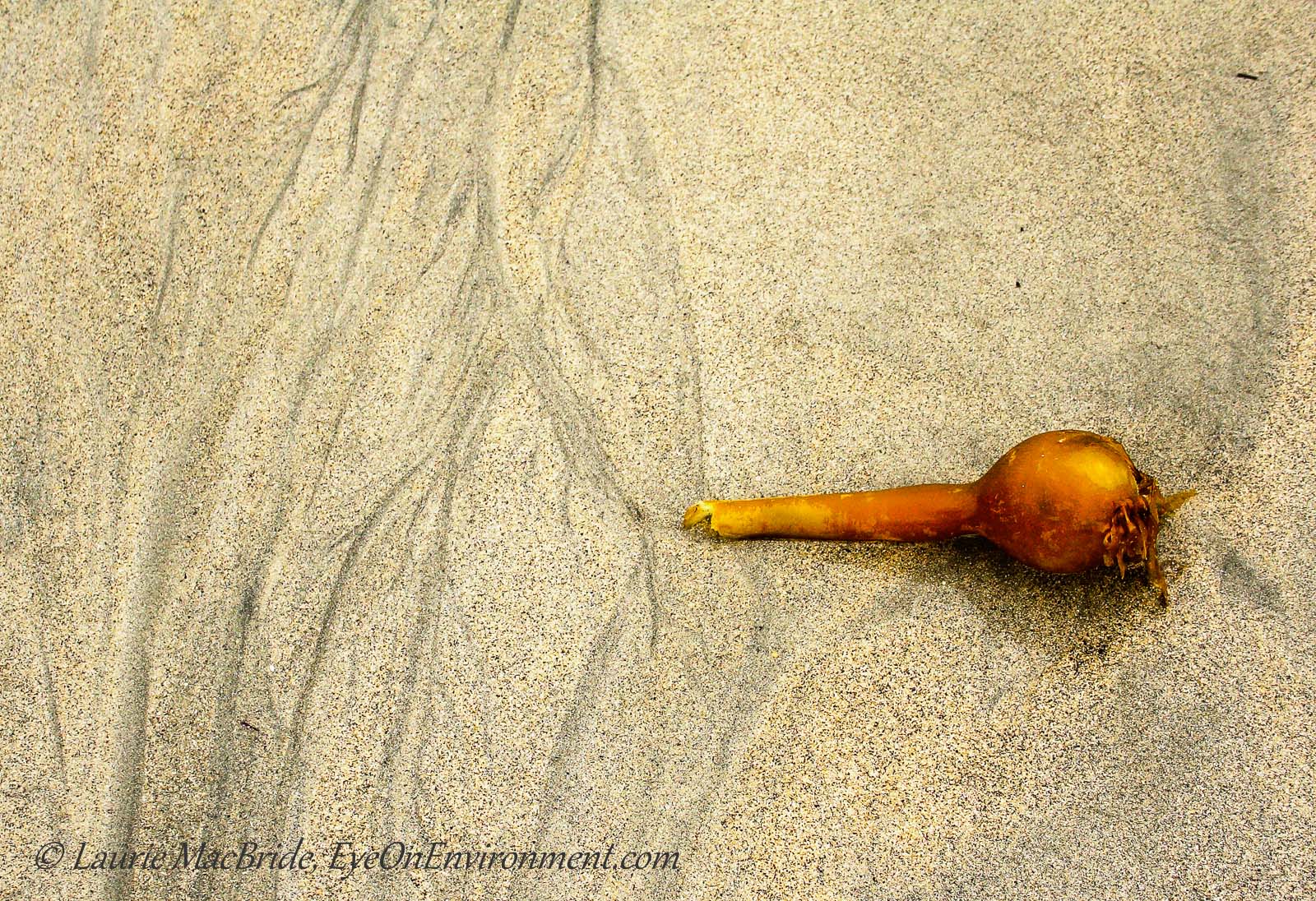
Bull kelp head on the sand

After the Storm (click to enlarge)

A washed-up kelp head and rivulets left by the receding tide: sometimes less really is more.

I couldn’t resist trying to capture the simplicity and stark beauty of this little tableau at West Beach on Calvert Island. Along this wild, wind-swept stretch of sand on BC’s outer coast, each square foot is a microcosm of the dynamic interaction of biology and physics that takes place every day.

These dynamics are complex, yet hopefully their story can be conveyed in a simple scene like this.

The image above is one of the 38 prints in my recent photography show, Reflections on the Coast, which took place on Gabriola Island. In case you weren’t able to see it, I’ve made a simple video of the show (be sure to have your sound turned on, as there’s a narrative piece that goes with each image).

Fall’s Last Hurrah

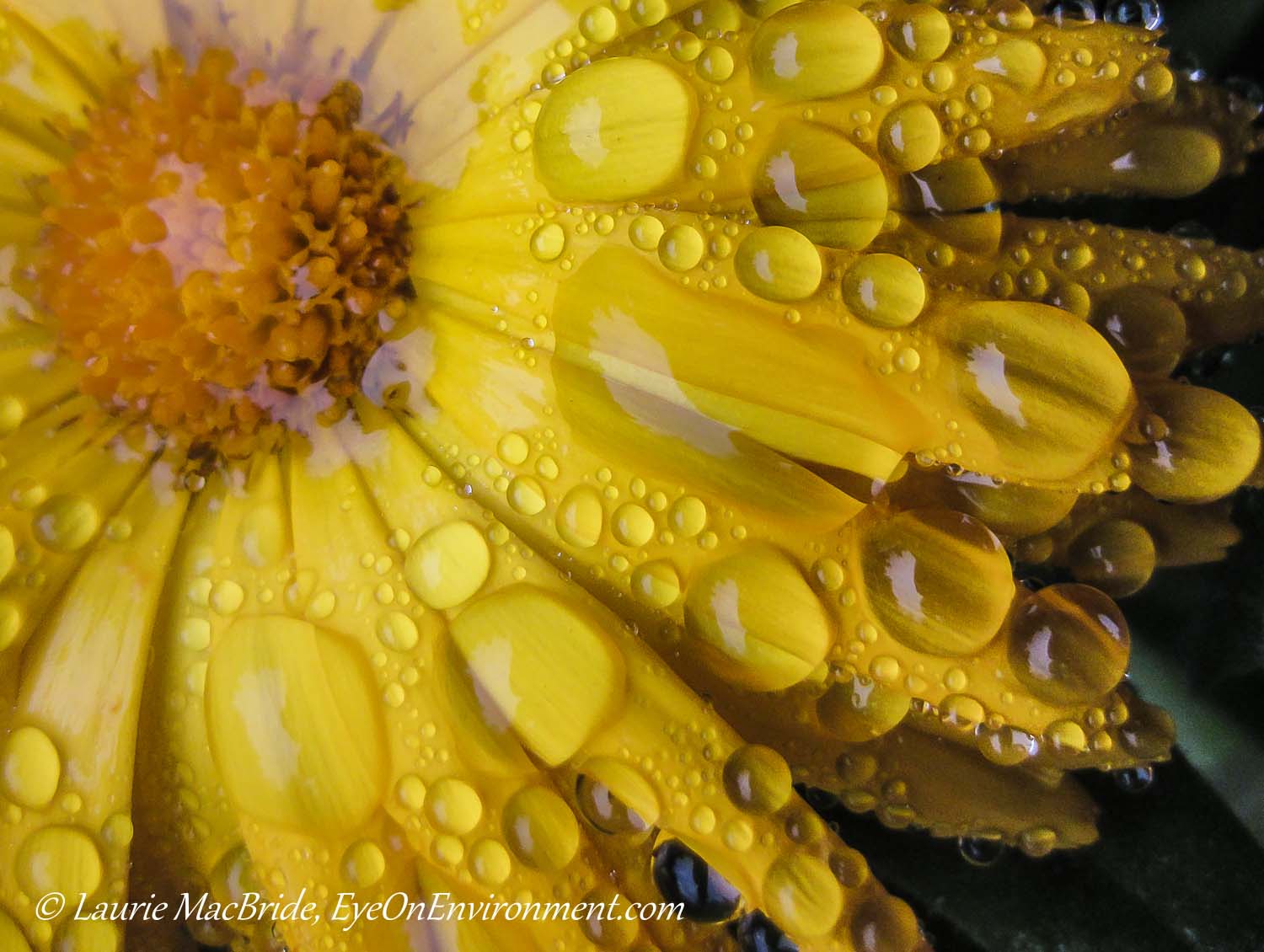
Closeup of yellow calendula petals with raindrops

Rain on the Calendula – click to enlarge

Here on the west coast, November can be a drab time of year. With its diminishing daylight, bare tree limbs, and wet days turning fallen leaves into a sodden brown mass, it’s never been exactly my favorite month.

All the same, I was able to find some splashes of colour in our garden throughout that dull month – and am still finding some even now that December has begun. The Calendula patch, in particular, has a number of hangers-on, enjoying their last hurrah before winter arrives to put an end to the festivities.

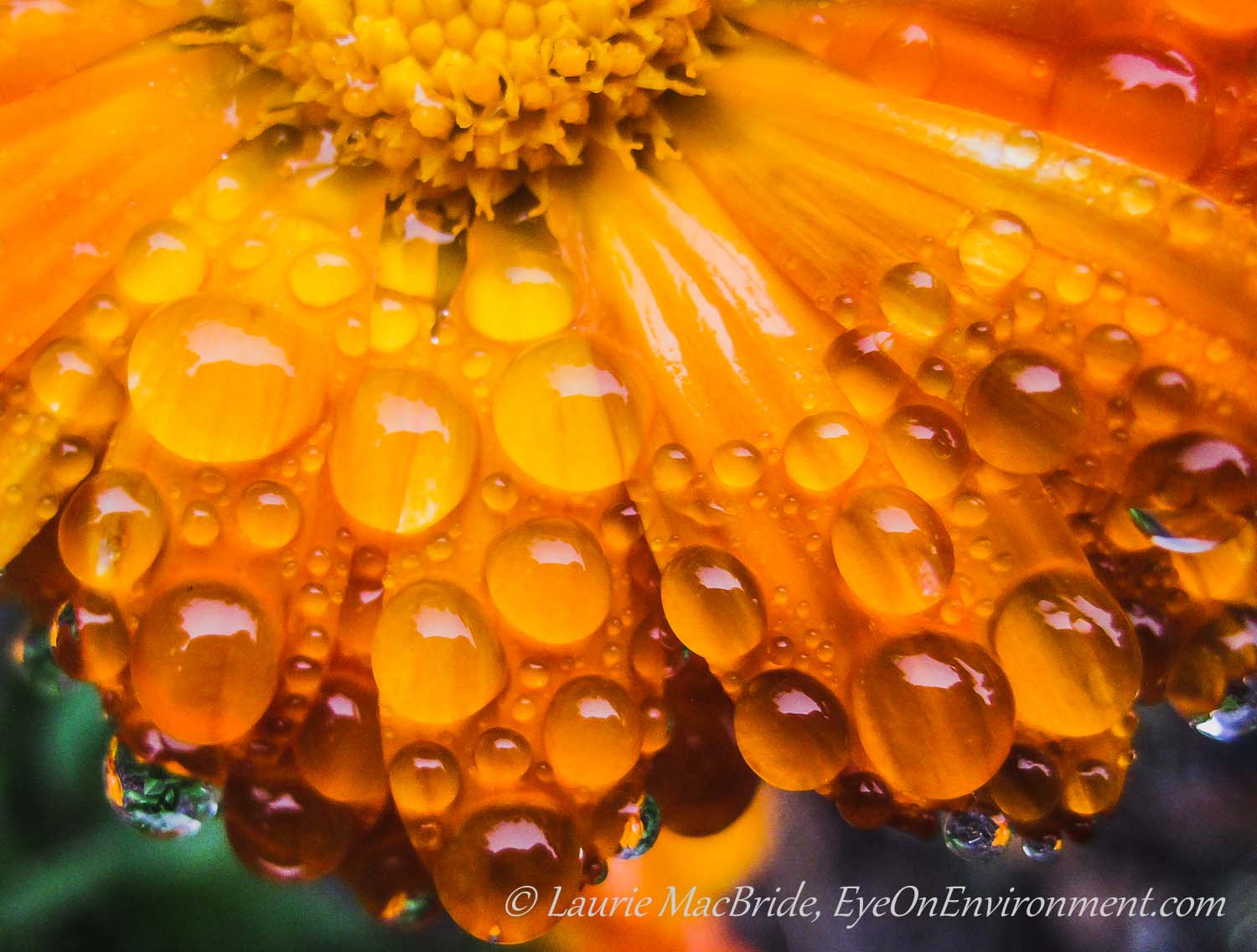
Decorated with raindrops and wearing the saturated hues that November light can bring, they seem well decked out for their party.  And at this time of year, I tend to appreciate their beauty more than I might in summer.

There’s a bit of snow and cooler temperatures in the forecast now – so I expect this garden party will be ending soon. 

Closeup of orange calendula petals with raindrops on them

Rain on the Calendula #2 – click to enlarge

Moving Forward in the Fog

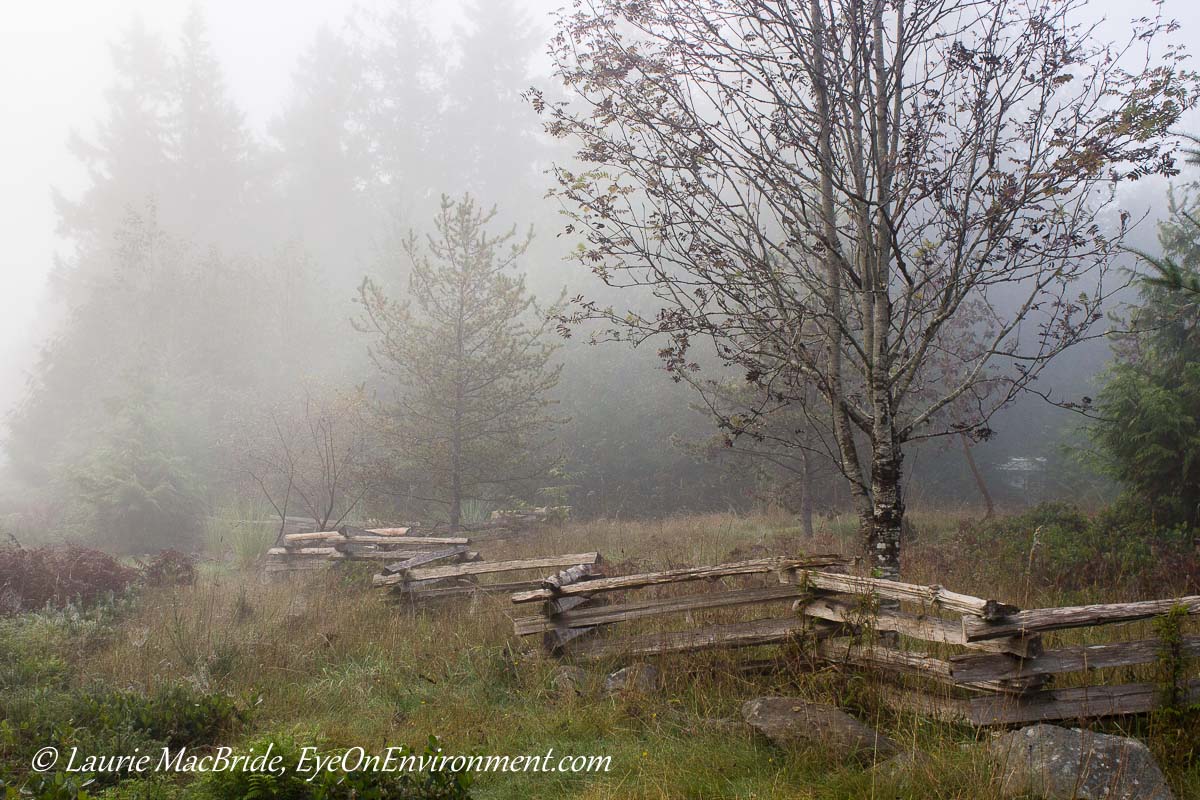
Fence, trees and meadow backlit in fog

Morning Fog, Gabriola (click to enlarge)

Travelling along on a foggy fall morning, the closest reference points are clear enough. But naturally, as you cast your eyes further ahead, the sharpness diminishes and the landmarks get less and less visible.

It’s not unlike how one’s own life can feel at times. So perhaps it’s helpful to remember that as you move forward through the fog, those distant points that are eluding you right now will each, slowly and in turn, come into focus: one tree, one fence post, one morning at a time.

If you enjoyed this post you might also like: