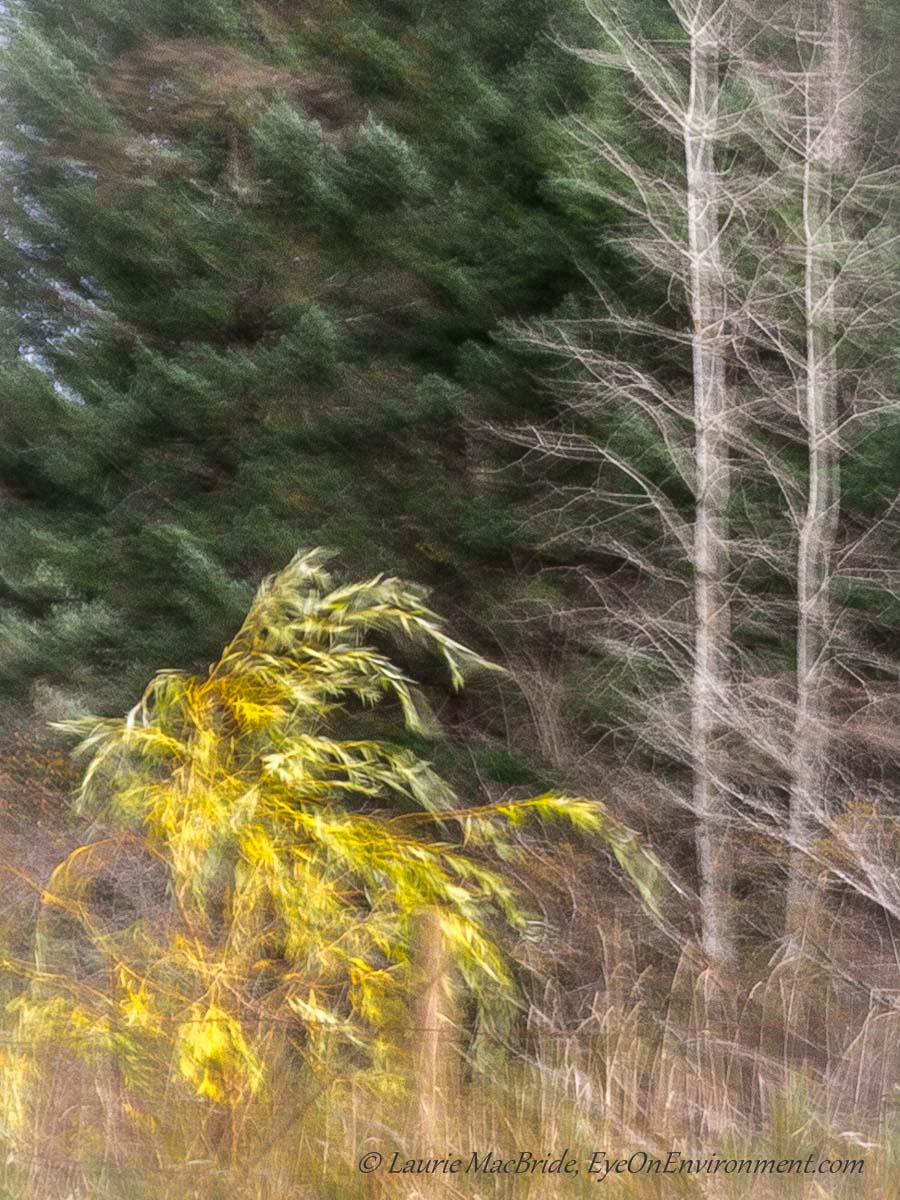
Wind in the Willow

Wind blown trees

Wind, Willow, Alders and Firs

After a month of rain and overly warm temperatures, we’ve entered into a time of cool, bright, windy days – each one, a power failure waiting to happen. But there’s an upside to this weather pattern: the sunny afternoons call me out of doors, and now that my garden chores are mostly finished for the year, I finally have some time to wander and explore.

The semi-abstract photo above is an attempt to convey my impressions of being amid all the tremendous natural energy that Mother Nature is throwing at us these days. Since I wasn’t carrying a tripod when I took this shot, a slow shutter speed wasn’t feasible. So I chose to use a bit of intentional camera movement instead, to give a sense of the wind sweeping through the weedy grasses in our overgrown lower garden, tossing about the branches of the firs, alders and young weeping willow. On such a day, everything is in motion  – including, it seems, the photographer.
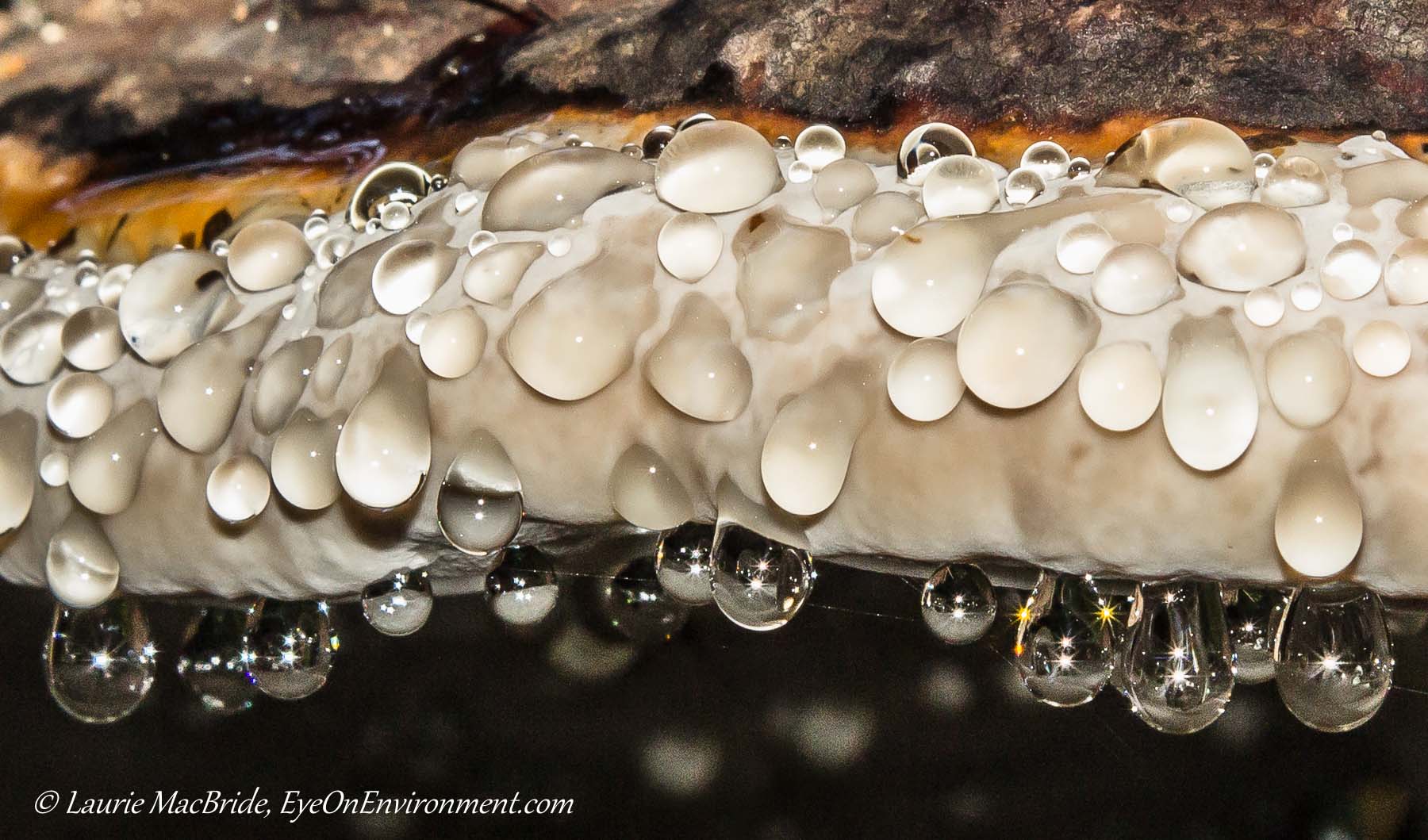
Liquid Light in the Forest

Raindrops on bracket fungus with sparkles of light in lower drops

Forest Chandelier (click to see the details – starbursts and a bit of spider silk)

The bracket fungus in this photo grows on the side of a fir tree on our property. Usually it looks rather unprepossessing, but the other day, after one of our many recent downpours, a network of raindrops clung to its edge and that ordinary bracket fungus became something very special.

It was late afternoon and as usual, I wasn’t carrying a tripod (I mostly shoot handheld). I tried a few frames using what little natural light was still filtering through the trees, but to get the depth of field I wanted while managing to hold my camera still, I needed to add some flash.

Normally I prefer natural light, but flash does serve a purpose at times. And in this case, I love the result: the repeating starbursts inside their glassy globes seem like a perfect antidote for the dreariness that comes with the short, dark days of November.

Hanging On in the Garden – Loudly

Fuschia plant with flower and fruits

Fuschia flower & (edible) fruits – click to enlarge

Normally the fuschias would be sleeping in our greenhouse or solarium by now, but this year they’re still outside, partying on. It’s because we’ve had an unusually warm fall so far: I don’t think our night time temperatures have yet dipped below 10 degrees (50 Fahrenheit).

As a result there’s been a battle raging in the garden, between the summer veggies – who just won’t let go – and the fall veggies, who are desperate to win my attention.

Every time I go into the garden to pick our dinner, I’m torn between using the summer crops while they’re still producing, or letting them go for compost and moving on to the new.

I seem to hear loud shouts from every direction:

“We may be teeny, but nothing tops zucchini!” say the summer squash.

Zucchini plant with multiple small fruit

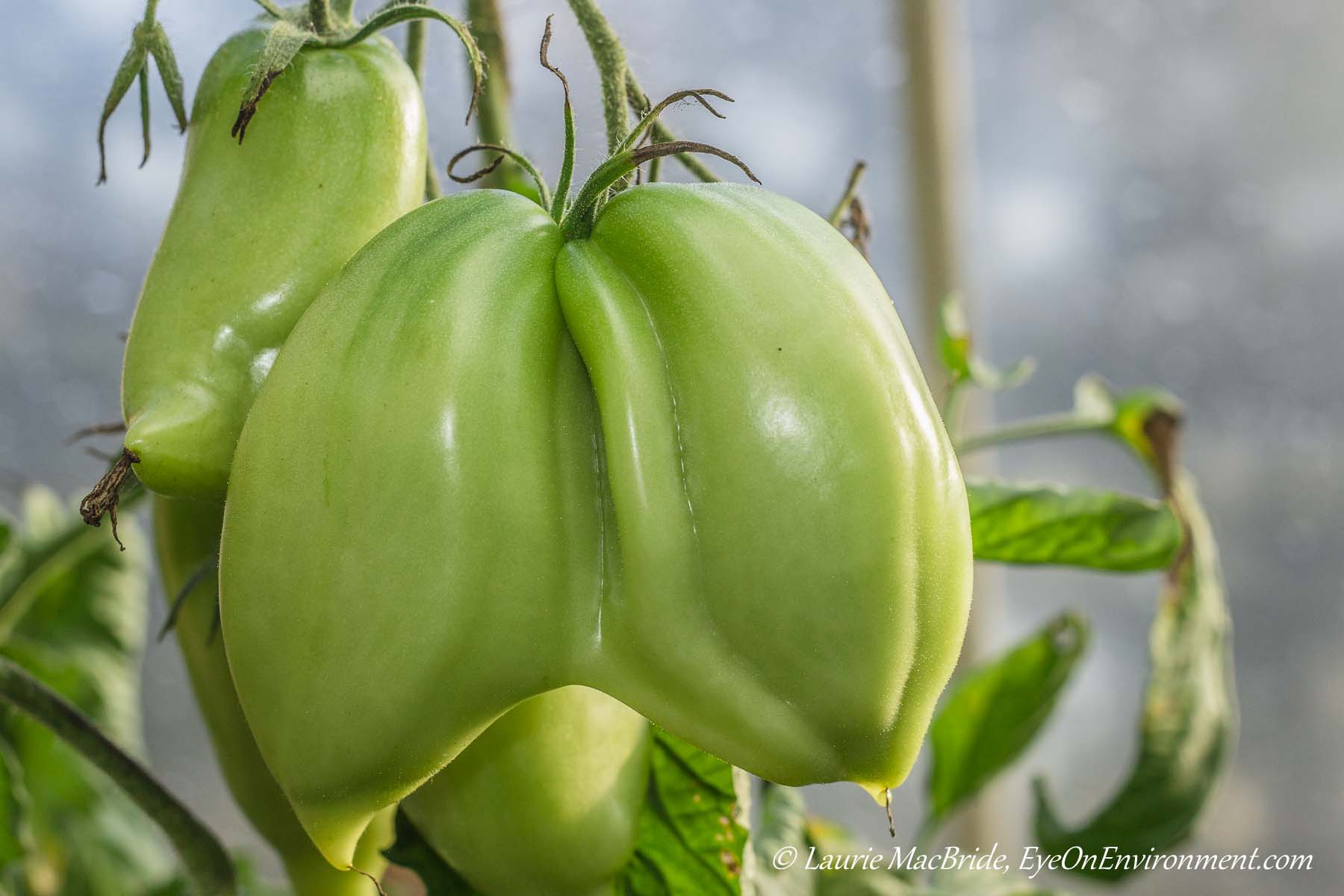
“Tomatoes unite! We’re determined to keep on growing even if we have to form a coalition to do so!” say the sauce tomatoes.

Tomatoes on the vine, with two tomatoes merged into one

“Let Us! Let Us! Let us be your dinner instead,” cry the fall lettuces, who believe we need more salad in our diet.

Rows of lettuce, ready for salads

“I admit my heads are small these days – but I’m still delicious and nutritious!” pleads the broccoli, who’s been feeding us for the past five months.

Broccoli close-up

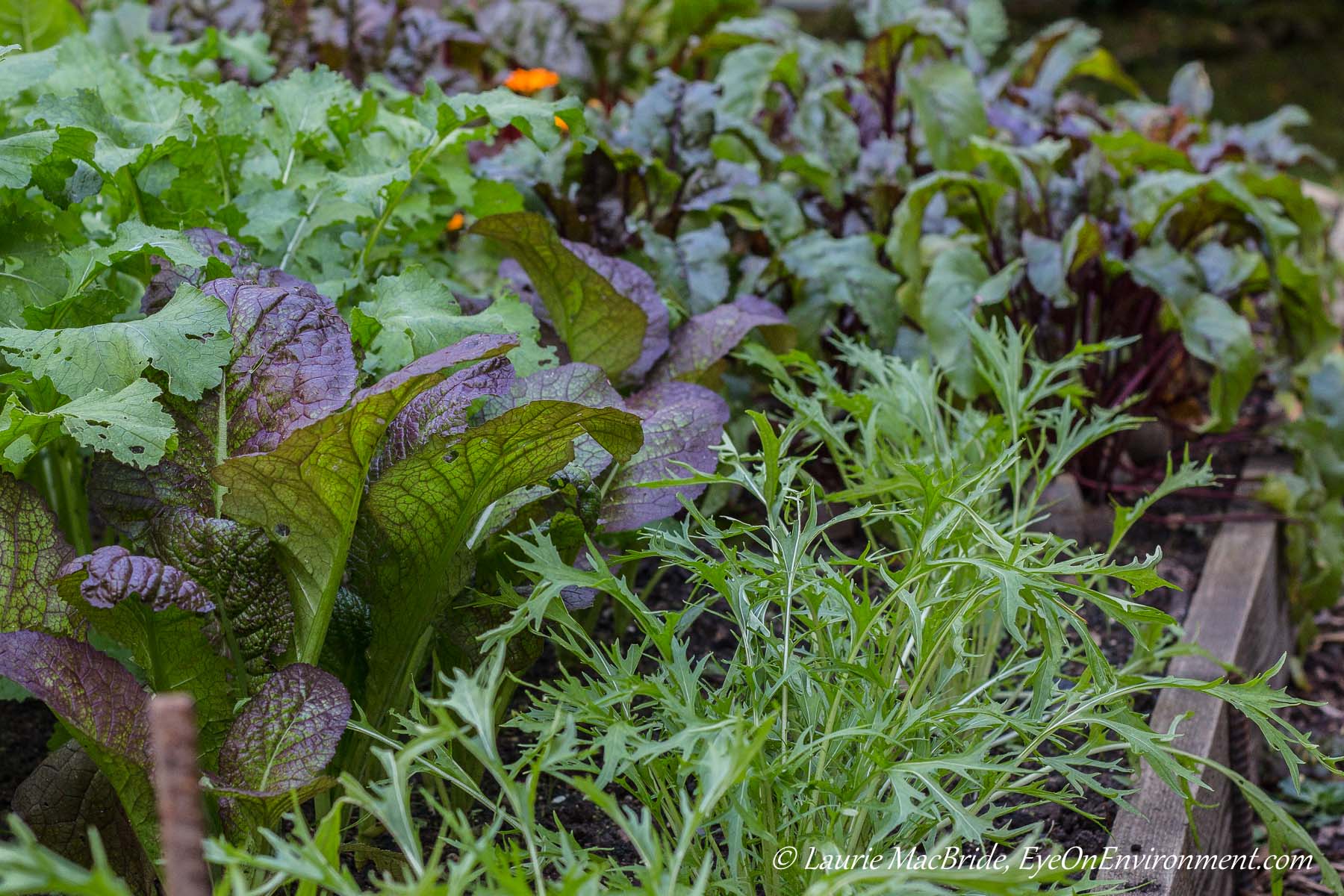
“Pick ME! Pick ME!” shout the mustard and mizuna, who have lost their patience and believe it’s long past time for a stir-fry.

Oriental greens in the garden

Meanwhile the turnips, cry out, “Our Turn! Our Turn!”

Turnips in the garden

While the beets say matter-of-factly, “Forget all those fancy veg – you simply can’t beat beets!”

Beets in the Garden

So far “summer” has tended to win out – probably because of that other, more constant voice in my head (my mother, saying “Waste not, want not”). But I’m feeling more and more pressure from those great looking fall crops that to date, I’ve barely touched. Perhaps it is indeed time for a stir-fry and some roast beets.

The Shape Shifters

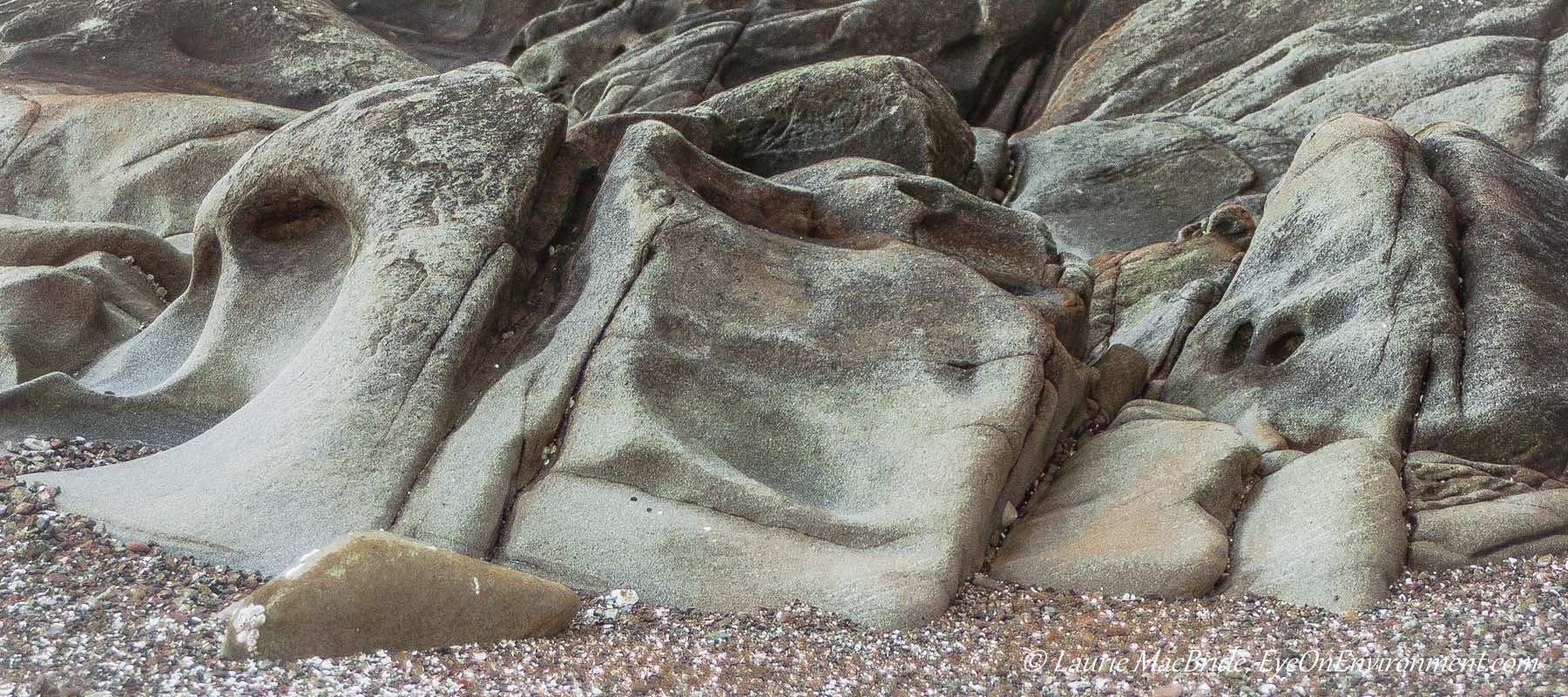
Eroded sandstone shapes on a beach

Shape Shifters in Sandstone (click to enlarge)

Maybe my imagination was running rampant that day, but when I stepped out of my kayak onto a beautiful little pocket beach, I saw what seemed like a trio of quirky faces at the head of the bay. When I looked back a bit later, they’d morphed into a large prehistoric fish looking out to sea – and by the time I left, I saw something else entirely.

But of course, that’s the shape shifting nature of the sandstone rock that dominates our shorelines here in BC’s Gulf Islands. Over thousands of years, the soft surfaces have been eroded by wind, rain, waves, sun and salt, forming an endless variety of curves, contours, patterns and textures that can launch your imagination on a wide-ranging flight of fancy. What you see in any given stretch of shoreline one day can be utterly different the next day – or even just the next minute – making the journey all the more fascinating.

Race for the Kiwis

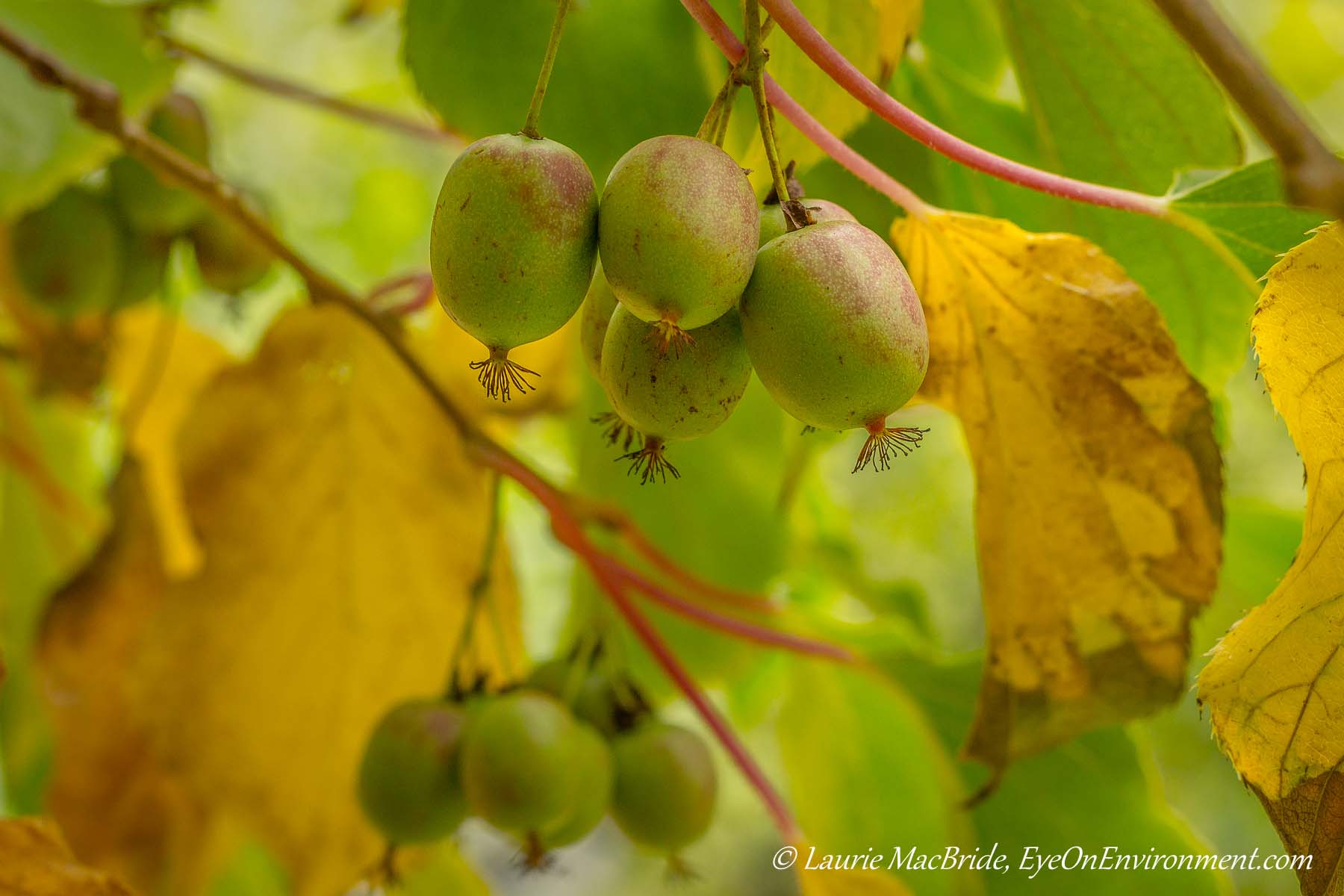
Hardy kiwis on the vine

Kiwi Time (click to enlarge)

It’s kiwi time, and the race is on.

Each September as our Hardy kiwis (Actinidia arguta) start to ripen, we begin a delicate balancing act, deciding exactly when to harvest. We want them soft, ripe and sweet, but if we wait too long, many will vanish in the night.

It’s a big job, picking 50 to 60 pounds of the grape-sized fruits, then washing and processing them. (We run them through our juicer and freeze the resulting concentrate for wine-making later on, when we have more time.)

Most of the year we love sharing our property with raccoons, pileated woodpeckers, red squirrels and all the other delightful two and four-legged creatures that live here or visit seasonally. But at kiwi time, we’re a little less charitable. Steller’s jays arrived about a week ago, and over the last couple of days I’ve seen then staking out the kiwi vines – so we’d best get moving fast.

Beaks at the Ready

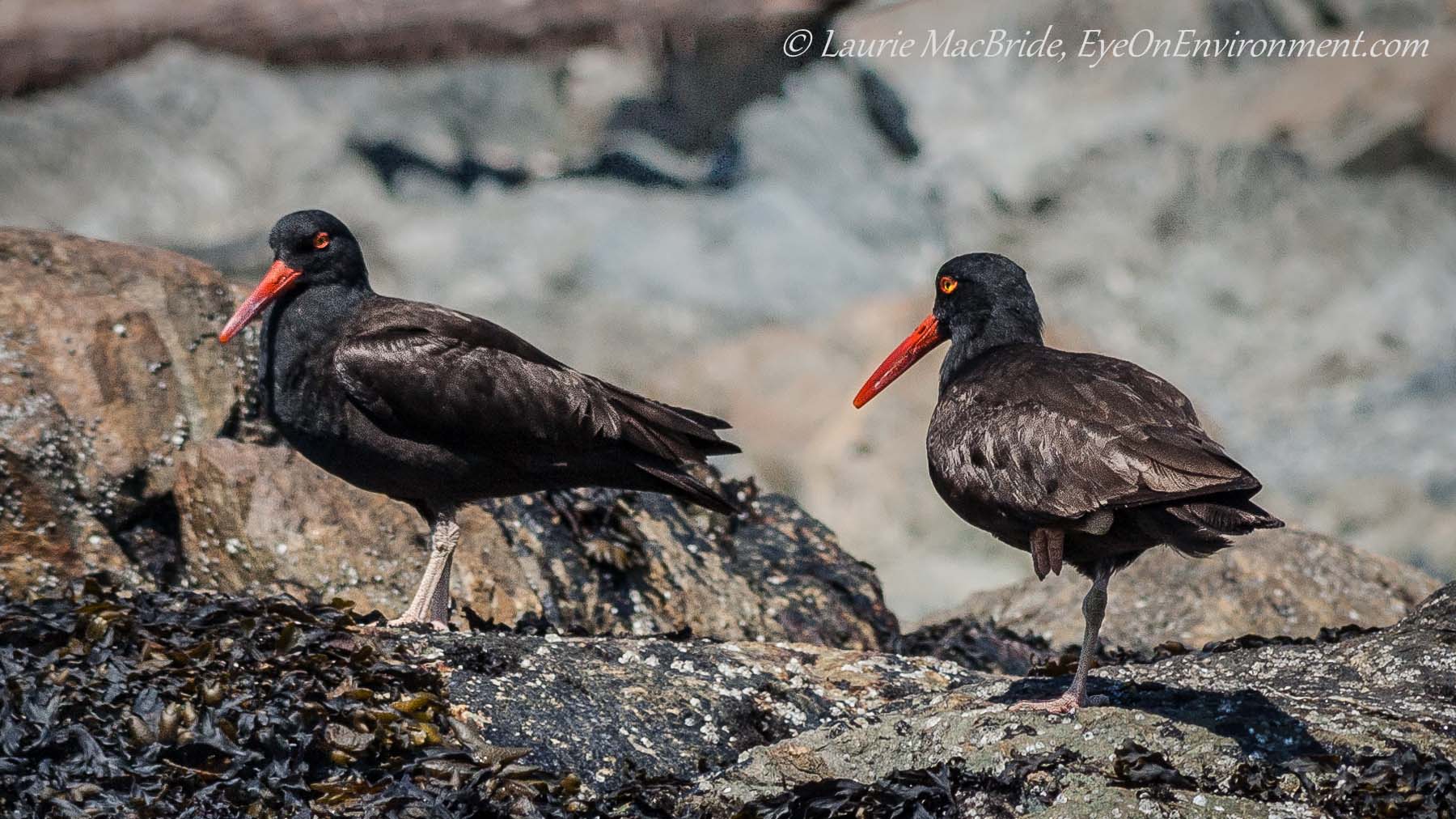
Two oystercatchers on shore

Black oystercatchers (click to enlarge)

With their gaudy orange beaks and colourful eyes, Black oystercatchers remind me of circus clowns – so I tend to chuckle every time I see one. Nonetheless, they’re beautiful birds and I love watching them, and hearing their piercing whistles.

Although almost half of the world’s Black oystercatcher population lives here on the BC coast, we see them only infrequently, usually when we’re out kayaking. During breeding season (March through August), they inhabit low rocky shores, where they lay their eggs in small depressions in the rock, barely above the high water line. Here in the Strait of Georgia, their favourite nesting sites are on small outlying islets, away from the madding crowd of other birds and beach-walking people (not to mention unleashed dogs, which pose a real threat to eggs and hatchlings).

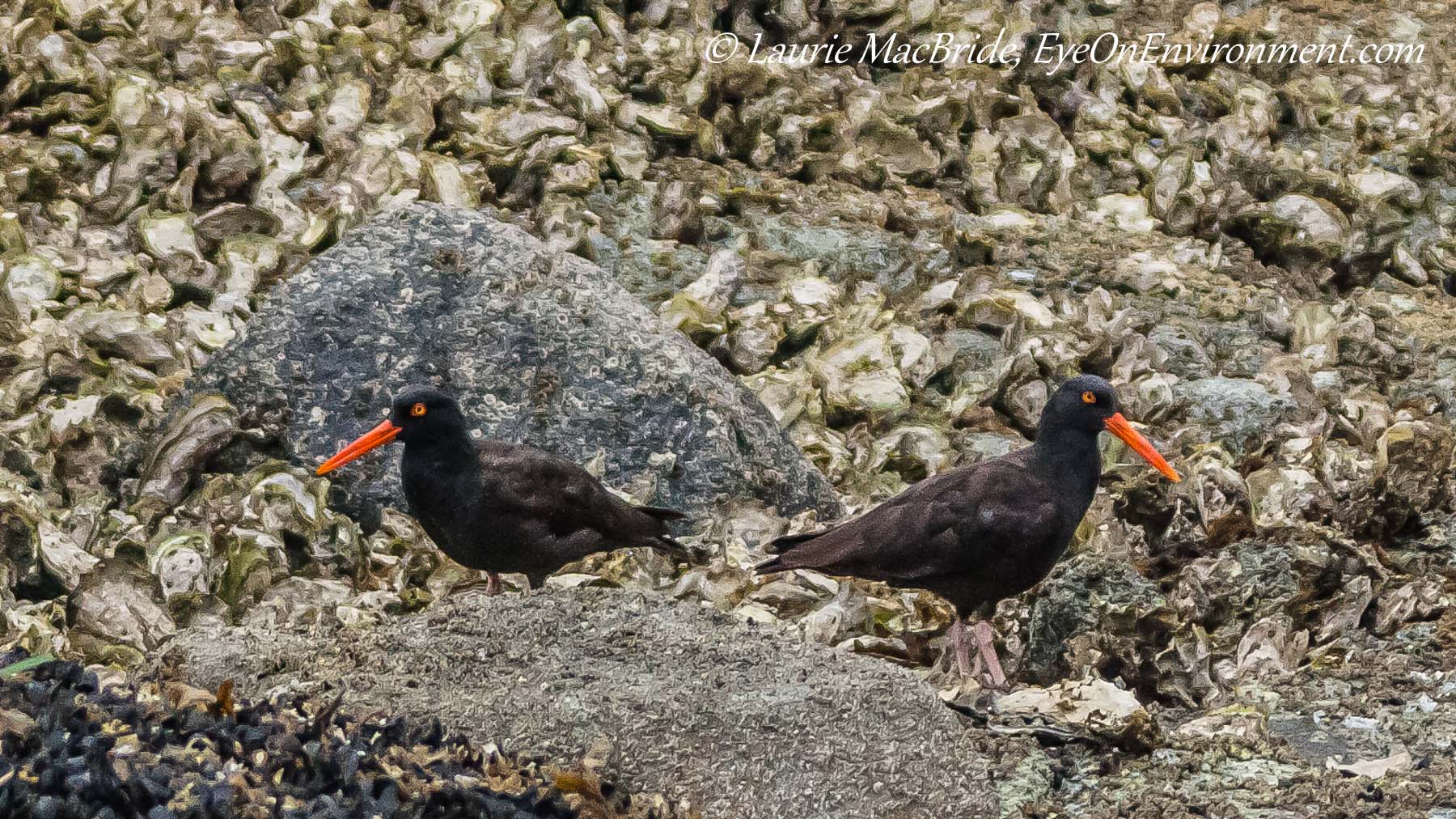
When the tide goes out, parents and fledglings alike feed in the intertidal zone, close to the water’s edge, eating mussels, limpets, barnacles, and – no surprise! – oysters, when they’re available. I’m guessing those long, pointy beaks come in pretty handy at meal times.

Oystercatchers surrounded by oysters

Oysters on the Menu (click to enlarge)

Golden Hour Geese

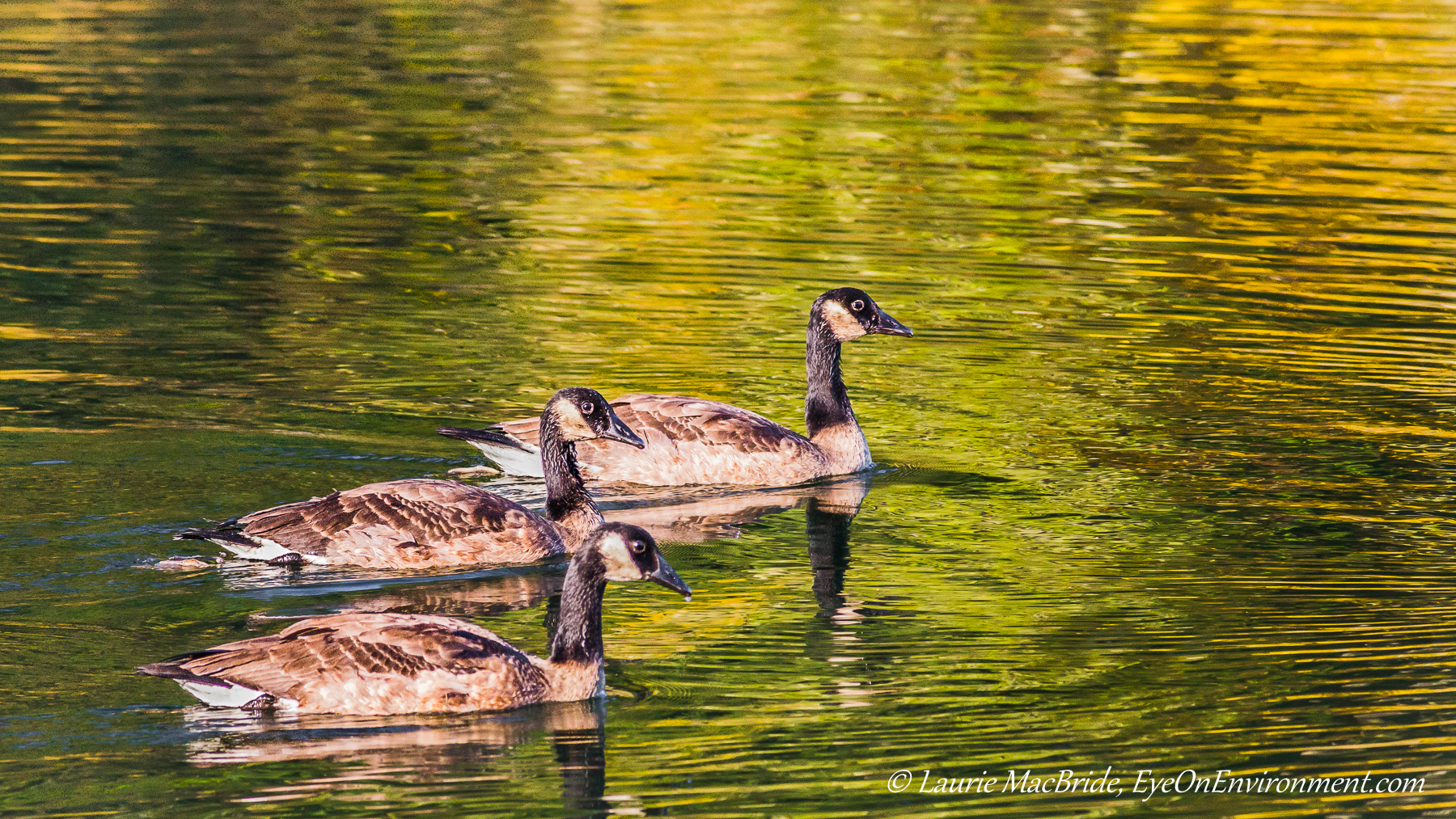
Three geese with golden light on the water

Golden Hour Paddlers: Canada geese (click to enlarge)

“Golden Hour” ends early on midsummer mornings, and I’m not the morning person I used to be (especially during vacation). So when we’re off boating, the embarrassing reality is that by the time I’m ready to set out in my kayak or dinghy for a paddling excursion or a walk ashore, I’ve usually missed those glorious opportunities to capture nature in the soft light of early morning.

But occasionally I get lucky. Early one recent morning, a skein of 21 Canada geese (including the trio in the photo above) flew into our anchorage, landing close beside our boat. It was Golden Hour, and here was nature right in front of me, ready for my camera: my favorite way to start the day.

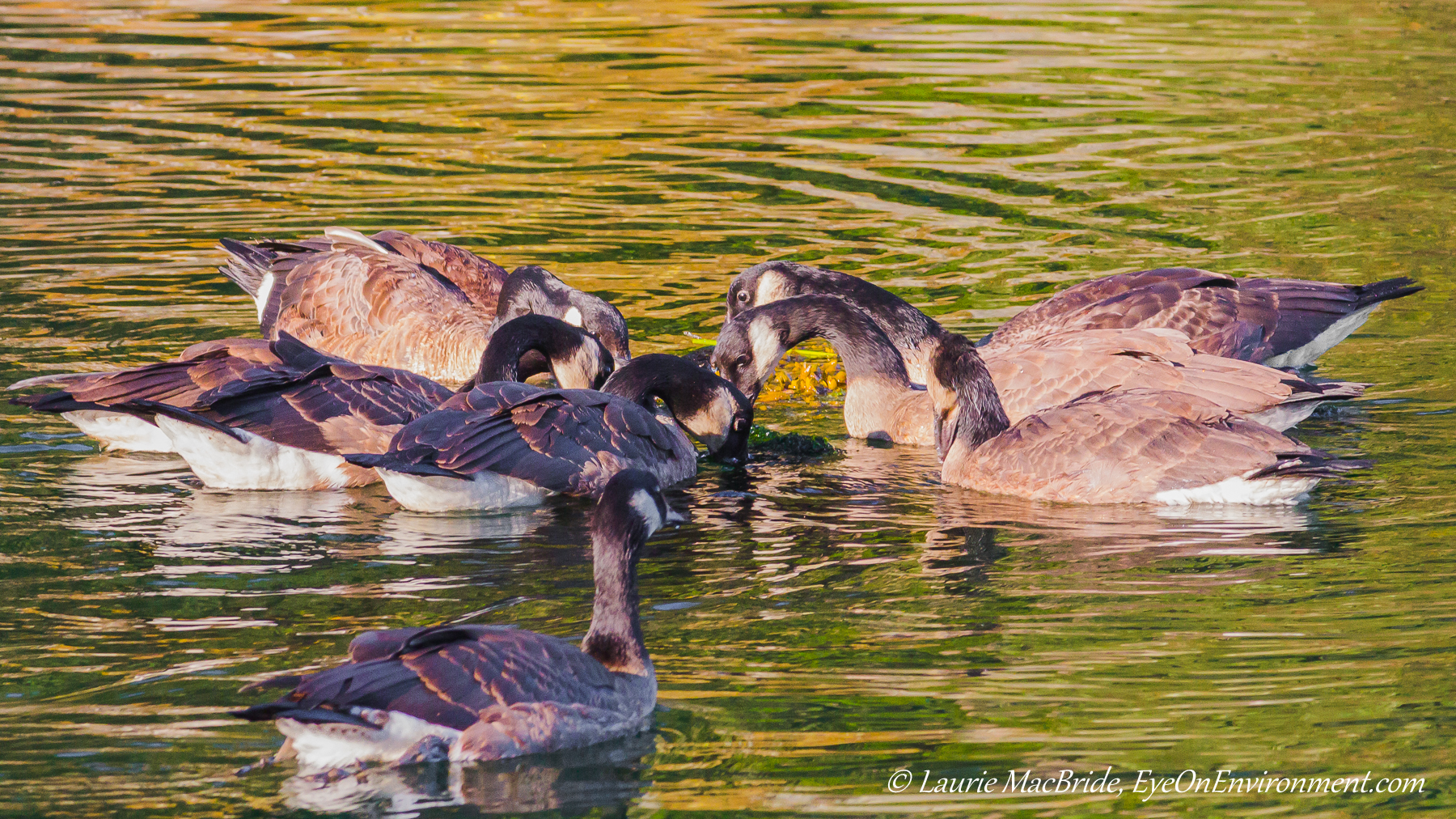
The geese stayed for a lengthy time, paddling slowly about the anchorage and stopping every now and then to share a breakfast of floating seaweed rafts (see below). I sat in the cockpit, sipping my first cup of java and watching the paddlers, who passed close by several times. The soft light around them was augmented by the reflected colours of the trees along the shoreline, making the morning seem like pure gold.

Canada geese sharing seaweed.

Breakfast Buffet: soon, all the rafts of floating seaweed had been cleaned up.

A final reminder of my photography show, “Inspired by the Coast”: 35 marine and nautical images of the BC coast, on display as mounted prints (available for purchase), at Silva Bay Restaurant & Pub on Gabriola Island. Ends September 7, closing day for the restaurant & pub. 

Mother Nature’s Art Gallery

Kayaker looking at rocky island shore

Mesmerized: off Reid Island (click to enlarge)

The shoreline can be mesmerizing for paddlers here in the Gulf Islands.

Everywhere you look, there’s a fascinating new canvas of layered and eroded sandstone decorated with mosses, lichens and – as the tide drops – endless permutations of kelp, barnacles and other intertidal life.

And if you let your imagination drift, you can often conjure up strange human or animal faces, like the grimacing pirate I saw on Reid Island, in the photo above. Maybe you can see him too – or maybe you’ll see something else entirely!

With so much to look at, it’s no surprise that many kayakers seem to spend a lot of time simply floating, with their paddles resting on their boats. After all, who needs to reach any further destination, with Mother Nature’s art gallery right here in front of you?

My photography show, “Inspired by the Coast”, continues until September 7 at the Silva Bay Restaurant & Pub on Gabriola Island  (34 mounted prints in the main room, foyer & family room). Open every day, so if you’re on the Island please drop by to have a look.