The Trickster Goes Flower Picking

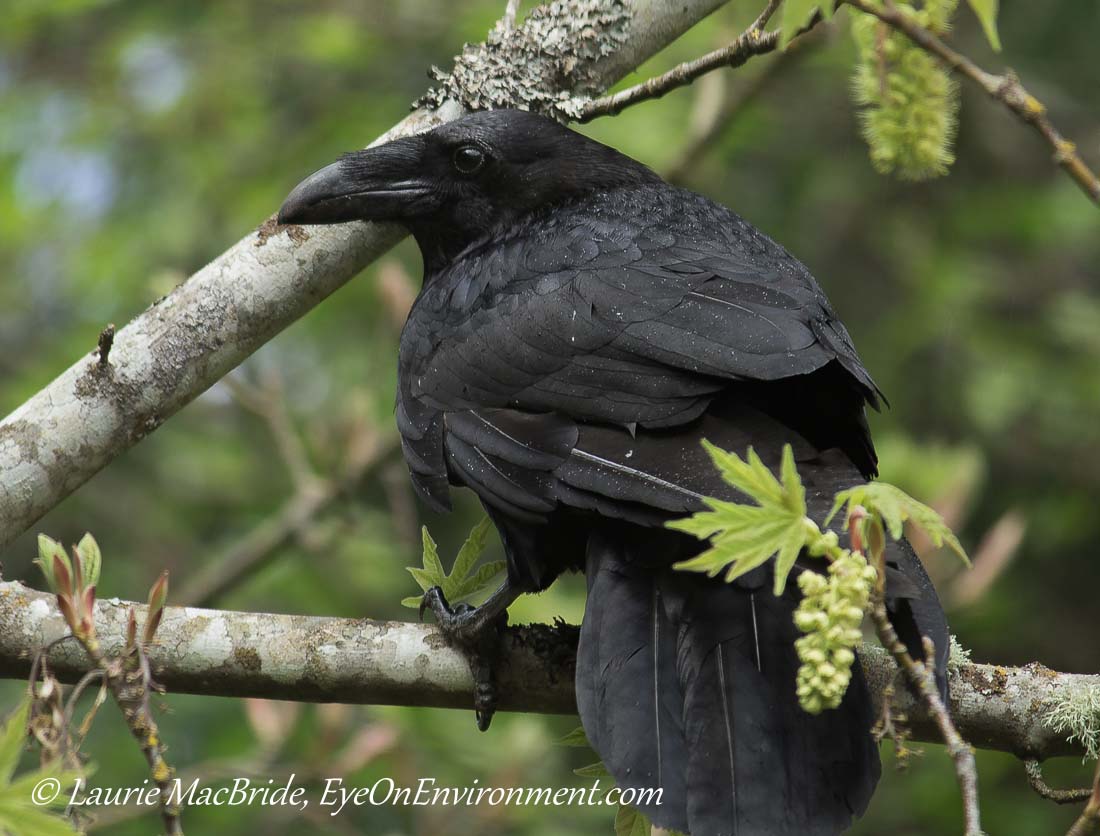
Raven in a tree

The Trickster (Common Raven) – click for larger view

We live among ravens. Day in, day out, the raucous calls, mechanical-sounding “toc” notes and powerful wing swishes of these large birds punctuate our soundscape.

The raven was known to First Nations people as The Trickster, for good reason. This bird lives for up 40 years and has a wide range of vocalizations, from the gentlest “coo” to the harshest “kraak’, and everything in between. Ravens mate for life and often the pair will work together to snag a meal, one bird serving as decoy, the other as bandit.

Over the years I’ve watched these birds extracting treats from compost bins, flying along over top of fast moving cars when interrupted from a roadside meal, soaring overhead in amazing aerial acrobatics, and gathering in great mobs to raid apple orchards. But never, until a couple of weeks ago, had I seen a raven picking flowers.

I was in the kitchen when I noticed flowers falling from our Big Leaf maple tree and landing on the patio. At first I thought it was the wind, but there was barely a breeze. When the flowers kept coming at regular intervals, I figured Squirrelly must be at work. I hadn’t seen him (her?) for awhile, so I went to an upstairs window for an eye-level view.

To my surprise, the flower picker turned out to be a raven, moving about the branches, picking large flower stems and dropping them to the patio below. Was this a form of play? Was he trying to impress his lady love? I saw no indication the bird was eating the flowers, and I couldn’t imagine they would make useful nest building material, so I was at a loss to know what was going on. But then again, it was The Trickster, after all.

Raven holding maple flower stem in beak

Trickster’s Bouquet – click for larger view

If you enjoyed this post you might also like:


Lilac Lemonade

Close-up of lilac blossoms

Lilac Dreams

When life hands us lemons, we’re told to make lemonade. So what do you do when nature knocks down your beloved lilac tree? You fill the house with flowers, make photographs, and feed your friends!

We awoke last Sunday morning to a changed view from our living room window: an open vista where the lilac tree had stood. Overly tall and top heavy with blossoms, its two largest trunks had fallen over during the night in the heavy rain and wind.

In retrospect, I realized we should have been pruning more heavily over the years instead of letting it grow so tall. Hindsight is wonderful, right?

So what to do with that tangle of trunks, branches, leaves and blossoms?

The smaller of the two fallen trunks was unbroken, so we propped it up and covered its roots with a thick mulch of compost, and we’re keeping our fingers crossed it might survive. Once the flowers fade, we’ll cut it back radically and hope for the best. The larger trunk was a write-off, so I cut off enough flowering stems to fill every vase I could find. Our house has had a glorious scent this week! And of course those blossoms make good subjects for closeup photography.

Solo, our two-year old black-tailed deer, has been taking care of the mess. Over several days, we’ve dragged branches out to our unfenced lawn, where he’s been enjoying a feast of flowers. Although lilac are included in both of the “deer resistant” plant lists in my gardening library, it turns out that this young buck really does love those blossoms.

If you enjoyed this post you might also like:

Feeding Frenzy

Male House Finch feeding a flapping juvenile on a bird feeder

Keeping Daddy Busy (House Finches) – click to enlarge

Birds are incredibly busy at this time of year, and no bird seems busier or more harassed than some of the House Finch fathers that we see around our bird feeder.

Imagine having several large teenagers following you around from dawn to dusk, complaining loudly and constantly about how hungry they are – and insisting that you spoon-feed them.

That just about sums up the life of these overworked parents in May. I expect that when they fall asleep at night, they dream of those gaping maws and that incessant cheeping – and feel thankful that these darling little squawk boxes grow up quickly!

If you enjoyed this post you might also like:
A Weekend with Surf Scoters

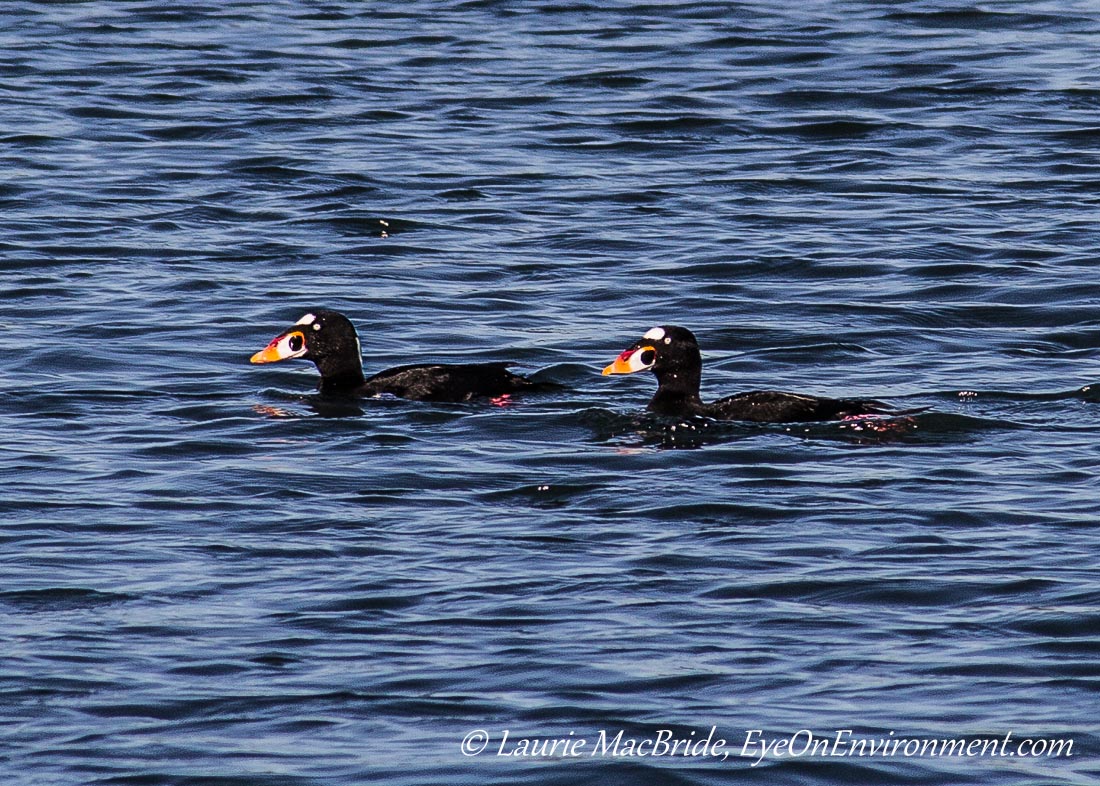
Two male surf scoters

Dapper Duo: male Surf Scoters (click to enlarge)

Earlier this spring we spent a couple of days on our boat, anchored in one of our favorite little places – not far from home, but enough distance to feel “away”. I expected a quiet time, but the Surf Scoters had something else in mind.

These sturdy, highly social and decidedly odd-looking sea ducks were constantly on the go: feeding, diving, surfacing, displaying their plumage, and taking to the air en masse for frequent, short flits about the bay. Skimming along just above the water, the flock’s rapid wingbeats created an eerie, wavering trill not unlike the ululation you might hear at a Middle Eastern funeral. What an amazing show! (More photos below.)

I’ve often seen large flocks of surf scoters feeding on mussel beds in the Gulf Islands in the winter and early spring, but always at a distance. Apparently they’re elusive enough to be one of the least studied of all North American waterfowl. So seeing them all up close, over two full days, was a rare treat.

They were probably feasting on herring eggs, and enjoying their last hurrah here in our area. By now most of them are likely winging their way up north, to the lakes and wetlands of the boreal forests and tundra, their prime breeding habitat. I’ll look forward to their return in the fall.

More photos: mouse over to see the captions; click on any image to view in larger, slideshow format. 

If you enjoyed this post you might also like:

The Lovely Couple, Part Two

Male mallard duck on a lawn, close up

Donald, on Guard (click to enlarge)

Earlier this week I introduced you to our friends Donald and Daisy Mallard (click here if you missed that post).

As promised, here are two more photos of the lovely couple during one of their exploratory waddles around our yard, and an update on their comings and goings.

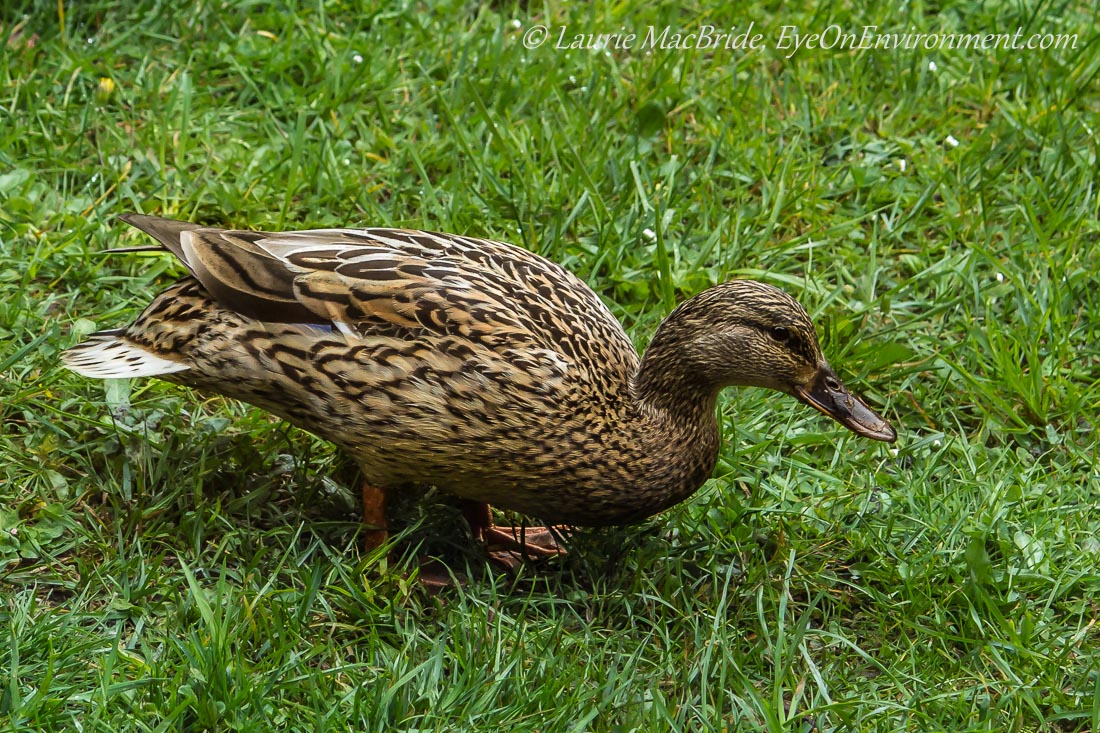
You’ll notice that Donald is vigilant, while Daisy’s focus in on the ground, searching out all potential edibles. I took the photos from inside the house, where I was cheering her on – the more slugs she swallows, the better our garden veggies will fare!

Female mallard on lawn, looking for slugs or other edibles.

Daisy, on Slug Patrol (click to enlarge)

Donald hasn’t been back since the day I took these photos. Daisy has come on her own a few times but her visits have been very brief – a fast trot and gobble, a very brief bath in the pond, a quick shake-off on the bank, then she’s flown off into the woods.

What this means is that ducklings might be on the way again this year. According to my bird reference books, during the time that female mallards incubate their eggs, the males gather elsewhere, to go through their annual molt. So Donald is perhaps at the big pond a quarter mile or so up the road, hanging out with the guys and looking a bit scruffy – while Daisy’s in a big hurry to get back to the nest, which is presumably somewhere in our woods.

We’re keeping our fingers crossed and eyes peeled for some fluffy little bundles.

UPDATE, April 29: The ducklings have arrived! No photo, alas, but we spotted half a dozen little fluffballs early this morning with Daisy, having a brief paddle about the pond before waddling off, back into the woods. If the experience of previous years holds true, we won’t see them again – one sighting only has been the rule each year. Nevertheless, we’re thrilled!  

In other (unrelated) news: I have a guest blog post & new photo on the Gabriolan.ca site. Please hop over and have a look – you’ll find it here.


A Little Help from our (Duck) Friends

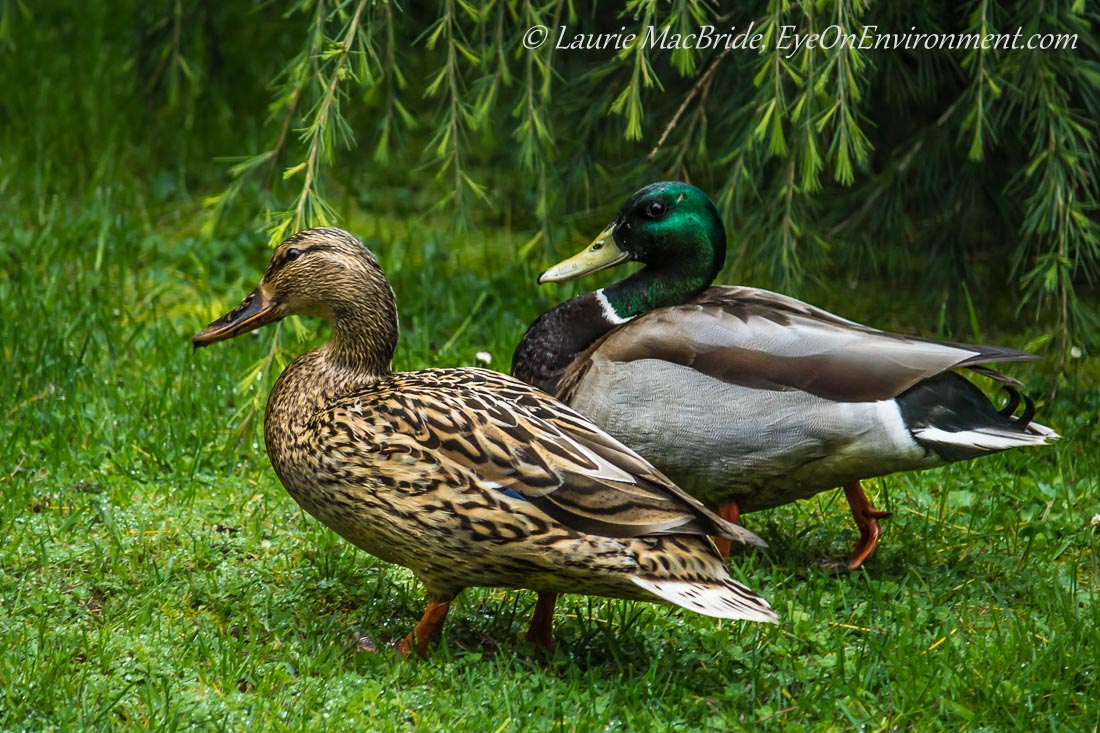
Male and fem.ale mallard ducks

The Handsome Couple on a Stroll (click to enlarge)

Aren’t they a great looking couple?

Donald and Daisy Mallard visit from time to time each spring. They drop straight down from the sky and land in our little pond  with a pronounced splash – quite startling if we’re out in the yard and hadn’t noticed their sudden arrival overhead.

We enjoy watching them paddle about, take a bath and sun themselves on the gravel bank. But it’s even better when they leave the pond for an exploratory waddle around our garden and house.

There’s usually some good eats to be found under the bird feeders, so that’s part of their circuit. Fortunately for us, they don’t just stop there.

Daisy’s more-than-healthy appetite keeps her on the march, her beak always busy: probing under the edge of the rocks around the edges of the garden beds, taking fast jabs at the lawn, and tipping her head back to swallow down what looks to be an endless supply of little morsels. (See photo below.)

I can’t be sure, but I like to think that she’s on “slug patrol”, helping to put a dent in the veritable army of slugs that invade our place every spring. If so, she’s truly a gardener’s best friend.

Meanwhile, Donald is ever vigilant. I’m not sure when he eats – certainly not when they’re on a waddle. He follows closely behind Daisy, looking around constantly for any potential threats. He’s Daisy’s bodyguard, and a darn good one from the look of it. Ah, true love!

Male mallard duck guarding while female eats from lawn

Daisy dines while Donald guards

These photos were taken from inside the house, looking out our dining room window. I’ll post a couple more in a few days.

If you enjoyed this post you might also like:

If you are on Gabriola Island this weekend, don’t miss “Flight of Fancy”, the Gabriola Photography Club’s spring show & sale: Sunday, April 28, at the Rollo Centre, 12 noon to 4 pm. See you there! 

The Pull of Two Worlds

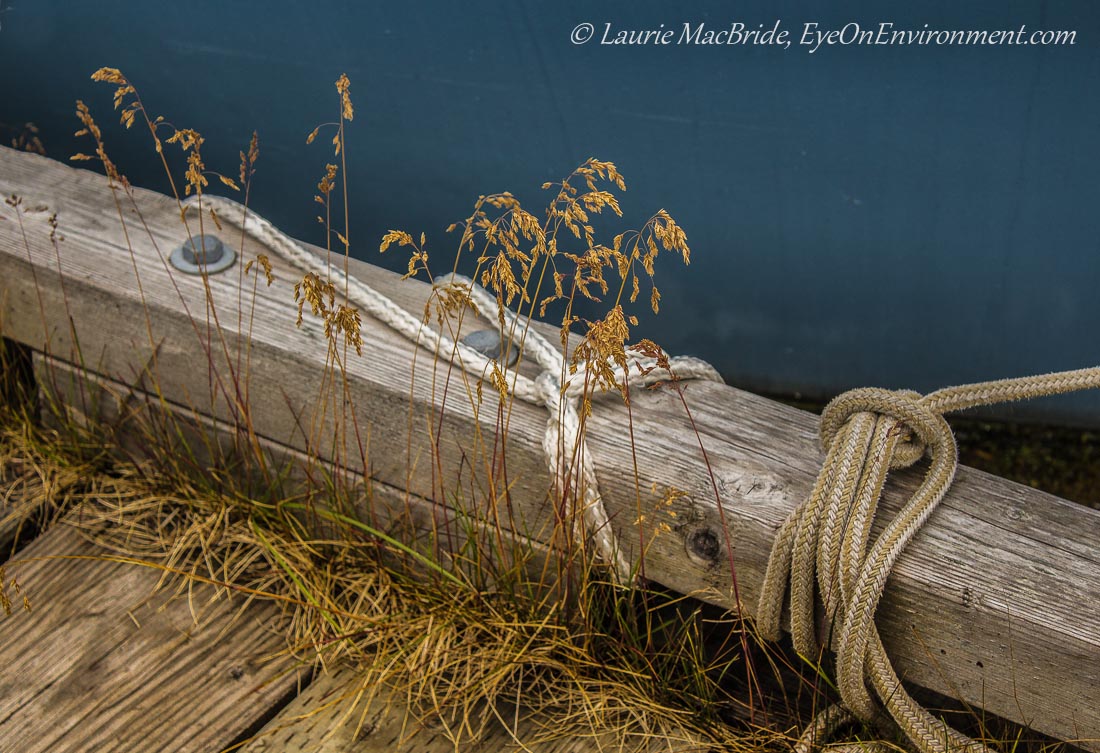
A dock with ropes tied to it and grass growing on it, and the water beyond.

The Ties that Bind – Land and Sea

This image, taken last summer in Port McNeill, seems to sum up the way my two worlds – land and sea – bump up against each other and compete for my attention.

Every spring and summer I am torn between the two. One half of me is tethered to the land, wanting to be home in the garden…the other half is casting off the lines, wanting to slip away to explore the BC coast. Both worlds pull at me, in a dichotomy I’ve felt for most of my life.

For the past five summers the sea has won out, and we’ve gone boating. This summer it’s time for the land to win a round, so we’re staying home. I’m looking forward to warm days, dinners on the (land-locked) deck, hammock time and fresh garden veggies.

Of course, living on an island, the sea is never far away, so hopefully I’ll get out on the water now and then. And if that proves difficult, some vicarious boating should be easy enough, since I still have plenty of photos from recent summers afloat to process…perhaps you’d like to “come along”?

If you enjoyed this post you might also like:

Keeping the Buzz Alive

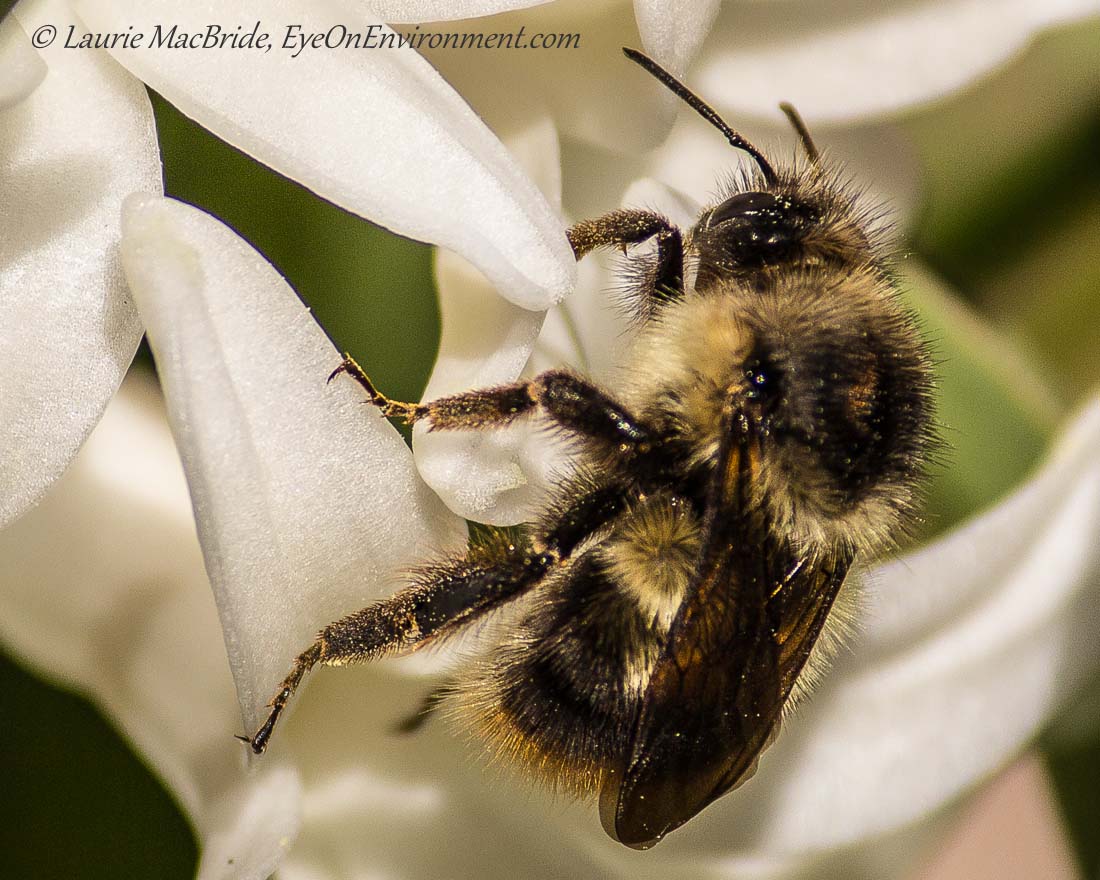
A bee pollinating a hyacinth

Bee on the Hyacinth

Ah, the marvelous scent of hyacinths, and the dreamy buzzing of a languorous bee. What a great combination!

I love it when the bees appear each spring.  It gives me hope – for a healthy harvest here at home, and for our planet.

Bees are hard working and much needed by every one of us: globally, they pollinate three quarters of the foods we humans eat. Without them our plates would be pretty empty. So you’d think we’d respect and honour these little critters, out of our own self-interest if nothing else.

Yet around the world, bees are in trouble. One of the main culprits appears to be a class of pesticides called neonicotinoids, or “neonics” for short (which incidentally, also look to be harming birds).

Neonics are used to treat seeds and plants for home gardens and commercial agriculture, as well as lawns, termites and fleas. They persist in the soil for years, permeate the whole plant and come out in the pollen and nectar – even in dew drops. And bad news for humans, they can’t be washed off our food.

So what’s a person to do? We can buy certified organic food (especially when buying corn or soybean products). Gardeners can choose organic seeds and plants – untreated with pesticides – and use only organic growing methods. We can plant herbs and flowers that bees enjoy:  look particularly for blue, purple or yellow blossoms.

The Bayer corporation is heavily involved in neonics, so there’s also a step you can take even if you’re not a gardener or farmer: replacing your bottle of Bayer Aspirin with generic ASA. And while you’re at it, check if your dog or cat’s flea treatment contains imidacloprid, the most widely used insecticide in the world (and Bayer Crop Science’s largest seller).

We can also take heart from the fact that change may be in the works. Despite an intense industry lobby, European leaders are pushing on in their bid to win a ban* on three major neonics used in seed treatment, and in the US, the government is being sued by beekeepers and public interest groups for failing to protect pollinators from neonics. (*Update, April 30, 2013: Great news – the ban has now been adopted by the European nations. This is the world’s first-ever continent-wide ban and a landmark victory for environmental campaigners!)

In the meantime, how about going outside to watch and listen to those beautiful bees at work? It’s guaranteed to bring on a case of the warm fuzzies.

If you enjoyed this post you might also like: