Reflections on the Origin of Totem Poles

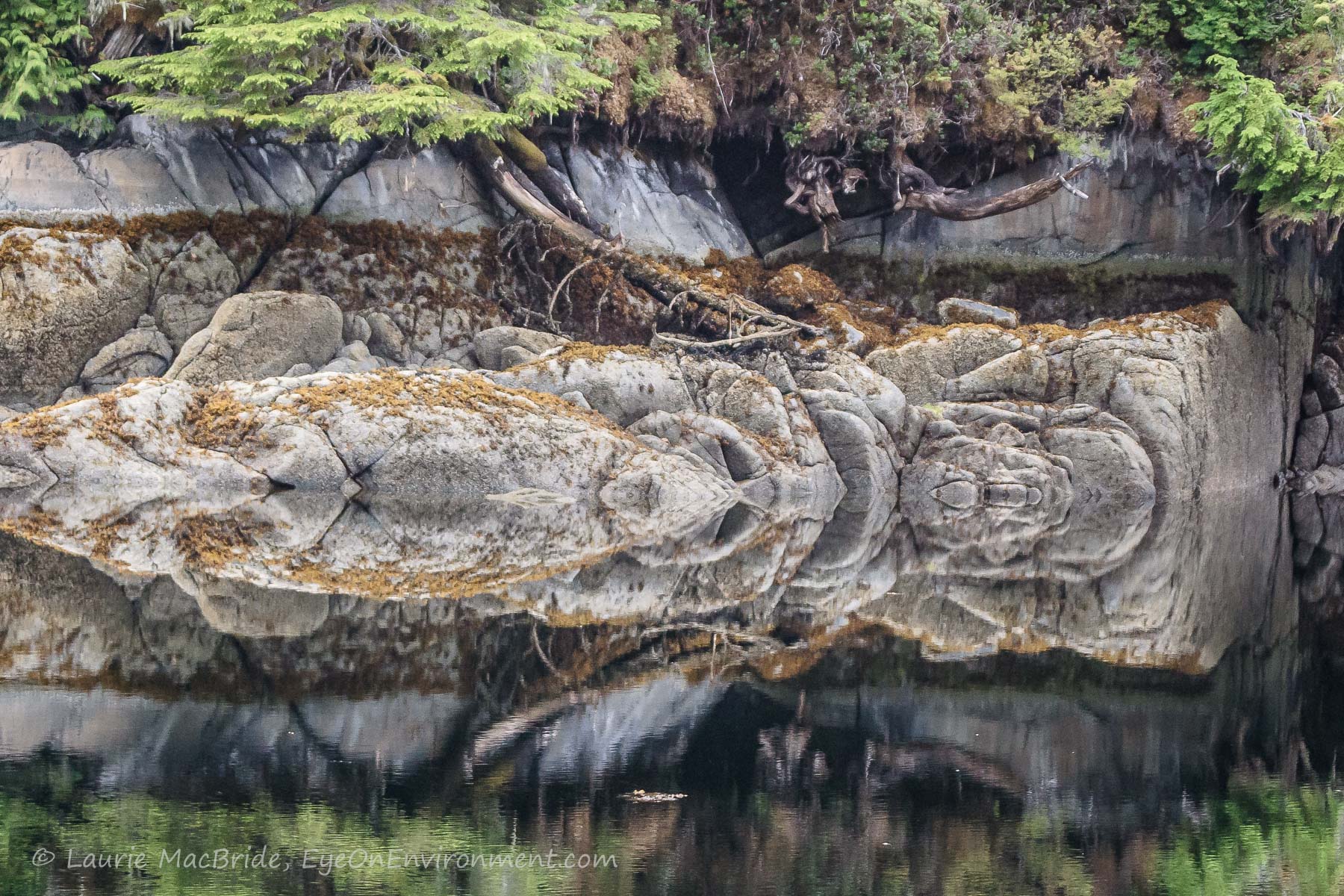
Face-like shoreline reflected in waterStill of Morning, © Laurie MacBride

Early morning aboard a boat can be a wonderful time, especially when you’re anchored in a quiet spot. Before the daytime breeze starts to ripple the water’s surface, you can find an infinite variety of animal and human faces and recognizable shapes in the reflections around the shoreline.

I’m convinced that the symmetry of these images must have inspired the earliest west coast aboriginal artists: just turn the reflections on their sides, and you have natural totem poles.

I took the photo above at Fish Egg Inlet on BC’s Central Coast.

Here are a few more west coast shoreline photos – can you see the “totem poles”? (Click for larger view.)

Totemic shoreline reflection

Totemic shoreline reflectionsTotemic shoreline reflection

Totemic shore reflection

The photo at the top of this page, “Still of Morning”, is available as a mounted print or as a greeting card – please contact me if you’re interested.

Ready for Liftoff: Barn Swallows

Barn swallows photo

It’s a delight to watch young barn swallows when they’re first learning to fly. Though initially awkward, they’re extremely quick learners: within a few days of fledging, they’re expert enough flyers to pluck their meals of insects from midair – and within a few weeks, they manage to fly all the way to Central or South America with their parents.

Barn swallows also very fast fliers: they’ve been clocked at 46 mph (74 km/hour).

I took this photo on an August afternoon in the village of Hartley Bay, when we were visiting on our boat. The young swallows were perched rather tippily on a power cable, seeming indecisive about what to do next, while their parents swooped by, landing occasionally to offer a tasty morsel or perhaps a nudge to get the youngsters moving.  By climbing onto our top deck I was able to get a “birds-eye view” of their antics. They seemed to having a conversation that went something like: “You go first!” “No, you!”

An hour or two later, they were fully airborne, with no looking back. And by now they must be enjoying the warm temperatures in the southern hemisphere. I woudn’t want their gruelling travel schedule, but it must be nice to have summer all year round!


If you enjoyed this post you might also like:

How to purchase this photo

West Beach: A Walk Worth the Wait

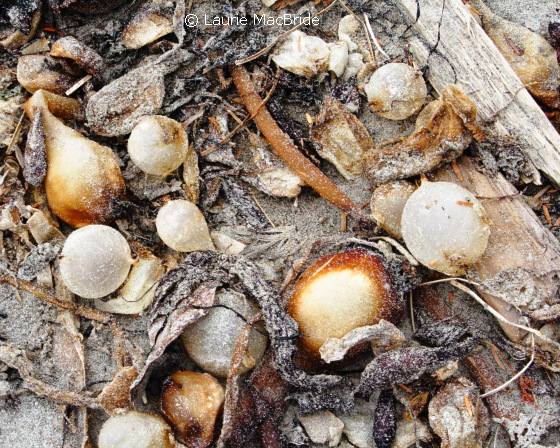
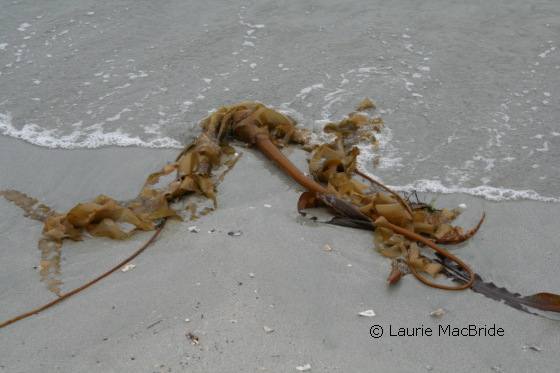
At Calvert Island’s West Beach on BC’s Central Coast, the pounding waves and raw energy of the Pacific Ocean have ground the sand fine and cast up all manner of  flotsam, including these bull kelp bladders. With their bulbous shapes and frosting of sand, they remind me of Christmas ornaments.

Our visits to West Beach have been welcome highlights when we’ve been boating along the Central Coast. Most of the shorelines in that part of the world are steep and afford no walking opportunities, except for estuarine areas, which happen to be prime grizzly bear habitat. So for exercise we tend to go paddling – limiting our shore time to brief lunch stops in those instances when we can find flat enough spots to land.

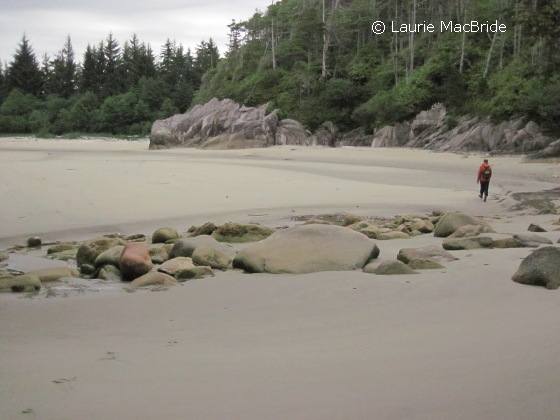
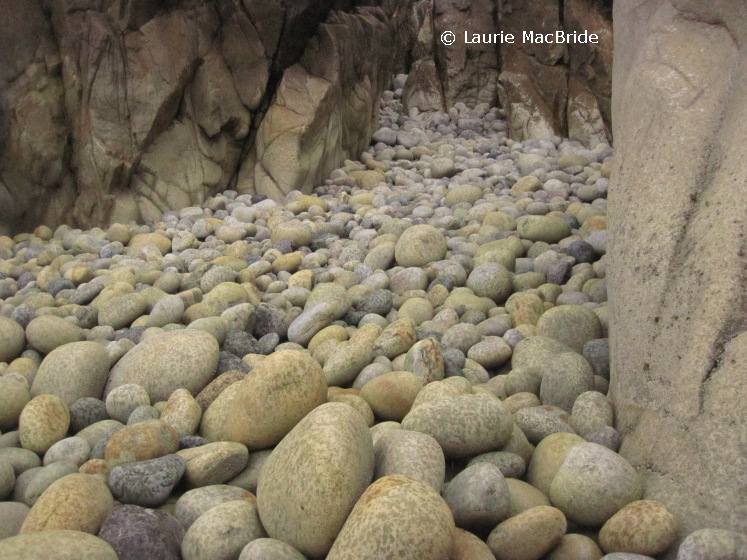
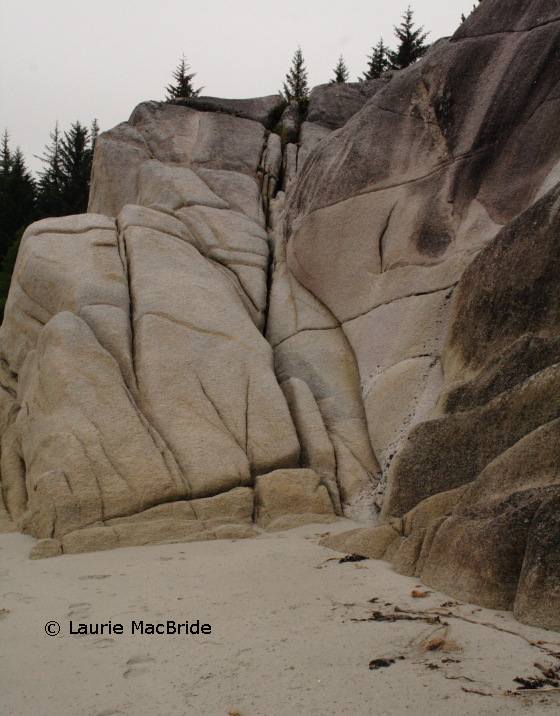
After many consecutive days aboard the boat our legs are itching for movement, which is one reason West Beach is so special. A short but lovely trail, partly boardwalk, leads from the sheltered anchorage at Pruth Bay through the forest across Calvert Island (thankfully a grizzly-free zone) to its wide open west side. There, the long stretch of white sand is edged by dunes and weather-sculpted cliffs and the walking is wonderful. In addition to the long stretch of open beach which makes you want to kick up your heels and run, at low tide you can wander through the gaps between cliff faces, pass beside a veritable sea of boulders and get a great view of the abundant marine life in the tide pools. The last time we were there, we saw fresh wolf tracks in the sand.

The weather has been overcast with a few drops of rain whenever we’ve been there, but that hasn’t dampened our enthusiasm for West Beach one iota. It’s a great place for beachcombing: natural treasures abound, all frosted by the fine coating of sand that’s delivered relentlessly by westerly winds and waves. Although I’ve only been there in summer (or what passes for “summer” in that part of the world), West Beach has had a “Christmasy” kind of feeling for me, thanks to the brightly frosted bulbs and garlands of kelp that decorate the beach – along with the very specialness of any day spent in such a wonderful place.

A few other images from West Beach and Calvert Island – click for larger view:
Castaways West Beach Walk Boulder Alley
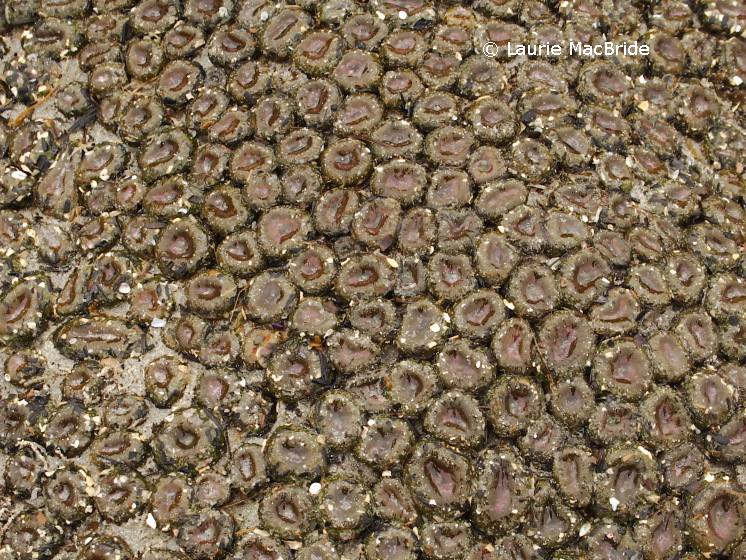
 Colonial Life (Anemones) Sand Wrapped Stranded
The Getaway Boulder Alley (detail) Creased by Time

If you liked this post you might also enjoy:

It’s All in How You See It

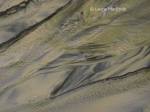
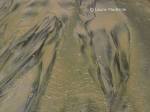
This photo and the ones below are from a series I did at Duncanby, in Rivers Inlet, in the summer of 2011.

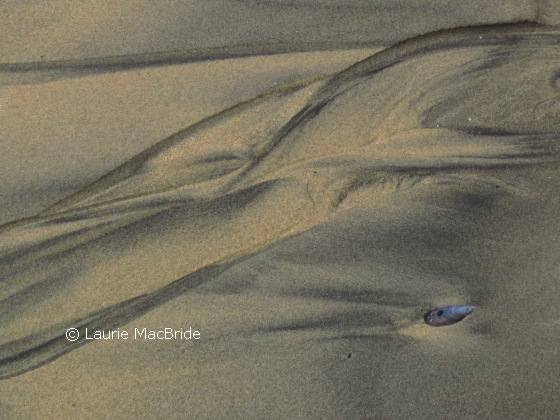
It had been raining for days, making everything grey and sodden, and to add insult to injury, the weather forecast that evening said a storm was on its way. But the clouds parted for a brief while, and so we hurried up the dock to stretch our legs before the dark and wet closed in on us.  As we reached the shore, the low-angle light revealed what the falling tide had left behind: a network of miniature rivers, channels and valleys, highlighted by varying colour sediments and shells dotting the sand—bringing the tiny beach alive with a beauty that took my breath away.

We shared the little stretch of shoreline that evening with a woman and her miniature dog. They were there to relieve not only the pooch’s bladder, but the owner’s boredom at being cooped up aboard her boat for so many wet days. She was eager for distraction and struck up a conversation with my husband.

In the meantime I was trying to capture the intricacies of the designs in the sand – no two alike and all of them fascinating – and found myself in a race against the unleashed dog. Eager to explore every inch of beach, the mutt was leaving a trail of footprints in the wet sand that threatened to derail my project. So I had to stay focused and work fast to keep ahead of him!

At some point I overheard the woman ask my husband, “What in the world is your wife doing?” She seemed surprised that anyone could be so absorbed in pointing a camera repeatedly at that little sweep of sand. Clearly, although we were in the same place, we each saw a very different beach that evening.

More from my Duncanby series – click for larger view:

After the Ebb  After the Ebb #2  Dogging the Ebb 
Ebb and Flow   Ebb and Flow #2 Ebb Scatter

Frequent Flyer Extraordinaire: Rufous Hummingbird

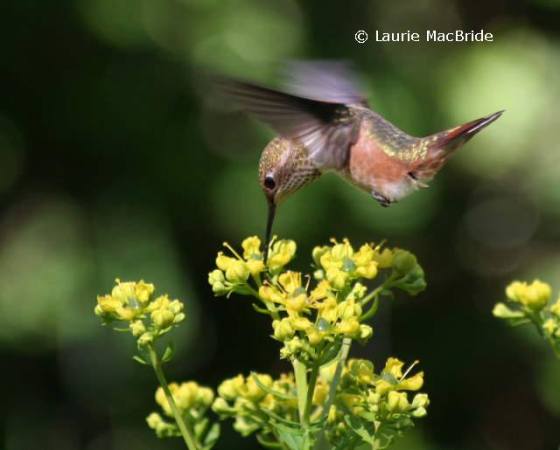
Rufous hummingbirds are amazing little creatures.

Weighing just over 3 grams (less than 1/10 of an ounce), these tiny birds fly further north than any other hummingbird. They travel a clockwise circuit of about 7800 miles every year: from their winter home in Mexico, they head up the Pacific coast to BC and Southeast Alaska for breeding, and then by mid or late summer, they fly back again to Mexico – but this time, via the Rocky Mountains chain. My mind boggles at their itinerary!

The males arrive in our region first each spring to establish their territory. We hear them before we spot them – their sharp buzz as they dive-bomb any human or other creature that could possibly be an interloper.

The females come a couple of weeks later, and much more quietly. Once here, they choose a spot and begin to build their nests – secretly, out of sight of the males, who would pose a threat to even their own young if they knew the location. One early spring I draped a few pieces of soft organic cotton lint from the dryer over the branches of the ocean spray bushes beside our house, and a day or two later I watched a female rufous carefully picking it off and taking it away. What a lovely nest blanket that must have made!

Once the young are fledged, our yard becomes a huge playground in four dimensions: soaring, diving, buzzing little hummers zipping about, trying out their new mobility, sampling the various flowers and learning the tricks of their trade. I’ve had some miss my head by mere inches as they zoom about the garden at break-neck speed. They seem to consider it a special treat when we turn on a sprinkler or water a garden bed with a hose nozzle – it’s shower time for hummers and they delight in hovering under the spray!

The female (or possibly an immature male?) rufous in this photo seemed to favor the summer rue in our garden over the sugar syrup in the feeder we provided. Who can blame her? Like us, she prefers organic food!

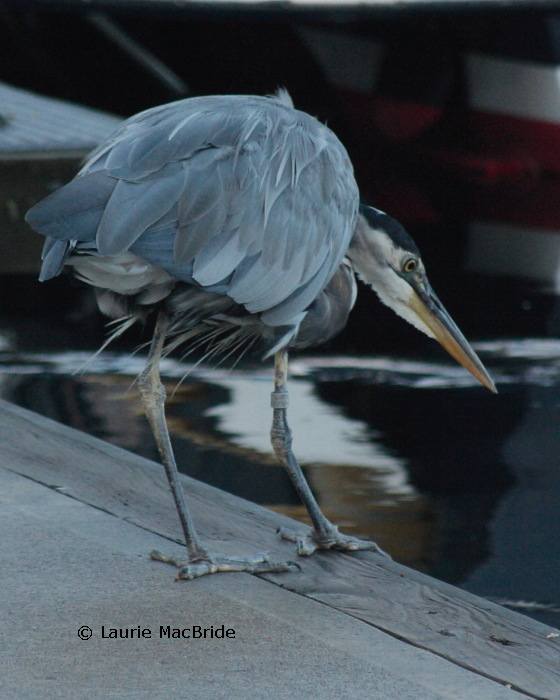
Elegant vulnerability: the Great Blue heron

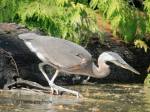
This Great Blue heron caught my eye in Coal Harbour early one morning, where he (or perhaps she?) was fishing off the dock at one of Vancouver’s busiest marinas. With his jewelry (note the banded leg), he seems very “urban chic” – walking calmly among the boats, ever so well adapted to the busy hum of the big city.

Although Great Blue herons usually live about a decade, they can survive to the ripe old age of 18, so perhaps this individual was old and wise to the ways of people. In any event, unlike most herons, he wasn’t easily alarmed – instead he was calm and unruffled, intent on catching breakfast despite the presence of a photographer.

Blue herons stand over a metre tall, and can look elegant or absurd depending on their pose at any given moment. I see them frequently and love watching them wading in the shallows at low tide, fishing off the edge of kelp beds or docks, or sometimes perched on the edge of a dinghy, carefully eyeing the water for any potential prey.

About the only time I dislike seeing them is when they land in our backyard and start chowing down on the newts or red-legged frogs that live in our pond. Fortunately that doesn’t happen often!

Elsewhere in North America, Great Blue herons fly south in the winter. But our coastal Great Blue herons don’t migrate, and over time they have developed into a distinct subspecies with some subtle differences from other Great Blues, such as darker plumage. While their population is considered relatively stable here in BC, they’re “blue-listed”, meaning they’re vulnerable – in particular, toxic contaminants and disturbances around their nesting sites can spell disaster at breeding time.

Four-fifths of BC’s coastal Great Blue herons live around the Strait of Georgia, and about half of these birds nest in just a few large colonies, making those sites very important to heron survival. Of course, about 3 million humans also live around the Strait, so that puts a lot of pressure on herons and their nesting and feeding areas.

We’re lucky to be able to share our region year-round with these awesome birds. If we can protect the habitat they need, and treat them with respect, I’m hopeful that we’ll be able to keep on enjoying them as neighbours for a very long time to come.

A few more heron photos – click for larger view and info:

Dall’s Porpoise: Making a Splash

Dall's porpoise bow-riding

Making a Splash (Dall’s Porpoise)

Dall’s porpoises are deep-water cetaceans, but every now and then we get a chance to see them up close. They travel in small groups at speeds up to 30 knots, and are known as “splash dolphins” for a good reason: they make an impressive rooster tail as they rush through the water. Groups of Dall’s porpoises often “bowride” (criss-cross rapidly right in front of a moving boat). Standing on the foredeck while this is happening is thrilling, to say the least!

Although Dall’s porpoises can be found in the Strait of Georgia, where I live, I shot this photo in Wright Sound on British Columbia’s North Coast. It’s a place where six long arms of water meet – including the channels that make up the Inside Passage and the routes to and from Douglas Channel (the fjord that leads to Kitimat). It’s right about the area where the large BC ferry, Queen of the North, ran aground and sank a few years back.

I worry about the impact on Dall’s porpoises and the marine ecosystem that supports them, should our government approve Enbridge’s current pipeline and tanker proposal, to export crude oil from the Alberta tar sands. The plan would mean that every week, 3 to 10 huge oil tankers would be travelling through these narrow and busy waterways. And here at home, I have just as much concern about the plan to increase crude oil shipments out of Burrard Inlet, which would mean a big increase in the already high number of oil tankers passing through the Straits of Georgia and Juan de Fuca.

Both plans sound to me like a recipe for disaster – and not just for the porpoises.

Fog over Okisollo

Fog over Okisollo Channel with Quadra Island in background

Okisollo Morning

When you cruise north of the Strait of Georgia, you reach a network of constricted tidal passages, leading on to Johnstone Strait.

One of these passages (and to my eye, one of the most beautiful stretches of water on the BC coast) is Okisollo Channel, lying between Quadra and Sonora Islands. In late summer, fog occurs frequently here – both a navigational hazard and a photographer’s delight. I took this photo one August morning, just as the fog was finally lifting enough to allow us to haul anchor and move on, heading north on our journey.

Over the past few years the whole area around Okisollo – including the nearby passages of Hoskyn, Nodales and Cordero Channels – has come to be known as “Wild Salmon Narrows”. The moniker is a good one, because wild salmon must pass through these narrow waters twice in their lives: first, when they’re migrating out to sea as juveniles, and finally, when they’re coming home to their birth rivers as spawning adults, at the end of their natural lives.

Unfortunately, wild salmon face a serious threat when they’re travelling through Wild Salmon Narrows: a great many fish farms line these passages. Open netcages full of farmed salmon (mostly Atlantics, a species foreign to BC waters) are very effective breeding grounds for sea lice, other pathogens and fish disease – putting the passing wild salmon runs (including the mighty Fraser River sockeye) at risk.

The good news is that there’s an active campaign underway to move these farms out of Wild Salmon Narrows, to give wild salmon a safe migration route. You can learn more or get involved by contacting the Georgia Strait Alliance.

Update, March 22, 2013: 

Good news! The BC government has announced that it will not issue any new fish farm tenures or allow any expansion of existing ones in the Wild Salmon Narrows (Discovery Islands) area until at least September 30, 2020. This decision came in response to the recommendations of the Cohen Inquiry into the Decline of the Fraser River Sockeye. Congratulations to Georgia Strait Alliance and all of the other groups and individuals who have worked so hard to protect wild salmon from the impacts of netcage fish farms in our local waters!