Morning Revelation

Islands half hidden by fog on a bright day

“Morning Revelation” (Grappler Sound, 0745 hours, July 2021) – click to enlarge

We left our anchorage in Mackenzie Sound at 0630, rushing to make it through Kenneth Passage on the last of the ebb. A band of fog clung part way up the mountains beside and behind us, but we could see blue sky ahead, so were hopeful the fog would lift and we’d have good visibility for most of our passage.

But the weather gods weren’t on our side. Fog dogged us through the narrow channel west of Kenneth, making it nerve-wracking to spot the multiple drift logs swirling about in the current, which was now against us as well.

Even when we reached the wider waters of Grappler Sound, clarity was elusive – as is often the case on summer mornings in the Broughton Archipelago. Fog rolls in from Queen Charlotte Strait and sticks around until early afternoon. It can be stealthy: it appears to lift, only to move around and descend again a few minutes later, thicker than ever. That’s OK when we’re at anchor, but we don’t want to get caught travelling in such deceptive conditions, especially these day when there are so many drift logs, which radar can’t detect.

The fog entirely blanketed the intricate shorelines and passages between our boat and our intended destination (hidden somewhere in the photo above) so we needed a duck-in. Luckily Carriden Bay was close by, with calm water, sunshine and plenty of room to anchor. We’d passed it many times before but this was the first time we’d stopped. It was a good place to practice patience while we watched and waited.

Two hours later we were underway again, thinking the way was clear – but soon the fog returned with a vengeance. We needed yet another duck-in, this one secure enough for overnight anchorage as we weren’t going to keep playing this game.

At 1045 we made it into Tracey Harbour, just before fog filled its opening passage. We’d never been there before, and it proved a good discovery – nice enough that we stayed for two nights. It’s unlikely we would have gone there if not for the fog, so in that sense, I guess the stealthy beast actually did us a favour that morning.


PHOTO SHOW:  “Breathing Space”, an exhibit by three members of the Gabriola Photography Club, runs until April 14, downstairs at the Gabriola Medical Clinic (weekdays). Together we’re showing about 30 prints, and “Morning Revelation”, the photo above, is one of mine on display. You can find more info here.
Space to Breathe

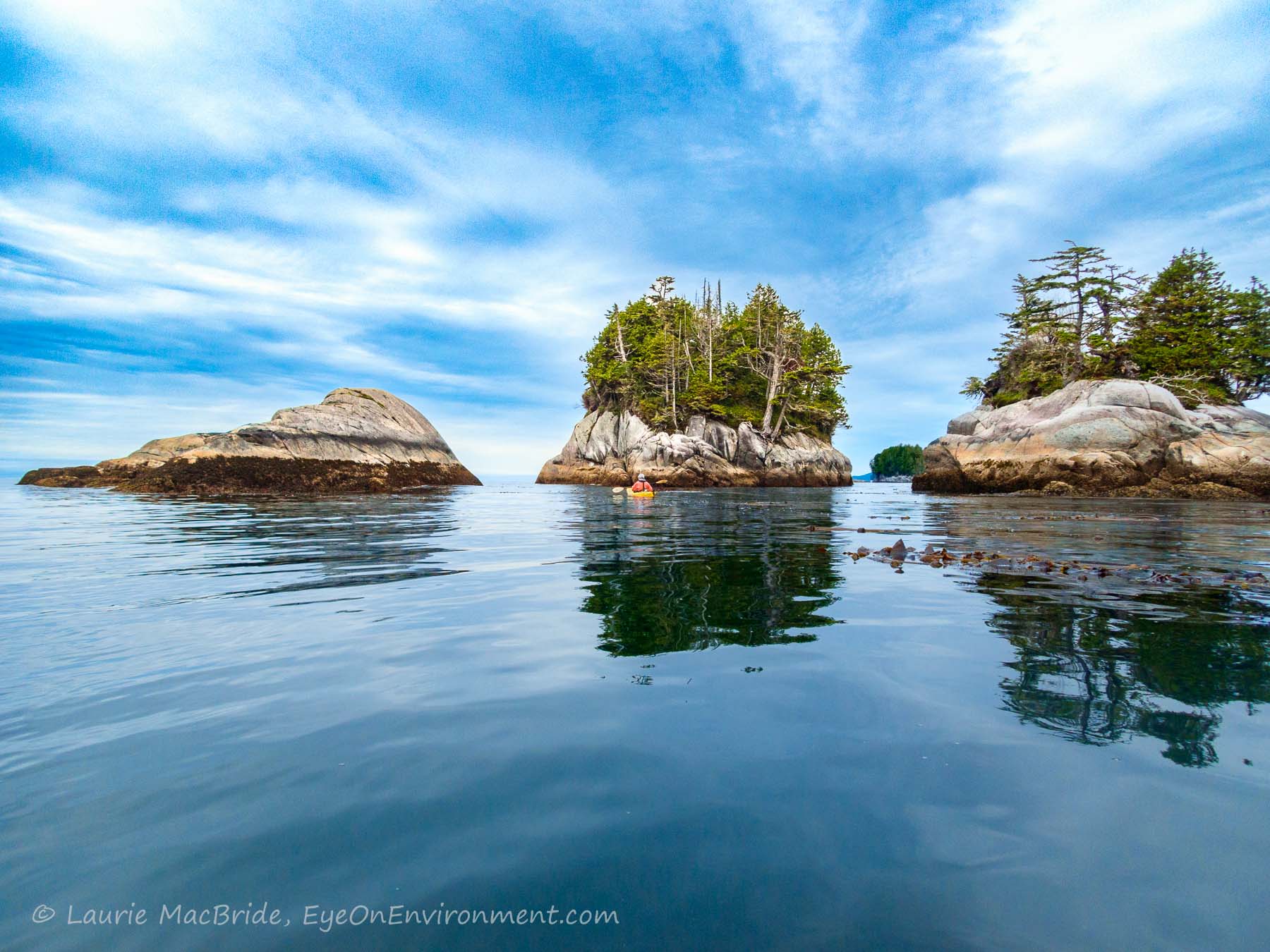
A kayaker in front of three small islands with blue sea and sky radiating out from centre.

One of my images in “Breathing Space”, a new exhibit that opened today.

I love the shift in perspective I get when I’m aboard our boat for an extended period of time – when we unplug from the online world, leave the clamour of human affairs behind, cast off our lines and immerse ourselves in the marine world.

Sight lines lengthen and my eyes refocus. No longer surrounded by tall trees, I watch the sky open up to reveal the fascinating dance of advancing and retreating clouds and weather systems.

As my sea legs return, my breathing deepens. The steady rise and fall of the tide – its ebb and flow like the breathing of the planet itself – becomes our metronome for life afloat, and a key factor in many of our daily decisions.

Anchored far away from the usual soundscape of traffic and neighbours’ comings and goings, I’m able to discern new sounds: a baby seal calling for its mom; sandpipers peeping as they forage on the nearby shore; the breaths of a porpoise, swimming slowly back and forth as it feeds outside the bay.


NEW SHOW:  I’ve teamed up with two other members of the Gabriola Photography Club to present a new exhibit, called “Breathing Space”, which runs until April 14, downstairs at the Gabriola Medical Clinic (weekdays). Together, we’re showing about 30 prints, with each of us bringing our own perspective to the theme. You can find more info here.

Dodging the Drift

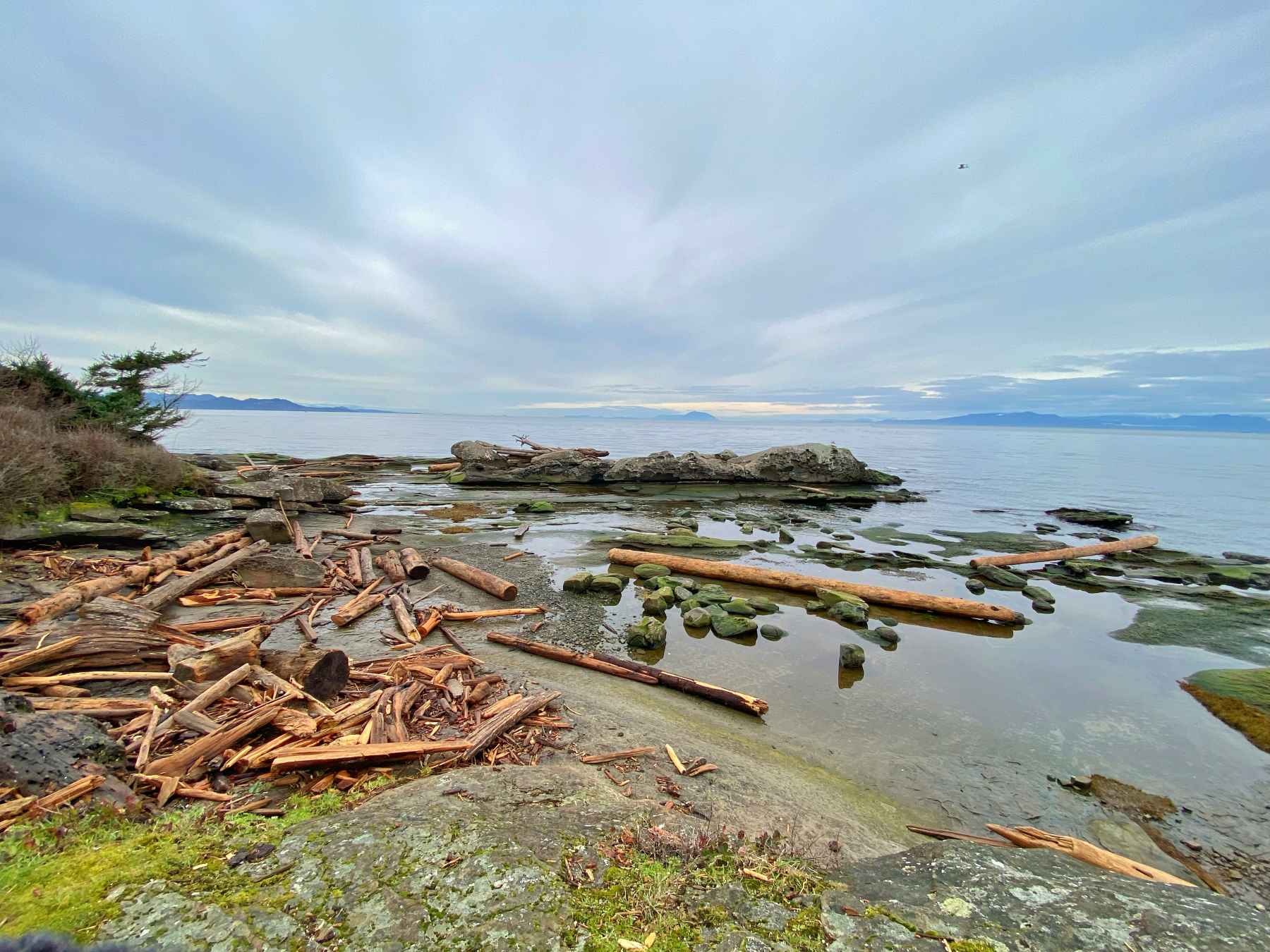
Beach littered with logs and woody debris

The photo above is a view from Orlebar Point on Gabriola Island. (Click on this or the images below to see the details.)

It’s not unusual to see big logs on this exposed shore. Escapees from logging operations frequently wash up here, especially when we have extreme high tides, as we did last week.

But what’s different this time is the proliferation of shattered, woody debris among the logs.

Different, but not really surprising. Southern BC experienced unusually heavy rains last fall. Steep areas that had been impacted by logging or summer wildfires must have been primed and ready to let loose a torrent of woody debris when those rains hit. And of course, everything eventually flows to the sea.

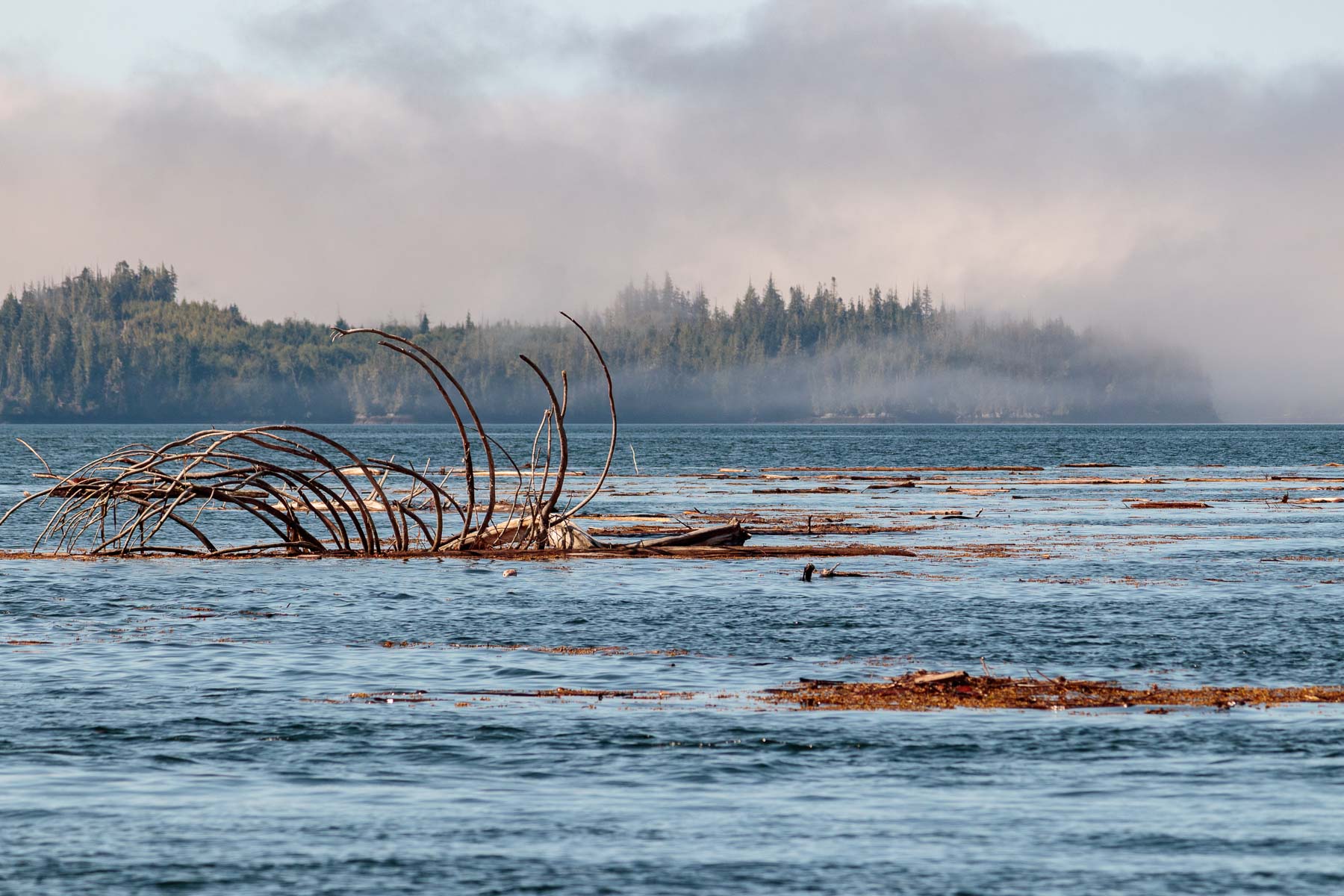
Driftwood in water on foggy day

It reminded me of our boating trip last summer, when we found our routes littered with myriad pieces of shattered forest (likely from the massively destructive landslide in Bute Inlet the previous fall).

One narrow passage we’d enjoyed in the past was completely choked off by woody debris, forcing us to do a quick 180 and take a longer route. Currents in another passage contained swirling logs, tricky to dodge even at slack water.

Heavy logs and large tree stumps floated into our anchorages with incoming tides. Things went bump in the night a few times, making for less than optimal sleeping conditions.

Logs, tree stump and other floating debris

One day we were forced to weigh anchor and move to another bay when a floating tree insisted on taking our spot. Another time a runaway tree blocked the entry to the only decent anchorage in an area we’d hoped to explore.

Overall, it seems that glacial melt, steep slopes, deforestation, and extreme weather events are conspiring to make safe boating a bit more challenging each year.

I do love modern navigation gear, but it’s not enough. Anyone boating in the Pacific Northwest would be wise to also employ a decidedly old-fashioned mariner’s practice: maintaining a constant watch.

Stay safe out there!

QT’s Spring Dreams

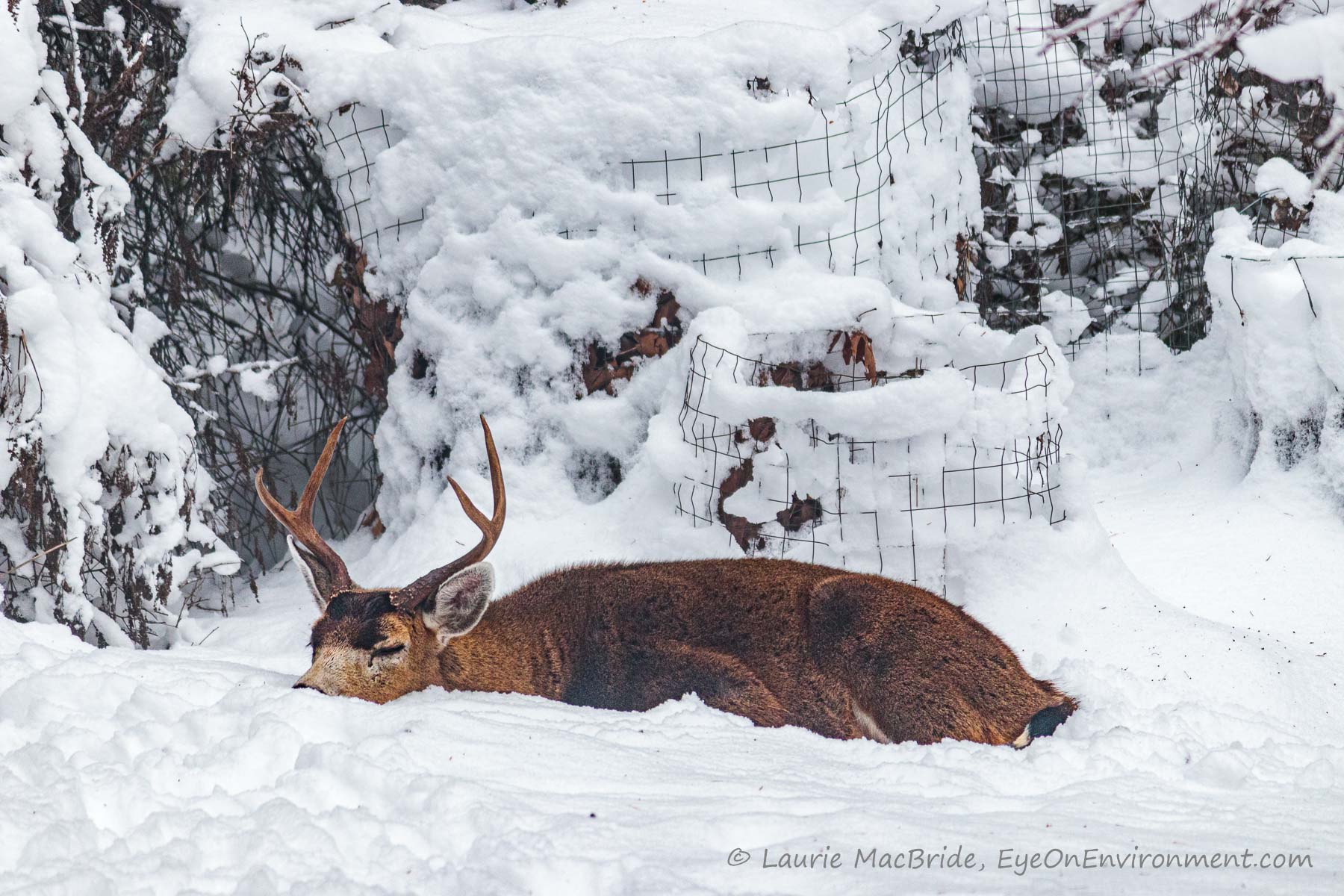
Buck lying down in snow

QT, relaxing outside our kitchen window (click on photos to enlarge & see detail)

The first day of 2022 was a frigid one here by west coast standards – but thankfully, no more snow fell that day. QT’s fur coat seems especially thick this winter, so he didn’t appear to mind the temperature.

In fact he seemed almost to relish that extra-cool mattress, as he stretched out in front of our leaf compost bins for a pleasant little mid-afternoon snooze.

Buck sleeping in snow

I’m guessing he might have been dreaming of spring days to come, when all that white stuff turns into tender, tasty green grass and wildflowers.

Dawn Light

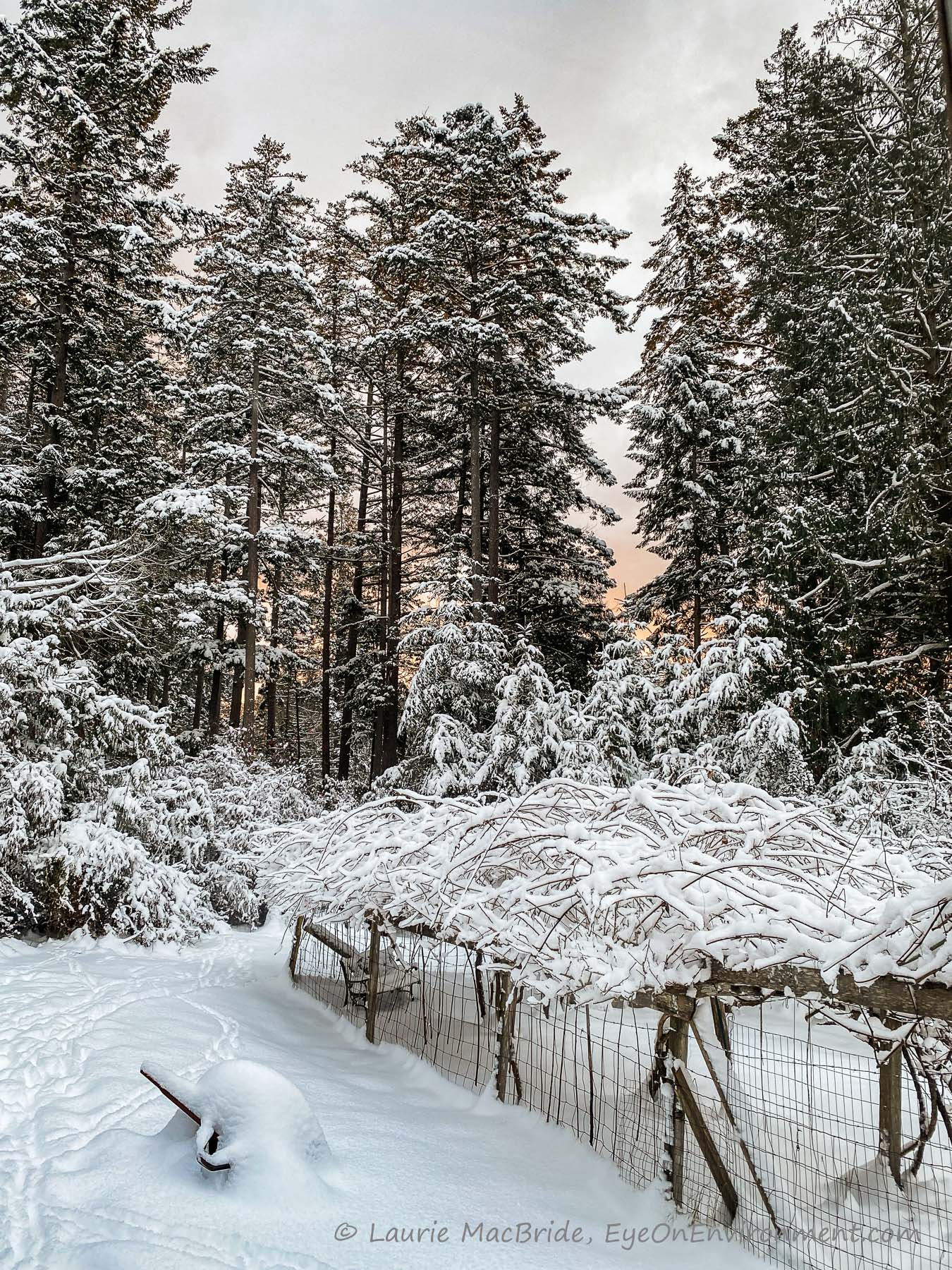
Dawn light through the trees over a snowy yard.

Dawn over our yard, where the wheelbarrow and kiwi vines take a well-deserved rest.

Here on the west coast of British Columbia, we’re ending the year under a thick blanket of snow and unseasonably cold temperatures. But with climate change bringing the world so many wild weather systems these days, who can really say what is “seasonable” any more?

The past year has introduced us (if rather brutally) to phrases like “heat dome” and “atmospheric river”. It has tested our individual and collective resilience – physical and emotional – with extreme temperatures, destructive wildfires, massive floods, and one wretched Covid wave after another. It’s brought tragedy to far too many people and families, here in BC and around the world. So I doubt many people will be sorry to see 2021 pass.

Fortunately though, some of these cold winter mornings have been dawning with the kind of light that brings excitement to photographers and a smile to pretty much everyone else who looks at the eastern sky.

It seems that moments of joy are possible – despite the noisy background of climate catastrophe, pandemic despair and a world gone weirdly awry in all kinds of ways. So here’s wishing all of you a happy new year. May you have the time to look, and may you find, a great many moments that bring you hope, joy and comfort in 2022.

Meeting the Ancients

Rocky shoreline resembling long row of carved faces

Meeting the ancients (click to enlarge).

We often meet unusual characters when we go kayaking. Sometimes they’re remarkable enough to transport me – at least in my imagination – to destinations half way around the world.

So it was with the oddballs in the photo above, whom I chanced upon this past summer at the edge of Queen Charlotte Strait. Contemplating the long row of ‘carved’ faces lined up in stony silence, staring out to sea, I couldn’t help but feel like I was meeting the famous moai of Easter Island.

OK, I know – it was Mama Nature, not the Rapa Nui people, who carved these ones, and I was barely 200 miles from home. Still, even a brief flight of fancy can be fun – not to mention, a low carbon way to travel.

Popping up for Halloween

Black elfin saddle mushroom

Right on time for Halloween, a few spooky characters have started turning up at our place.

Some, like the one above, have come dressed like the Grim Reaper…

two odd looking white mushrooms

while others have chosen a more ghostly costume.

I recognized the “Grim Reaper” as a Black elfin saddle mushroom (Helvella lacunosa) – we’ve had them visit in past years. But the ghostly look of the others puzzled me at first. And then I found the likely answer: according to Wikipedia, Black elfin saddles can have white stems when they’re young, and occasionally they have white caps. So I’m guessing these are Black elfin saddle youngsters, out for a lively bit of trick or treating.

No matter which of the two costumes they’re wearing, they all seem just a little bit spooky!

Light coloured elfin saddle mushroom

Port Neville: a Love/Hate Story

0700 hrs: Morning calm (click on images to enlarge)

My husband and I have a love/hate relationship with Port Neville.

We love it for the shelter it offers. Reaching more than five miles in from the open water, Port Neville  is a welcome sight for us during the long trek up Johnstone Strait. Many times it serves as an essential duck-in when we feel the wind rising and seas steepening – or when we’re just too tired to go any further that day.

I also love Port Neville for the photographic feast it provides. Despite a considerable amount of logging over the years, the mountains and shoreline vistas around the inlet can appear sublime. There’s good paddling opportunities too, usually in calm waters, and an occasional bear to be seen on the beach.

View over Port Neville to Vancouver Island mountains

But I confess: we have also grown to detest Port Neville. It’s because of what happens after dark.

You’d never know it from the photos I’ve taken, but once the black of night has closed around us, this seemingly tranquil “port” has become a whirling wind tunnel on too many of our stopovers. Despite dropping our hook in a number of different spots over the years, Port Neville has gifted us with long nights of anchor watches, worry and sleep deprivation.

Clouds over mountain in evening sky

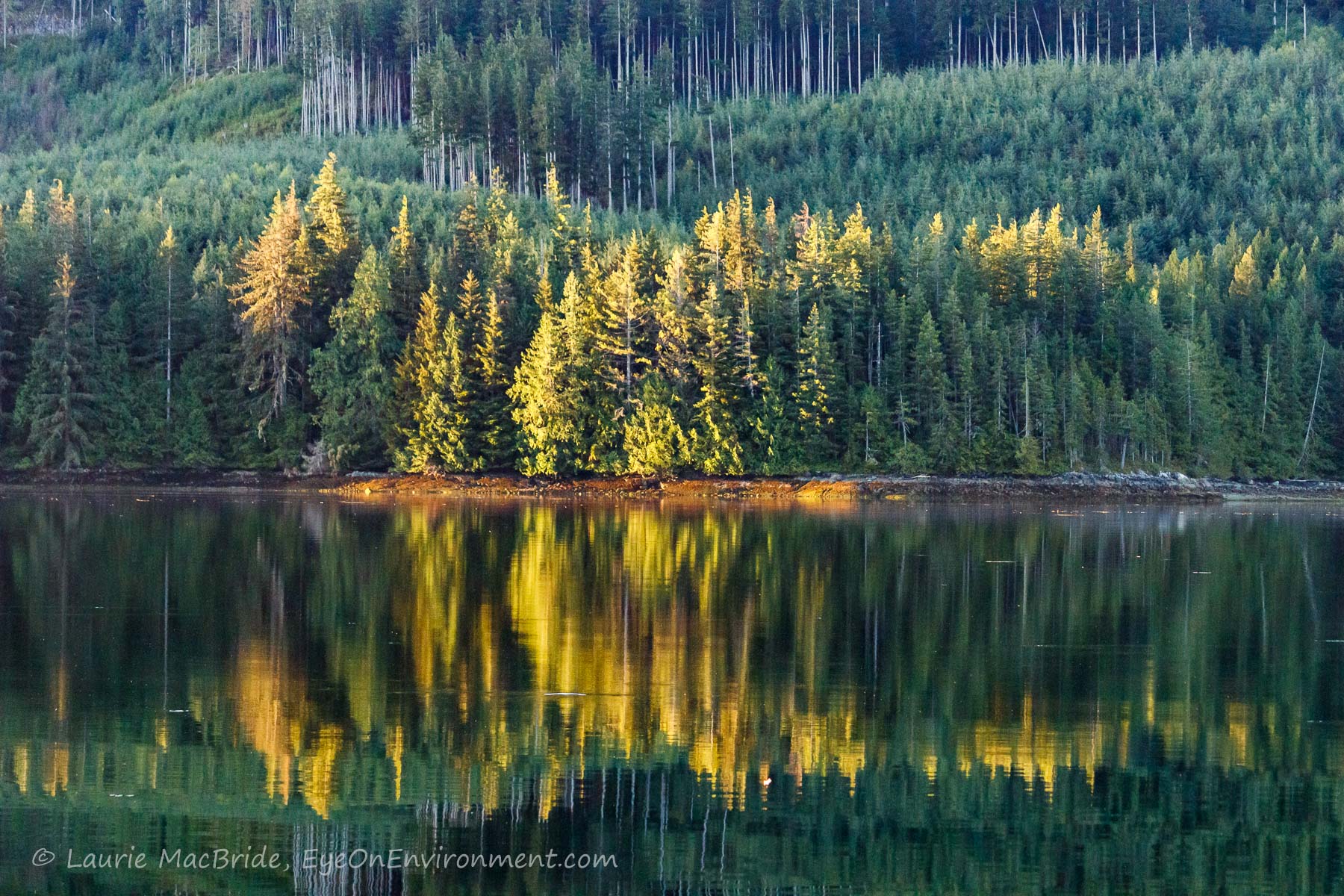
Still, once daylight breaks again and that infernal wind drops, those golden moments can make Port Neville feel pretty mellow.

Golden light on trees along shoreline

Even so, I’m not sure I want to hang any of my photos of this place on our wall at home.