Protecting our Coastal “Salad Bowl”

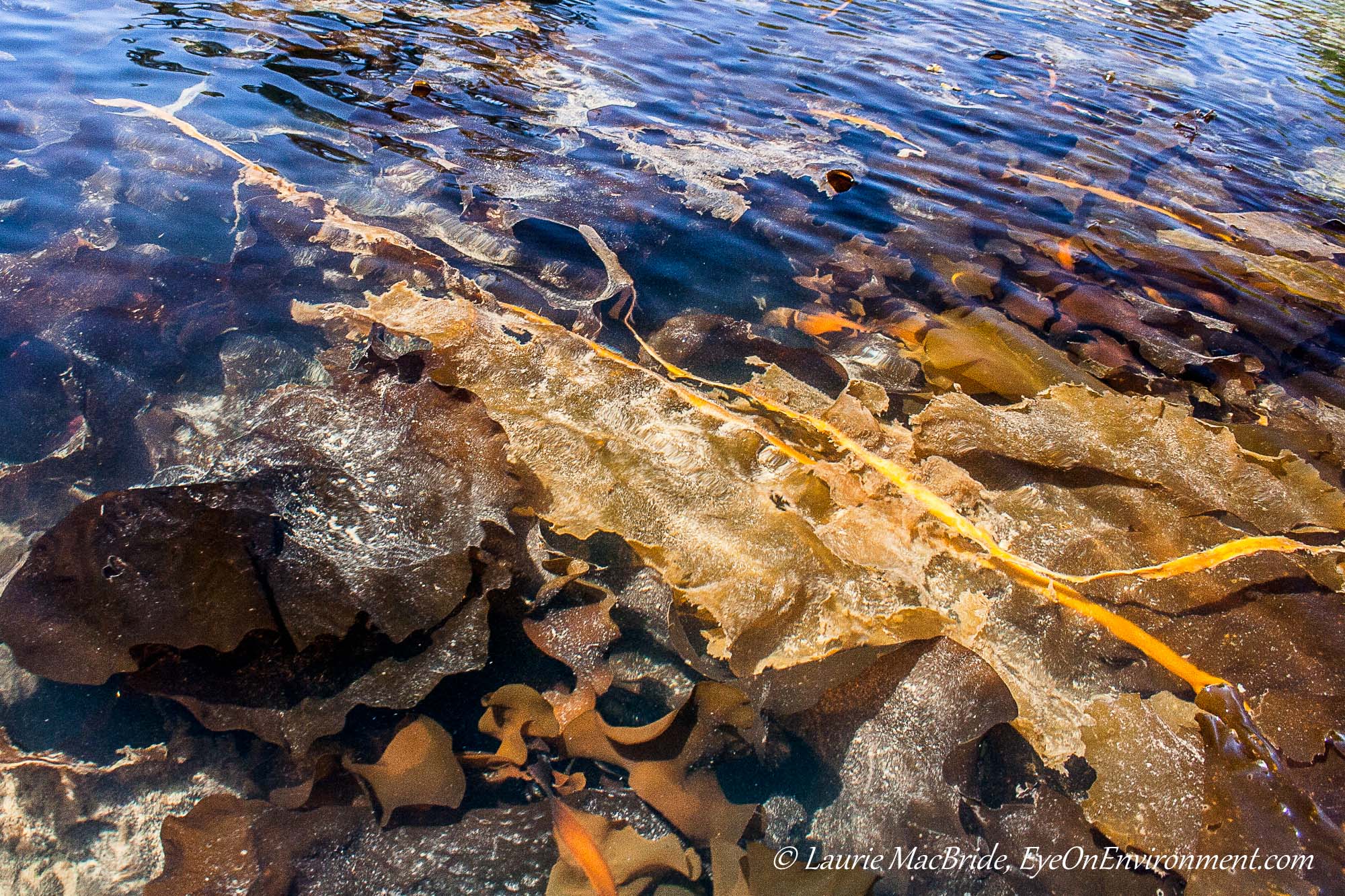
Kelp and seaweeds in intertidal zone

Profusion under our kayaks (click to enlarge, or twice to see all the details)

While our planet’s oceans are clearly facing serious health challenges these days, we’re fortunate that many marine and coastal habitats are still alive and relatively healthy. In our little corner of the world, the Salish Sea teems with life in many places, including some of the shores of Haro Strait at the southeastern end of Vancouver Island.

Paddling there at low tide earlier this month, so thick, rich, colourful and diverse were the kelps, seaweeds and sea grasses below us that we had the sense of floating atop a giant salad bowl. The water was dense with plankton and kelp crabs sheltered among the fronds.

In a single morning’s paddle, we encountered massive schools of forage fish, large flocks of Canada geese feeding on the seaweeds, numerous Great blue herons, River otters, gulls of several species, Pigeon guillemots, Harbour seals, Bald eagles, Black oystercatchers, cormorants and more. The intertidal zone was rich with barnacles, mussels, limpets and seaweeds, and of course, there was also much life below us in the sub-tidal zone, that we were not able to see from our kayaks.
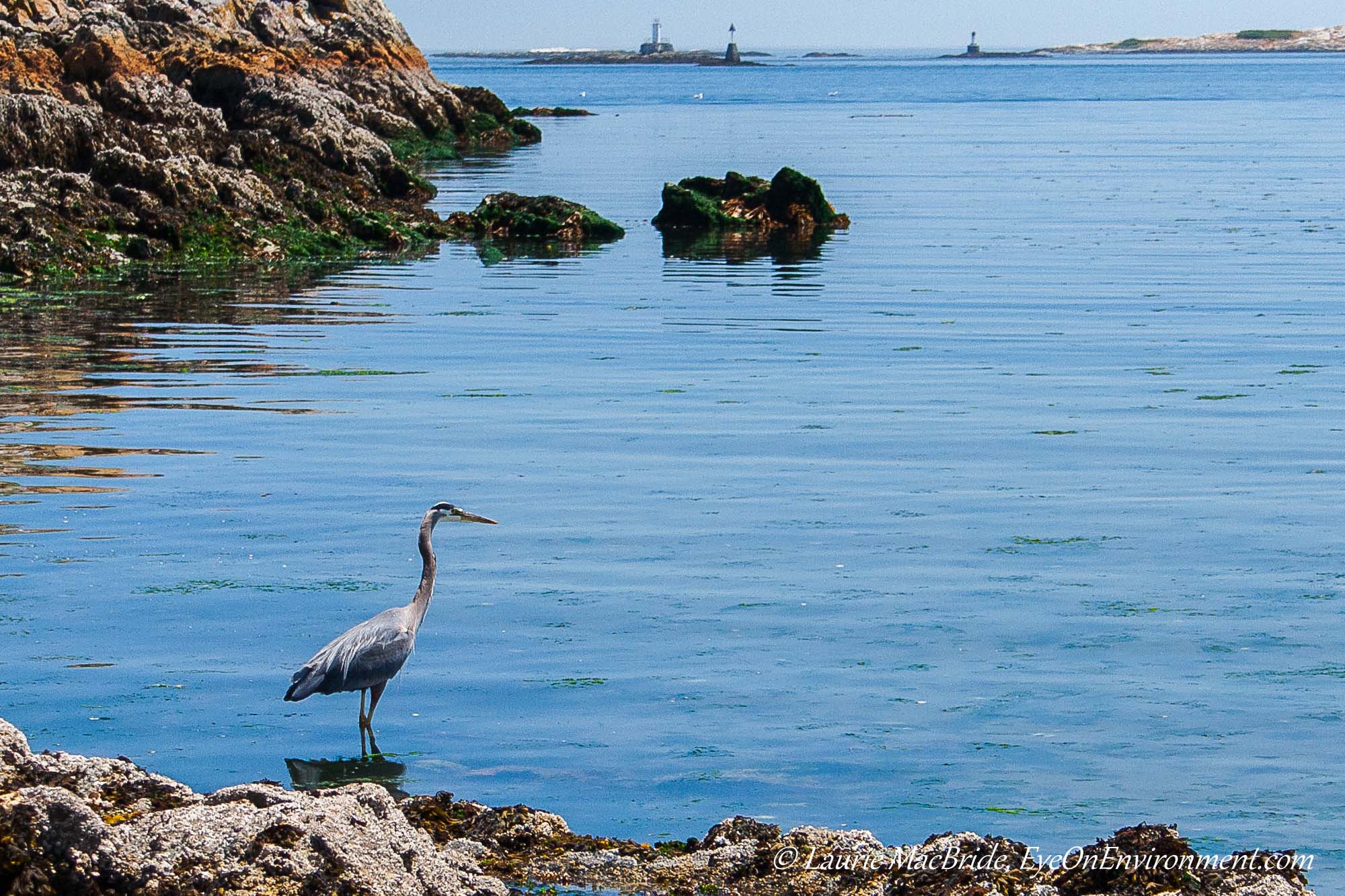
heron beside the water

Great blue heron at Cattle Point (click to enlarge)

Vital and alive, for sure – but these shores are also seriously threatened. If approved by Canada’s National Energy Board, Kinder Morgan’s plan to triple its existing pipeline capacity will result in a six-fold increase in massive tankers travelling in and out of Haro Strait, carrying oil from Alberta’s tar sands – about 35 tankers every month, year-round. With winter storms and gales, tide rips and currents and the already heavy marine traffic along this corridor, not to mention all the “unexpected” events that occur with ships of all sizes, accidents and major oil spills will be inevitable, and the impacts would be horrendous.

That’s one of the reasons that like many people in our region, I applied to be a commenter in the National Energy Board’s review of the proposal. I have other concerns about the project as well, including the climate impacts of all that tar sands oil. I was accepted as a commenter, and I’ve now submitted my official Letter of Comment along with some photographs and other documents. If you’d like to see what I said to the Board, you’ll find links to the Letter and attachments here.

My husband – who, like me, grew up on the shores of the Salish Sea – has also submitted a Letter of Comment, and it’s well worth a read. You can find the link to his letter and supporting documents here.

Bull kelp beds

Kelp Beds off Ten Mile Point (click to enlarge)

If you’d like to know more about Kinder Morgan’s proposal, its risks, potential impacts, and how you can help, you’ll find plenty of great information here, on Georgia Strait Alliance’s site.

Let’s hope the Board listens well, and heeds the pleas of the hundreds of BC residents who have been granted the right to take part in this process and are calling on the Board to reject Kinder Morgan’s proposal. In the meantime, I’ll go paddling with my fingers crossed.

A reminder if you’re on Gabriola Island this summer: about a dozen of my marine-focused prints are on display at Gabriola’s popular dockside eatery, Silva Bay Restaurant & Pub. I hope you’ll stop by for a meal and have a look.
 

Enjoying the Weedy Buffet

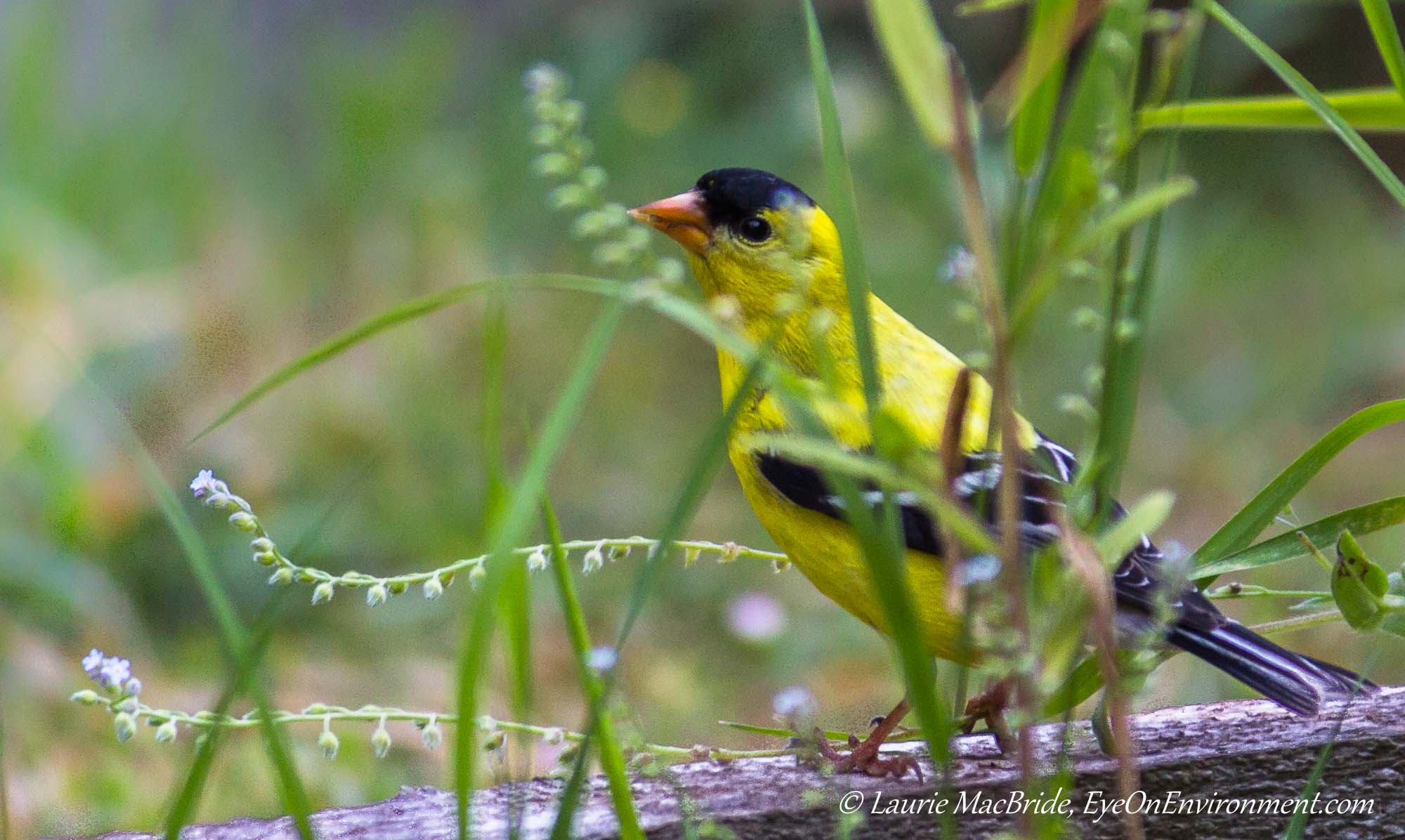
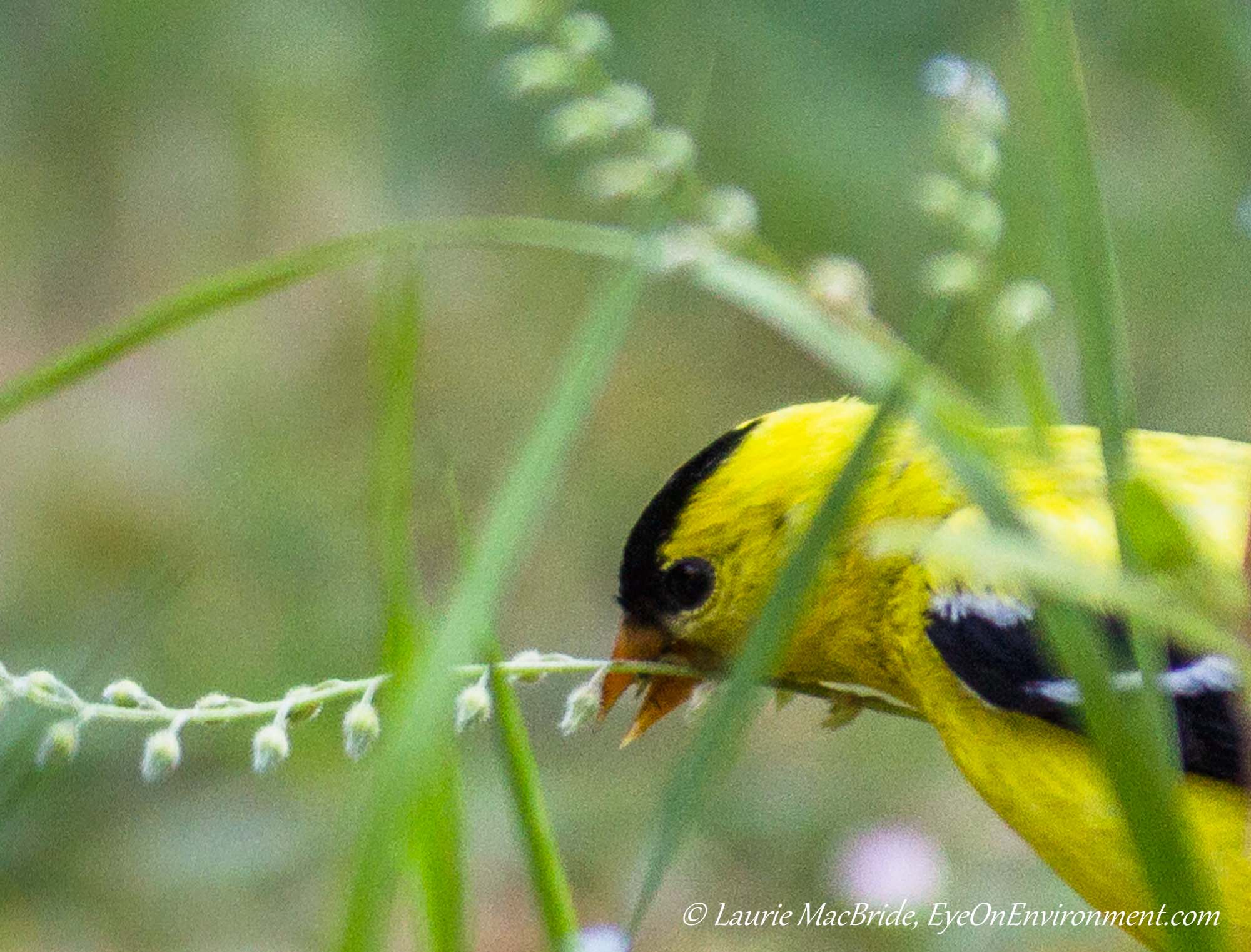
Goldfinch's LunchI owe some thanks to a goldfinch for saving me some work the other day. I was taking a brief rest in the garden, planning to return to my weeding in a few moments. But then this natty little fellow came hopping along and caused me to change my plan.

One item that had been on my to-do list was to clear away the many straggly patches of forget-me-not that were going to seed throughout our flower and veggie beds. But the goldfinch obviously viewed my messy weeds as a tasty opportunity, tucking into the seeds with gusto. (Click on the photos above and below to enlarge.)

I love having these colourful little birds around for the summer – and clearly they need to eat – so how could I possibly continue with my project?

I left the forget-me-nots in place that day, despite my chronic desire for tidiness. And since then, each time I’ve gone into the garden I’ve been careful to pull out only the very worst of the straggly stems, leaving most of the seedy buffet in place. I guess this means we’ll have a whole lot of forget-me-nots in our future…but hopefully, we’ll also have a lot of returning goldfinches.

closeful of goldfinch eating forget-me-not seeds

A reminder if you’re on Gabriola Island this summer: about a dozen of my marine-focused prints are on display at Gabriola’s popular dockside eatery, Silva Bay Restaurant & Pub. I hope you’ll stop by for a meal and have a look.
Time for Buzzing Off

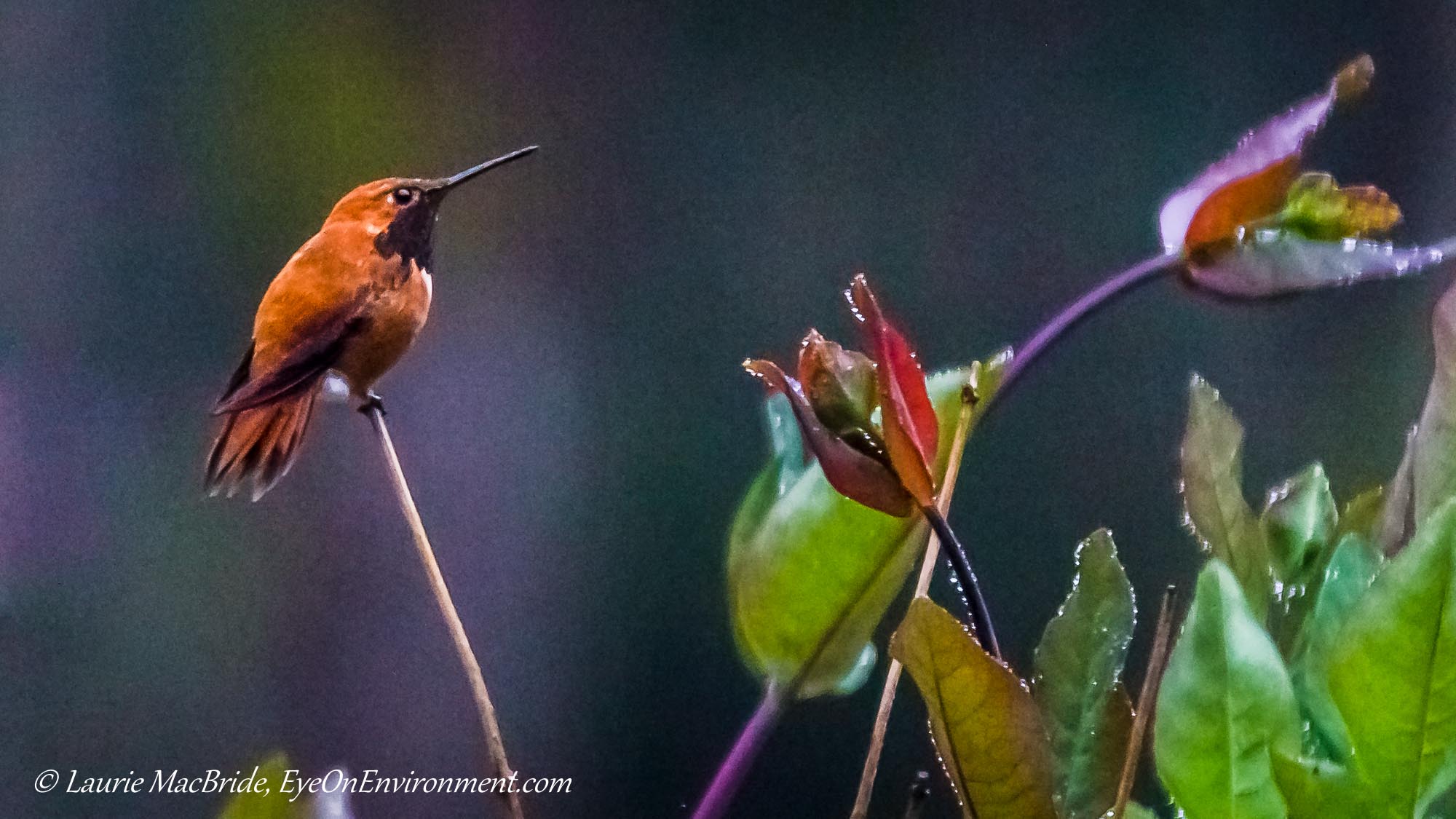
Male rufous hummingbird on honeysuckleIt seems quieter around our house than usual, and I think I know the reason: in the last day or two, Buzzy (shown above – click on photo to enlarge) and the other adult male Rufous hummingbirds appear to have taken off on their southern journey. They’ll be heading over to the Rockies, where they’ll tank up on wildflower nectar, then on to Mexico – completing a 4000+ mile-long, clockwise circuit of the continent.

That trip began earlier this year, when Buzzy and his buddies travelled up the Pacific coast from their winter home. They arrived here in early March to stake out their breeding territories, and immediately started making their presence known with steep dives, loud chirps and a rattling buzz aimed to intimidate any creature, large or small (including resident humans).

The females – a much more sedate group – came a couple of weeks later, to go about their quiet business of building a home and raising the next generation. Right away, Buzzy and the guys began their relentless harassment – chasing the females (and later, the young) away from the feeders and favorite plants with loud, quick attacks. These guys definitely don’t like to share their food or enjoy a relaxing moment with the wife and kids!

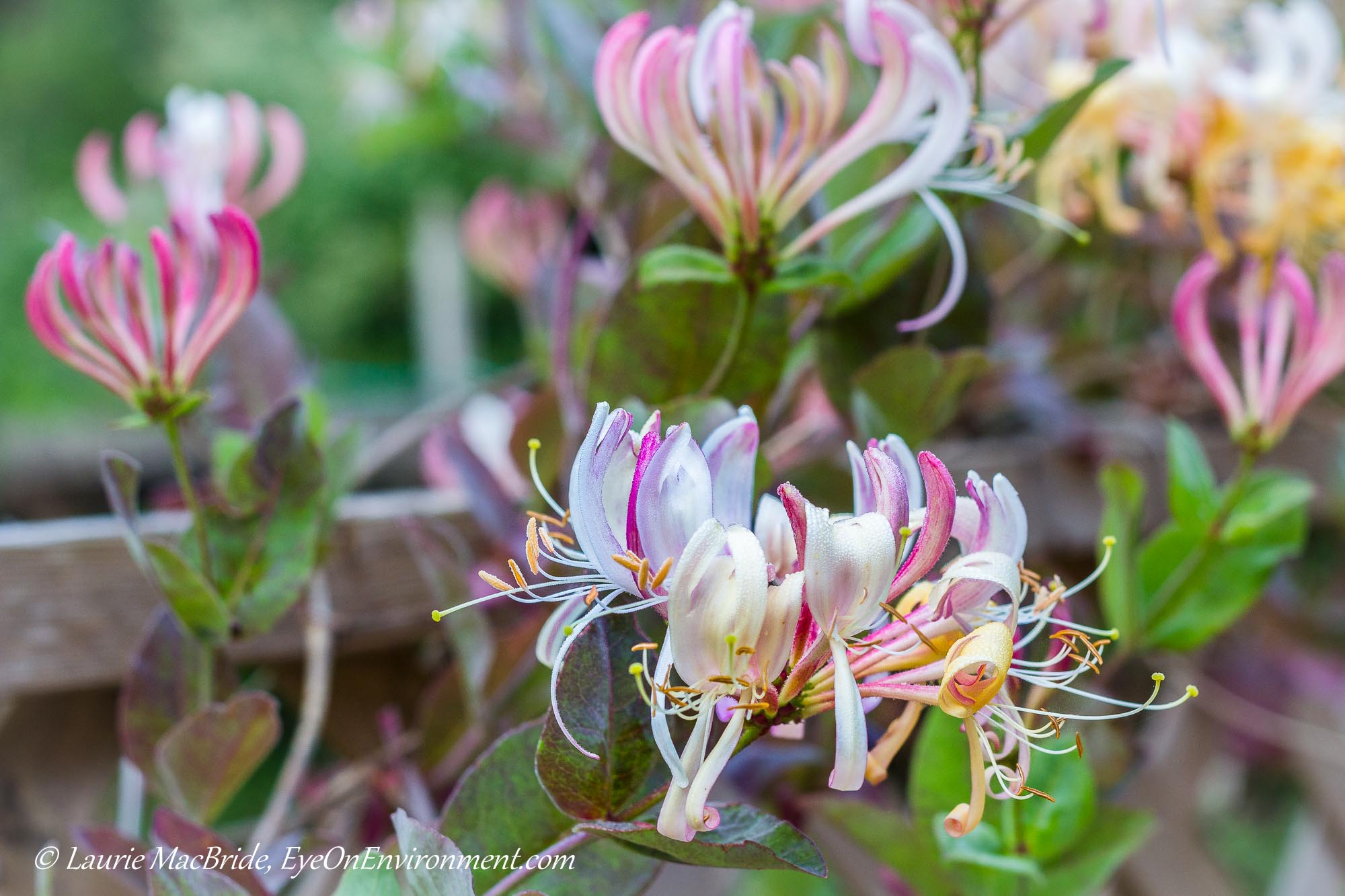
The females and young have been kept on high alert and in constant motion. But thankfully, they’ll get a reprieve now, until it’s their turn to head south in a few weeks. In the meantime, hopefully they can find some peaceful enjoyment here: although the honeysuckle that Buzzy guarded (shown below, a few weeks later – click to enlarge) is now past its prime, the Maltese cross and rue are at their peak, and we’ve got plenty of tasty insects to spare.

honeysuckle in bloom

A reminder if you’re on Gabriola Island this summer: about a dozen of my marine-focused prints are on display at Gabriola’s popular dockside eatery, Silva Bay Restaurant & Pub. I hope you’ll stop by for a meal and have a look.
Everyone Does Their Part

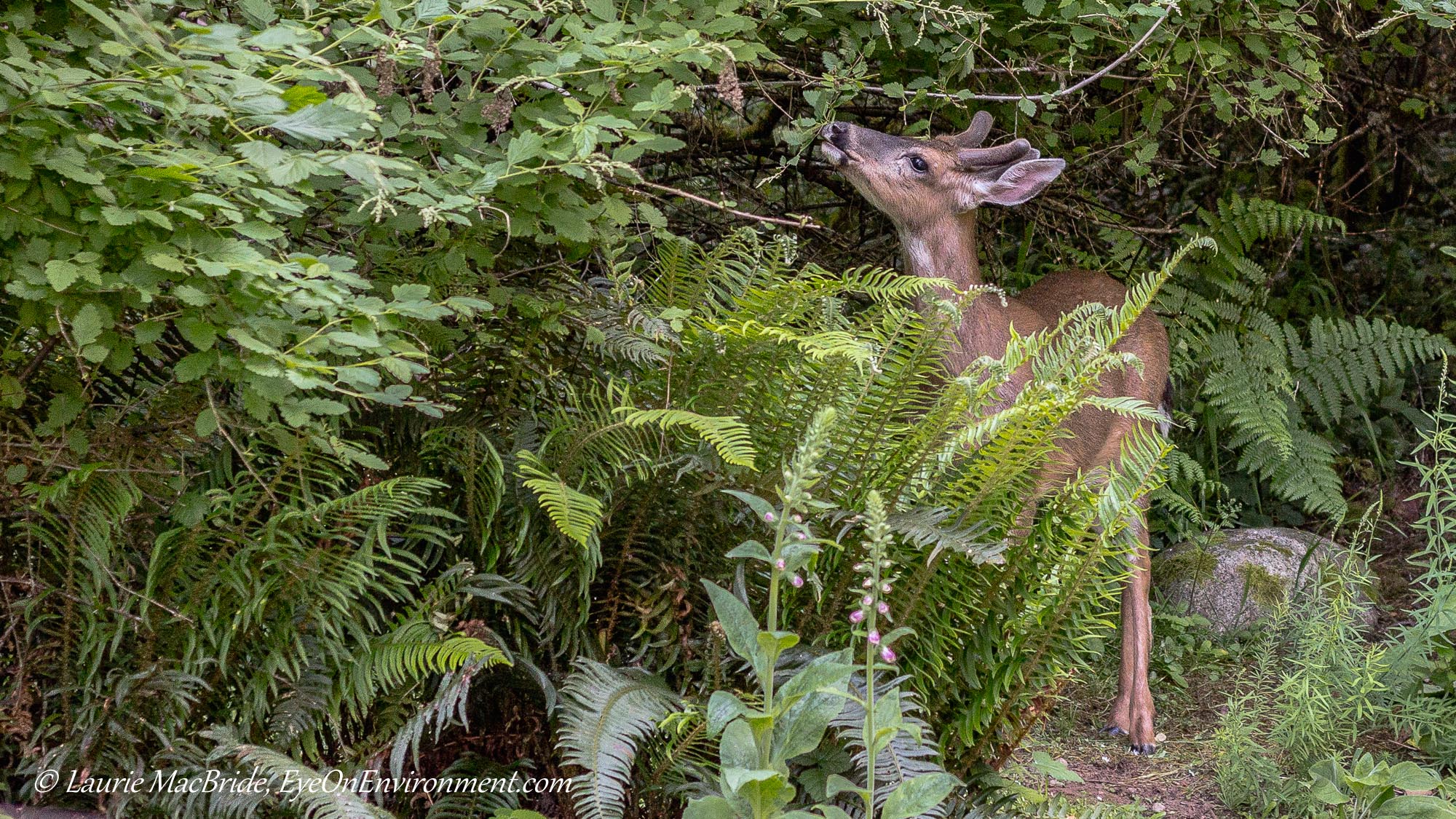
Deer reaching up to eat oceanspray

Nibblet, Hard at Work (click twice to enlarge & see all the details)

I like to think that everyone who lives here at our place contributes, doing their part of the considerable work needed to keep the homestead running. I plant, weed, harvest and preserve. My husband digs, waters, mows and repairs the trellises and other garden structures. The bees and butterflies pollinate our fruits and veggies, while the birds and frogs take care of the mosquitoes and other unwanted insects in and around the garden.

And now that Nibblet’s tall enough to reach the Oceanspray, he’s hard at work as well – doing his very best to keep the forest of wild shrubbery that surrounds our yard from crowding out the foxgloves and other cultivated plants. It’s great to see him so diligent in lending a hand (well, actually a mouth). After all, we’re not getting any younger, so we definitely need all the help we can get these days.

If you’re on Gabriola Island: about a dozen of my marine-focused prints are on display now, through the summer, at Gabriola’s popular dockside eatery, Silva Bay Restaurant & Pub. I hope you’ll stop by for a meal and have a look if you’re on the island.

Location, Location, Location

Flowering plants in a lawn

Wild Flowers or Weeds? (click twice to see the details)

It seems that in gardening, as in real estate, it’s “all about location”.

When the plants in the photo above appear in my flower or veggie beds, I call them “weeds” and rip them out – especially if they’re about to set seed.

But when they grow in a small grassy area outside our garden fence, near the edge of the forest, I call them “a wild flower meadow”. I get down on my knees to inspect the colours and intricacies of their tiny flowers and developing seed heads (if you click on the image twice, you can see some of the details).  I photograph the scene, then pore over books and websites to search out the names of the plants: English daisy of course, plus some sort of tiny cranesbill and possibly sticky mouse-ear chickweed (love that name!)…the others in the miniature meadow remain a mystery for now.

I admit it: I have a double standard.

A reminder: about a dozen of my marine-focused prints are on display now at Gabriola Island’s popular dockside eatery, Silva Bay Restaurant & Pub, which is now open for the season. My photos will be there through the summer so I hope you’ll stop by for a meal and have a look.
Detours and Delights

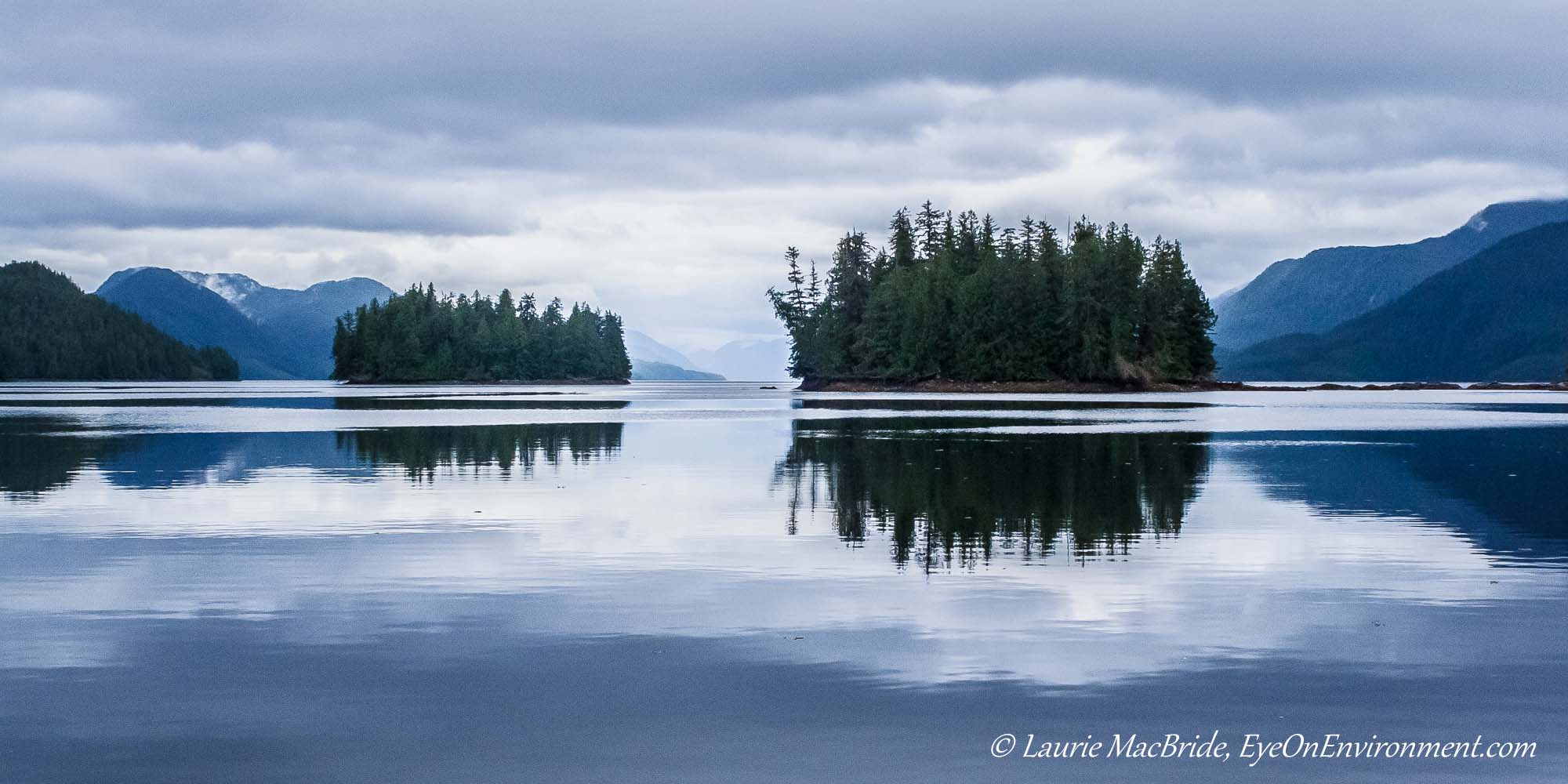
View of islands and reefs with low cloud

The view from Rescue Bay (click to enlarge)

It was July, and we were heading north from BC’s Central Coast. We had planned to take Mathieson Channel that day, to explore the inlets of the Fiordland Recreational Area, which looked gorgeous in our cruising guidebooks. But we realized that the low ceiling of dense cloud, along with the heavy rain that was forecast, would eliminate any chance of seeing those sheer granite peaks and beautiful waterfalls for at least the next several days. That was more time than we could spare waiting for the skies to clear.

If there’s one thing I’ve learned from a lifetime of travelling on boats, it’s that you have to be flexible about your routes and destinations.

We decided instead to take Finlayson Channel, the most direct course to the North Coast. To get there we needed to go through Jackson Pass, a narrow dogleg that is safest at slack water (the brief time when the current changes direction and has very little speed). We’d missed high water slack that morning, but there was a low water slack in a couple of hours. So we dropped anchor in Rescue Bay, just east of Jackson Pass, to pass the time until then.

I was disappointed to have to give Fiordland a miss – I knew we might never get back to that part of the coast so it may have been our only chance to see it. But relaxing over lunch, Fiordland no longer mattered. Rescue Bay was full of birds, and opened to a lovely, layered view even if partly obscured by clouds. No soaring peaks or waterfalls – only mirrored reflections of islands and reefs and gentle tones of blue. A quiet, subtle beauty: the perfect place to be on this monochromatic kind of day.

If you’re on Gabriola Island:  about a dozen of my marine-focused prints are on display at Gabriola’s popular Silva Bay Restaurant & Pub, now open for the season under new management. My photos will be there through the summer so I hope you’ll stop by for a meal and check them out.

In Praise of the “Common” Seagull

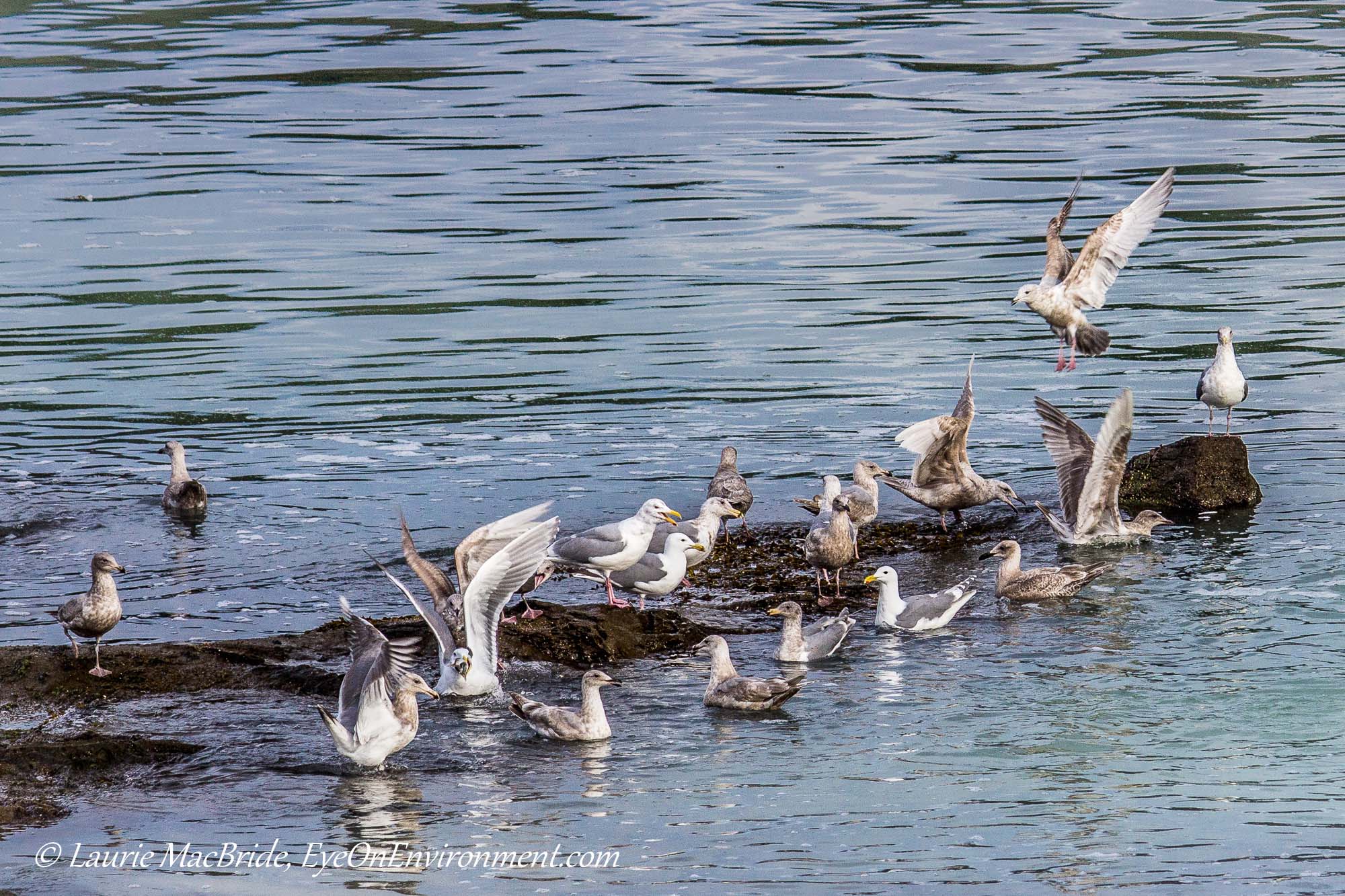
Seagulls feasting on herring

Spring Feast (click to enlarge, and then again to see all the details)

Here on Gabriola Island people are still talking about what a great herring season we had last month – those boisterous sea lions (featured in my previous post) made quite an impression, as did the eagles, who came in massive numbers to take in the bounty. It was a daily show of profusion and feasting.

But just as interesting, to me, were the seagulls – those much-maligned birds with their unforgettable calls and complex social interactions.

The photo above features a small subset of the hundreds of Glaucous-winged gulls I saw one afternoon at Drumbeg Park, bulking up on nutrient-rich herring that were driven against the shore by seals, sea lions and ducks.

The birds with bright white body feathers, grey wings and orange bills are adults, while the scruffy looking ones with black bills are juveniles. If you click on the image to enlarge it, you can see the diversity of behaviors and interactions and almost imagine the conversations going on among these very active, social birds. (You can click a second time to further enlarge the image and catch all the details.)

It was a joy to see so many gulls at Drumbeg, as it took me back to the days when seagull populations were strong here in the Strait of Georgia. I grew up close to a beach, and we spent all our summers aboard a boat, so gulls, with their mewing, whistling, rolling cries, were always present in my world. It was easy to take gulls for granted or even – as many people did – to denigrate them.

Our seagull population is now only half what it was in the 1980s (more info), so unfortunately, I’m hearing those wonderful sounds much less often nowadays. Like so many of our fellow species, seagulls are in trouble. It’s long past time we gave these fascinating birds the respect and appreciation they deserve.

You might also be interested in:

The Lions of March

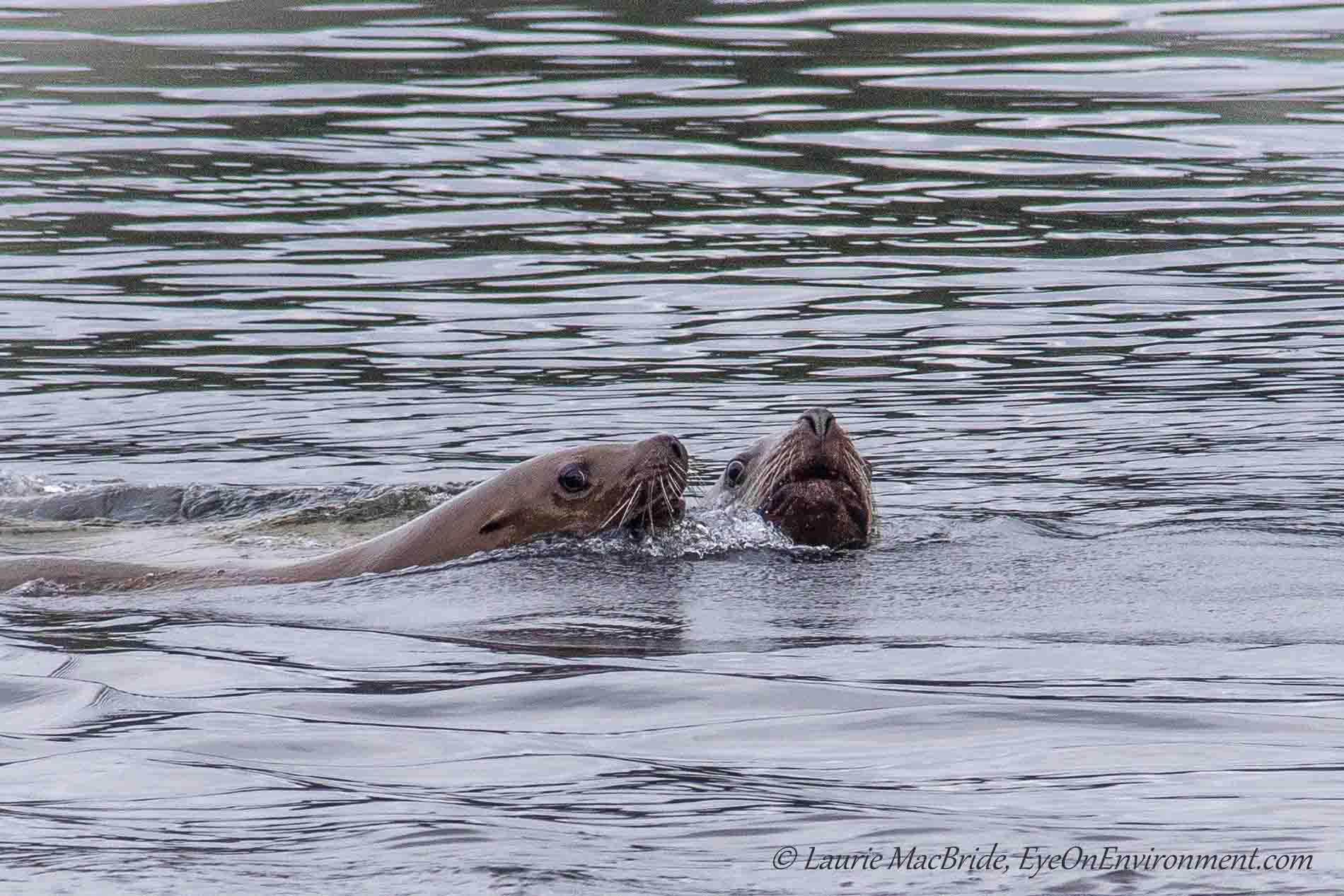
2 sea lions looking at viewer
Dynamic Duo (click on this & other photos to enlarge and see the details)

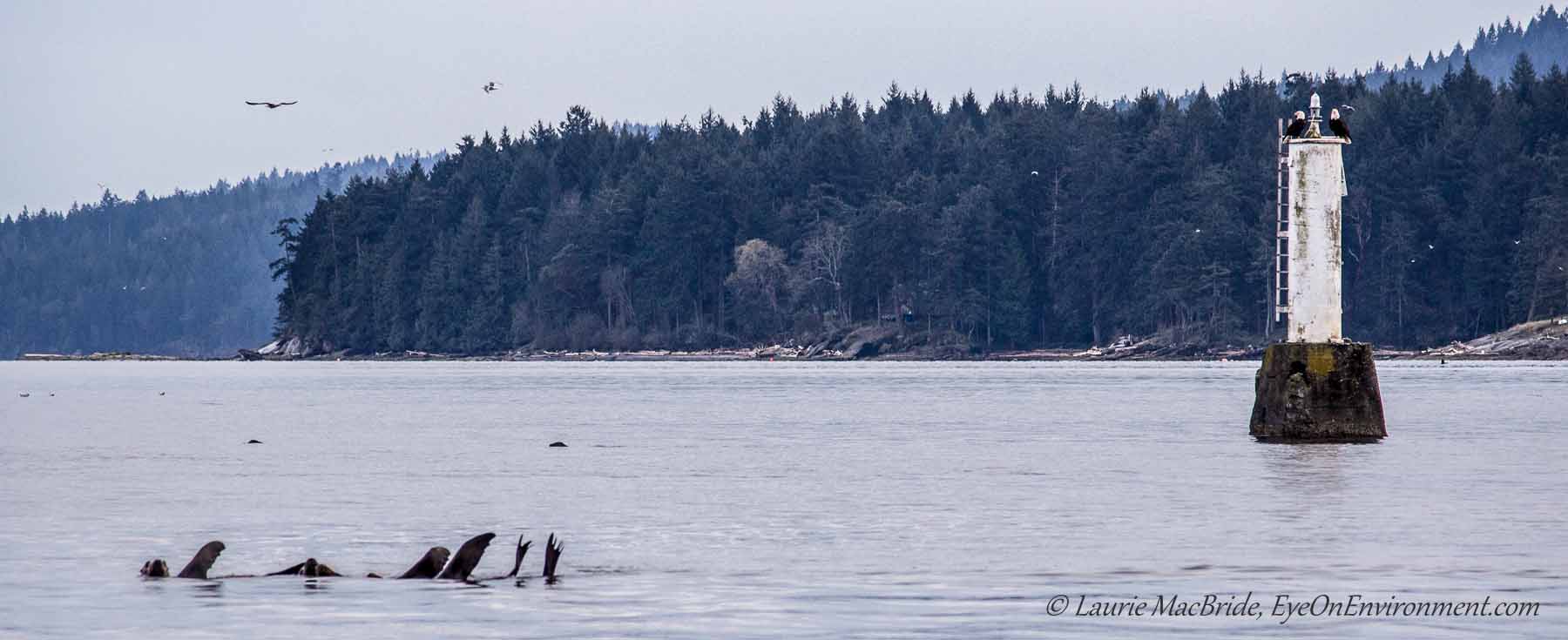
I can’t recall whether March came in like a lamb or a lion this year – but I certainly won’t forget the lions that arrived mid-month. California sea lions, that is. (More photos below.)

The reason they’re here is that a bumper run of spawning Pacific herring has arrived along our shores this year – creating a feast for Harbour seals, Bald eagles, masses of gulls and herds of sea lions, all chasing the little silvery, nutrient-rich fish.

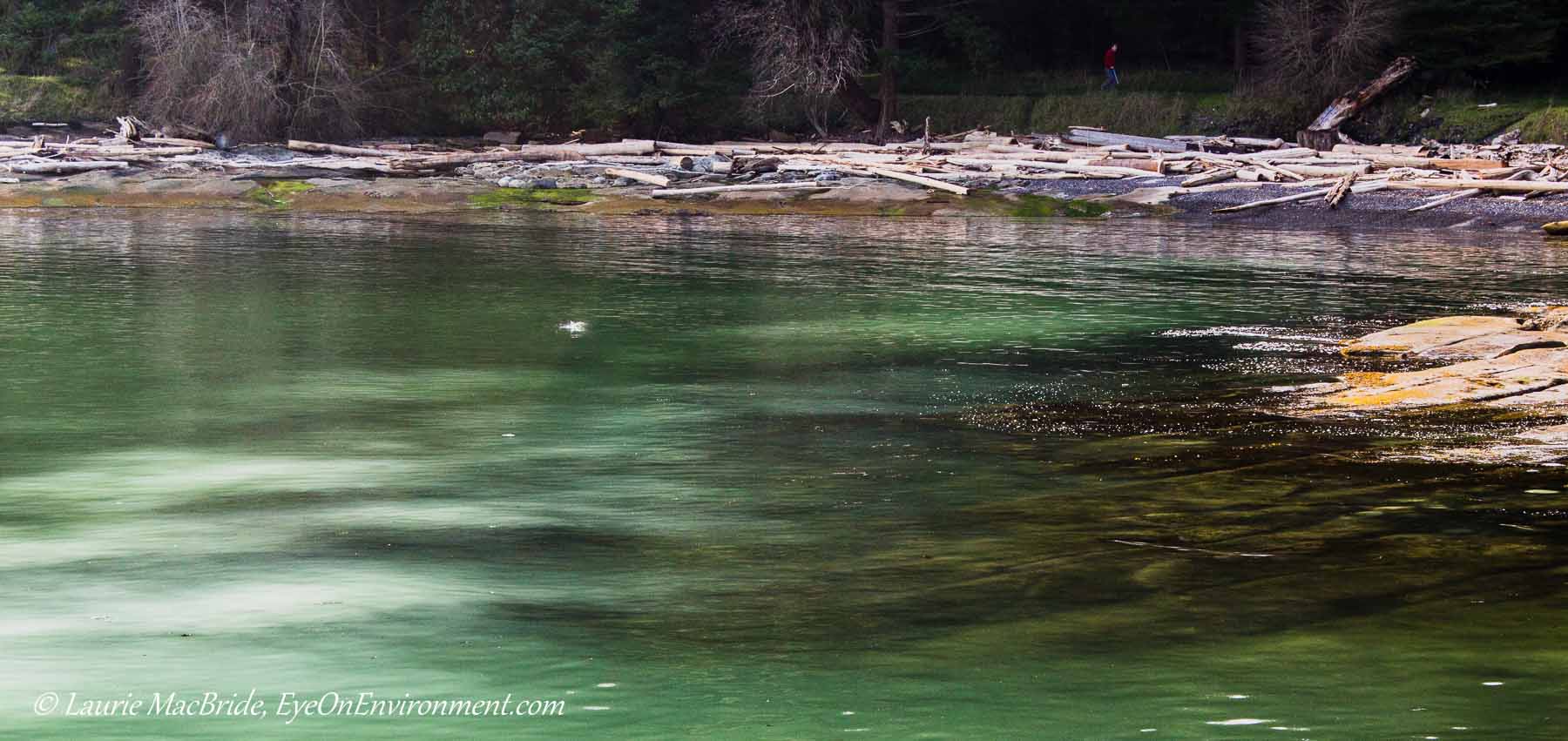
I’ve lived on Gabriola Island for 30 years, and though I’ve seen herring spawn along our other beaches, I’ve never seen it before at Drumbeg Park – where last week, the water in the bay turned milky white with herring spawn, as you can see in this photo (that’s not simply sunlight on the water):

White bands of herring spawn in the water along shore of bay

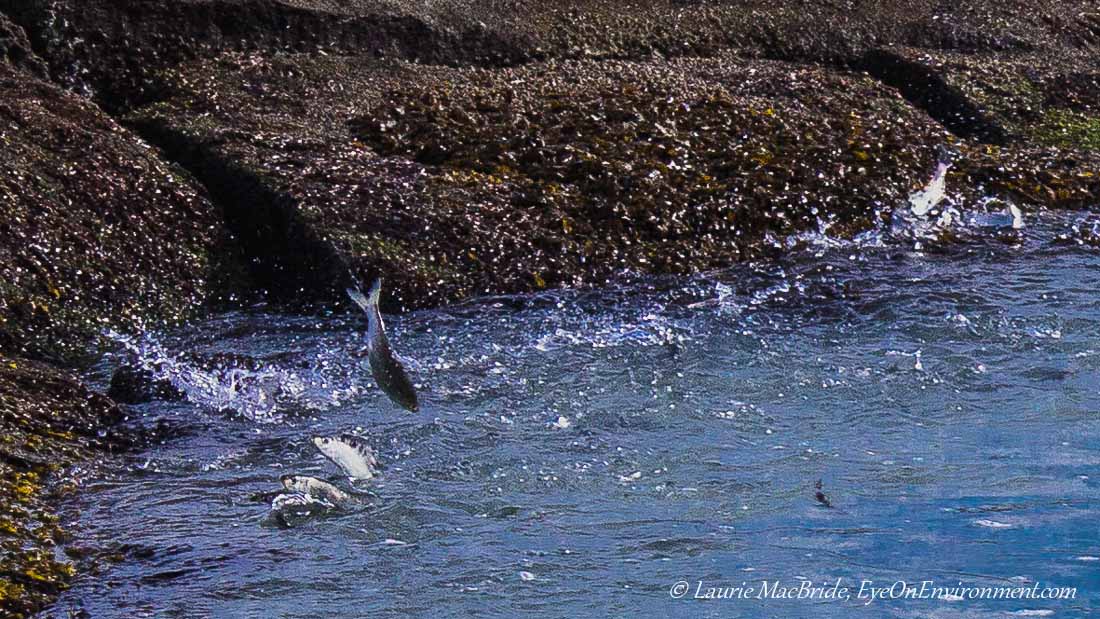
We watched as seals repeatedly drove herring up against the shore of the bay – so fast and furious was the chase that waves of leaping herring arced out of the water, close to our feet, trying to escape the predator’s jaws.

Herring Houdini

On the nearby point, hundreds of gulls cried out, managing to get in on the feast as the small fish were driven onshore. Inside the bay, Goldeneye ducks paddled about – attracted by the prospect of a hearty meal of herring eggs.

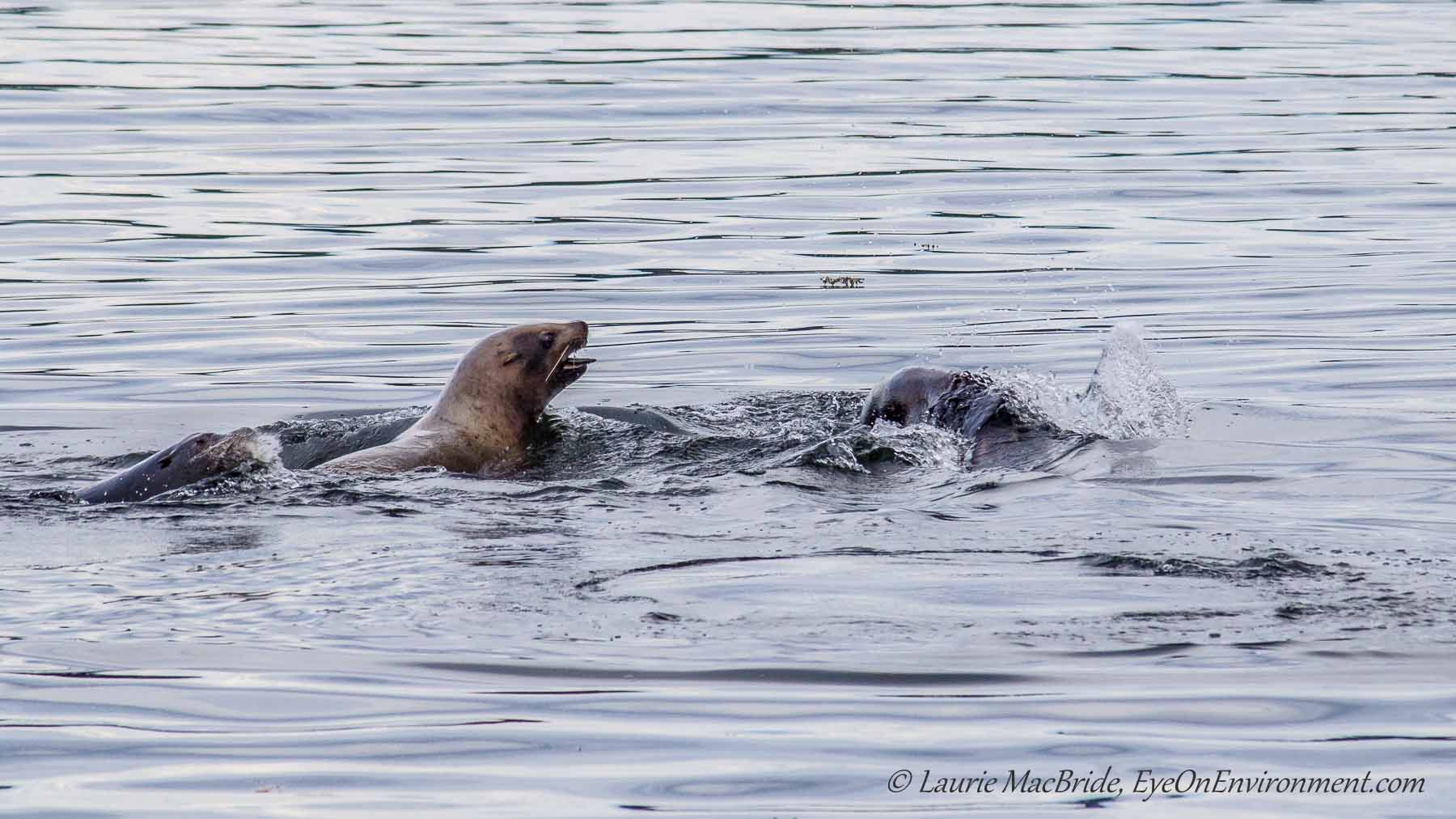
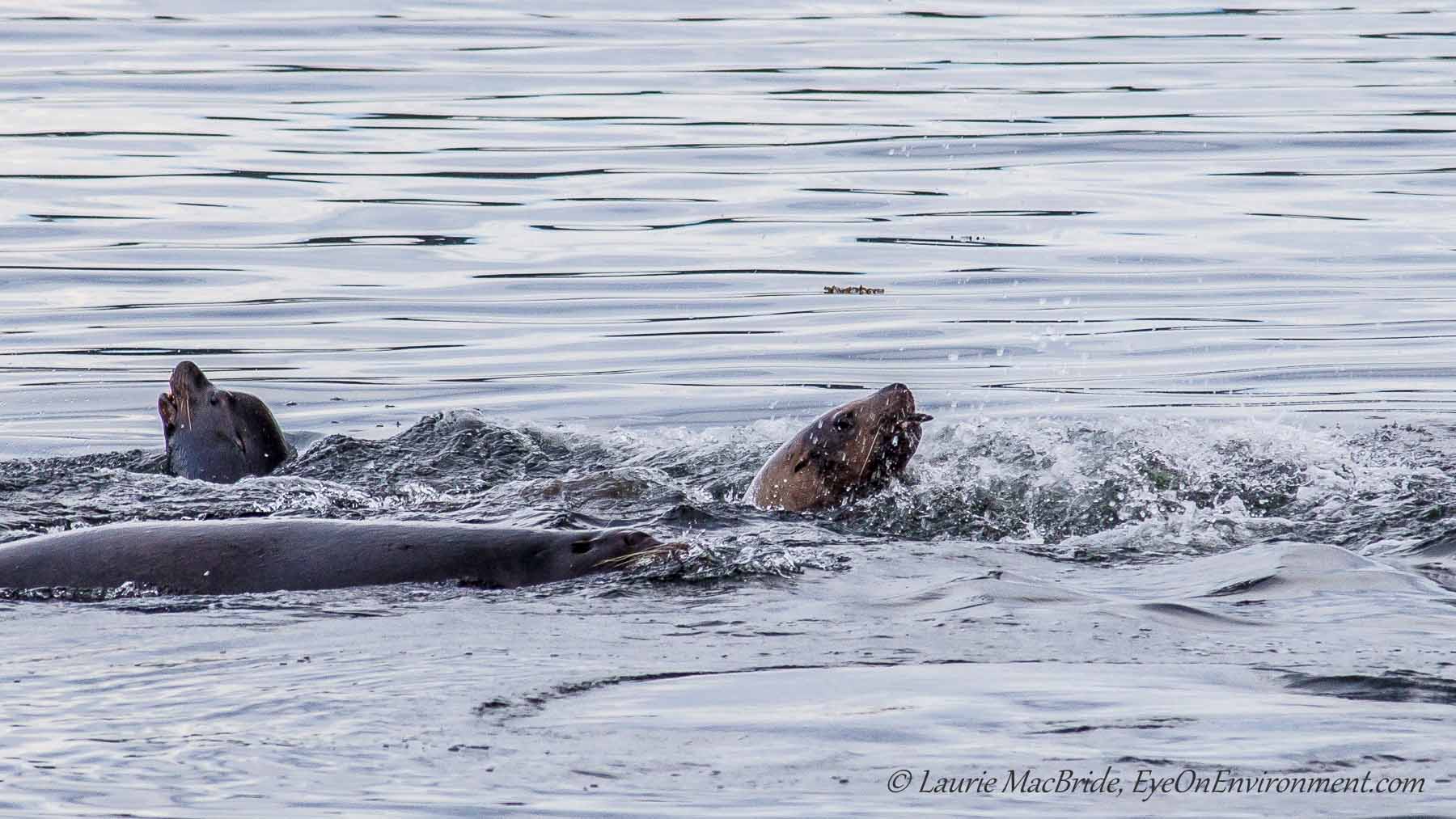
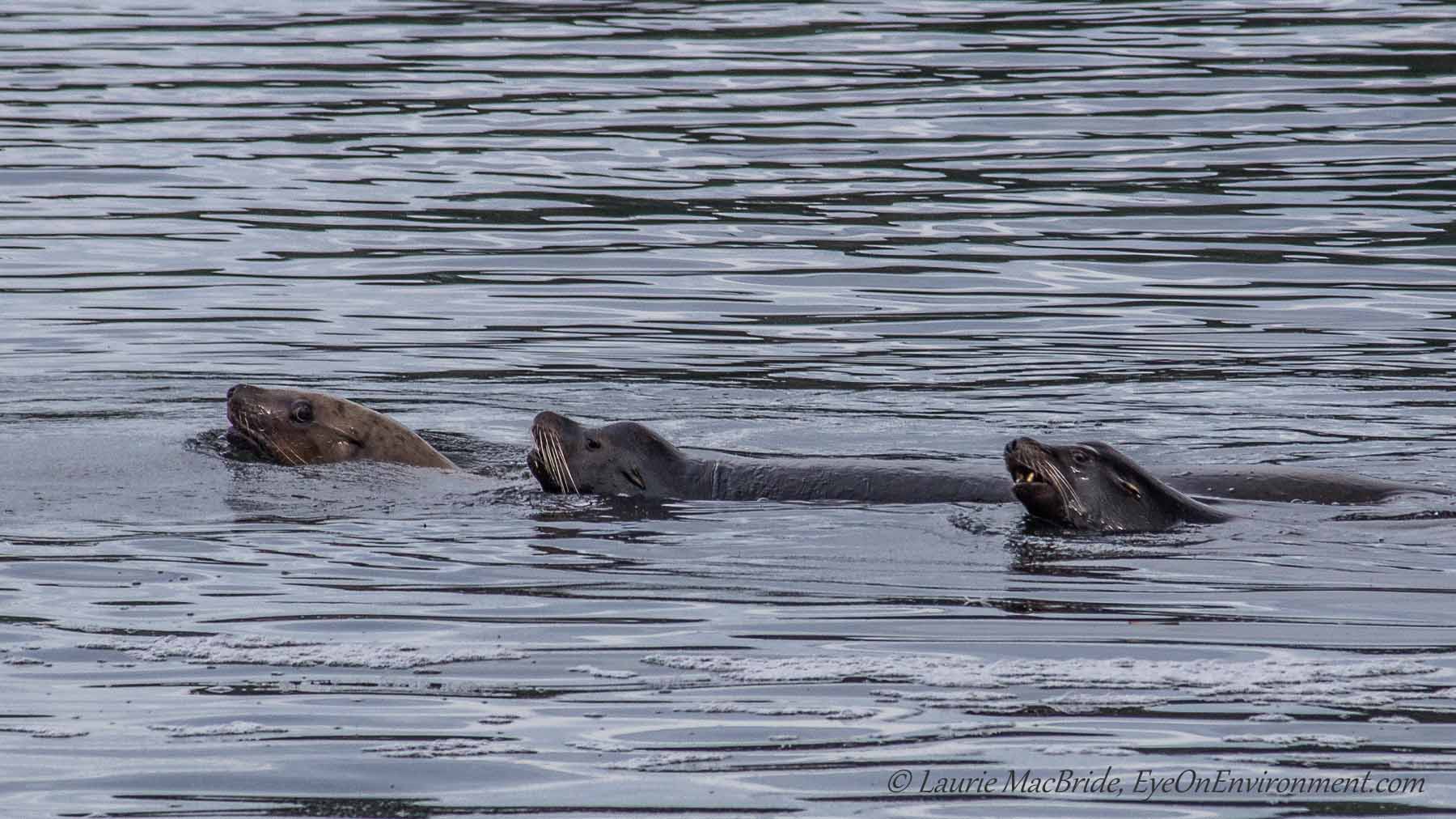
But the most boisterous show came from the dozens of California sea lions. Teams of the huge mammals (males weigh about 800 lbs) prowled Drumbeg’s shoreline, lunging after herring schools…

Team Work

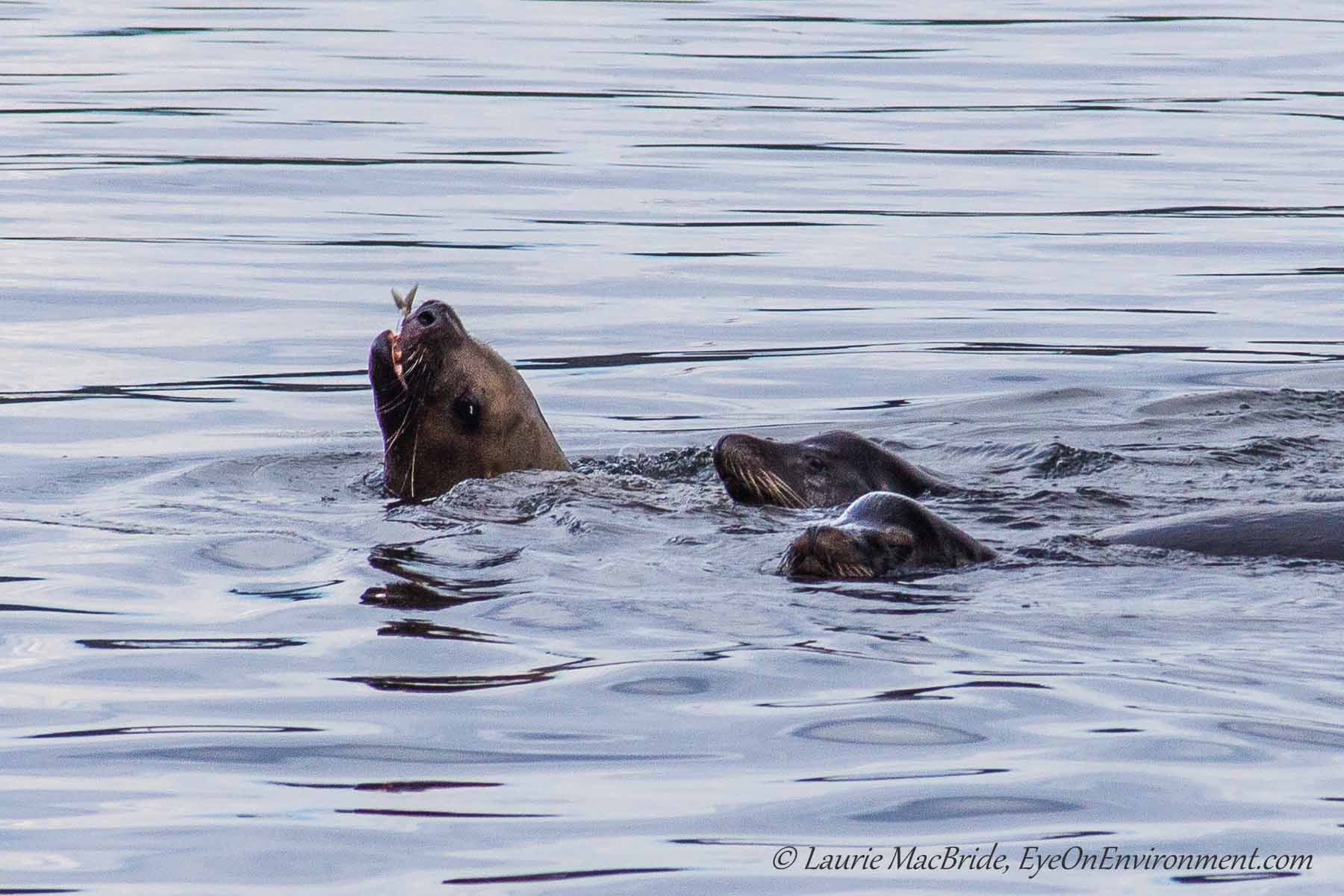
lunching on the fishy delights…

Lion's Lunch #2

then lounging with their flippers aloft like sails, until the next spate of gorging.

Nap Time

Each time they rushed the frantic herring they churned up the water, and every few minutes one lion or another would let forth a deep, mighty bark. There was no shortage of action!

On the Hunt

The strength of this year’s herring run and feeding frenzy suggest that despite how much is going wrong in the ocean today, our region’s marine ecosystem still has some vitality. That’s very welcome news – and a reminder of how important it is that we do all we can to cherish and protect every bit of beauty and ecological health that remain in our world.

Curses on You!

About herring :  Once they reach full maturity at about 3 years old, herring spawn each spring, depositing a dense mass of eggs onto eelgrass and other seaweed in the shallows and intertidal zone. Over the next 2 to 3 weeks, the eggs hatch into tiny larvae. Only about 1%  of these will survive, to metamorphose into little fish – whose mortality rate is also high. It’s estimated that from 10,000 herring eggs, only 1 will survive to reach maturity and spawn like its parents did. This sobering fact is why, in late winter and spring, gardeners should avoid taking home any seaweed: every bit of it needs to be left on the beach, as it’s critical habitat for a new generation of herring – the little fish that plays a huge role in our marine ecosystem.

Final reminder: my solo show, “Afloat in the Salish Sea: Images of Gabriola”, ends April 2.  It’s downstairs at the Gabriola Community Health Centre (691 Church St.), open 8:30 am to noon, Mon-Fri. this week, Mon-Thurs. next week (closed Good Friday).