
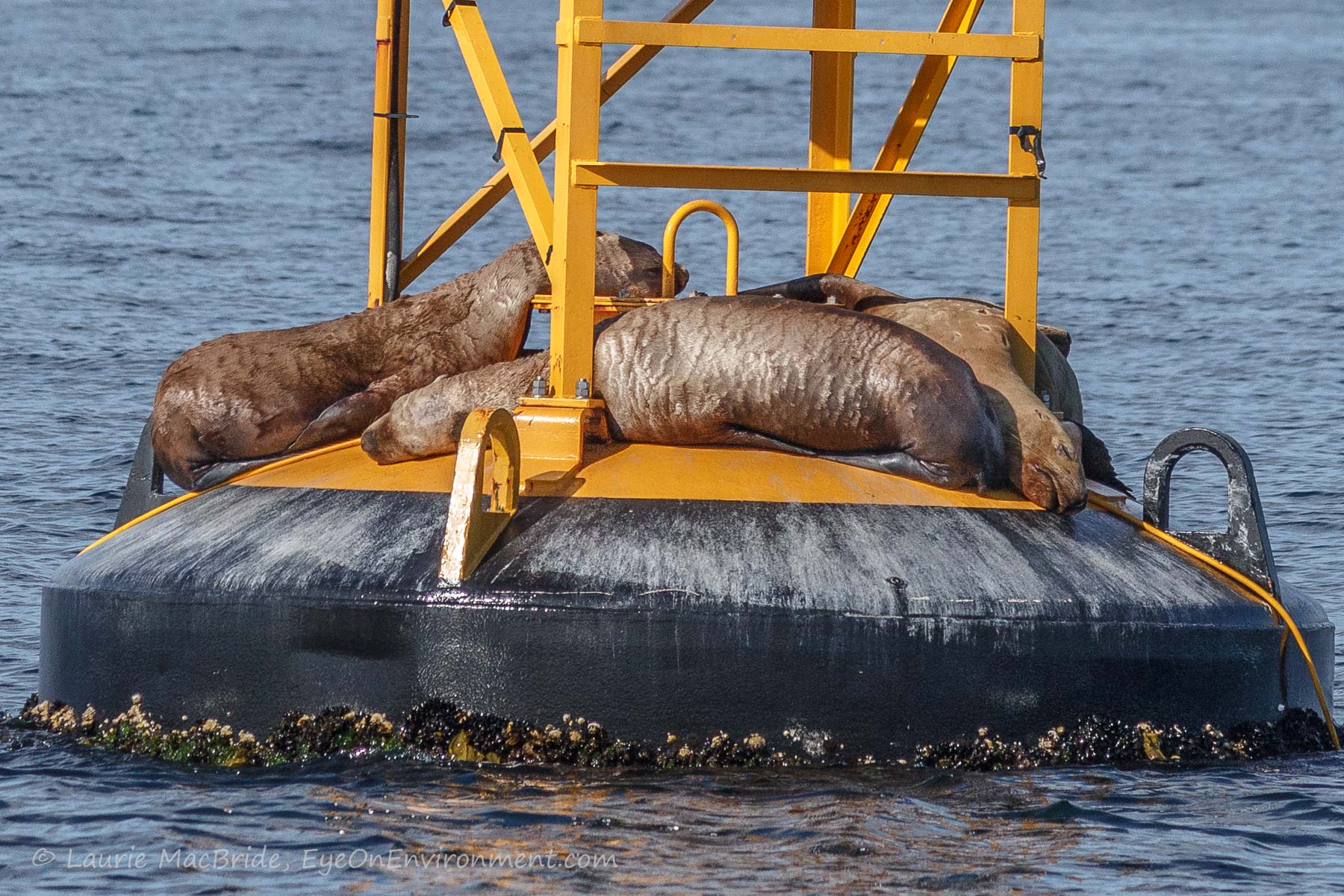
In Dreamland, on a waterbed (click on photos to enlarge)
Even sea lions need their beauty sleep. And since they’re a favourite meal for killer whales, they need to be careful about where they haul out for a snooze.
So it wasn’t a surprise last summer to see three large sea lions catching some z’s on East Cardinal Buoy PB, off Cape Lazo – the extremely shallow depth at that spot likely keeps killer whales at a safe distance. (More on this buoy, below.)
Despite the constant rocking and din of boat motors passing by, PB seems like a decent enough bed. It’s well situated for safety, and it even sports handy posts to keep sleepers from falling overboard.
Still, it doesn’t look exactly comfortable, especially for the lion on the left. My neck aches in sympathy!
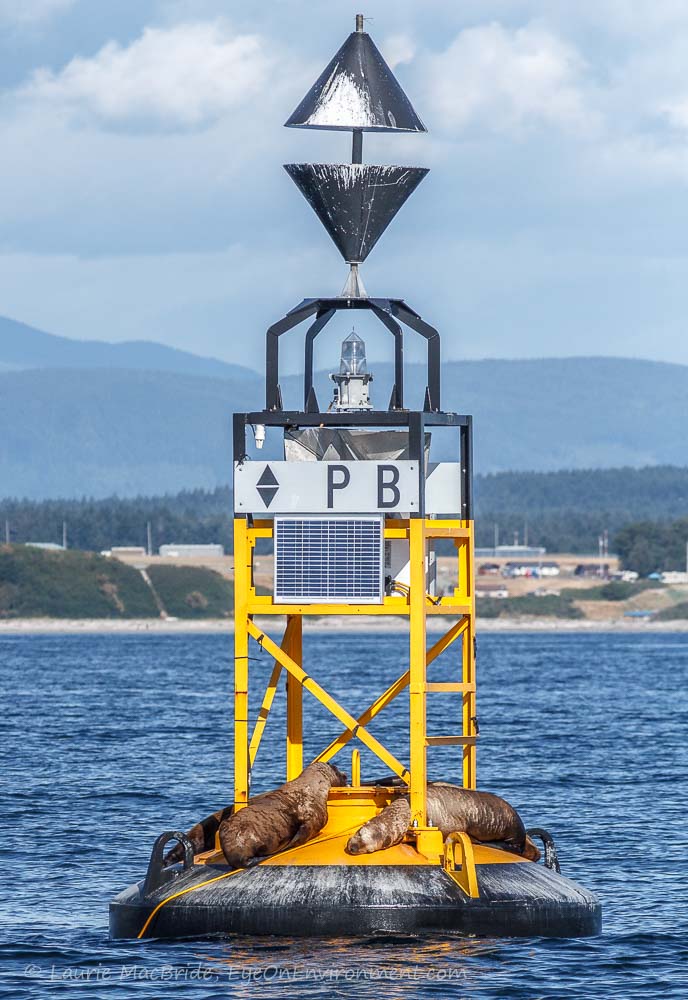
This important navigational aid is one of several that mark safe passage for mariners crossing the treacherously shallow “Comox Bar” between Denman Island and Cape Lazo, to enter or exit the Strait of Georgia.
PB is an “east cardinal buoy”, indicating that safe passage lies to the east of the marker. Cardinal buoys are yellow and black, with conical top marks configured in one of four specific ways, depending on whether safe passage lies to the north, south, east or west.
At night, mariners must determine the direction of safe passage by the speed/duration of the buoy’s flashing light, since the top marks aren’t visible.







 Eye on Environment